

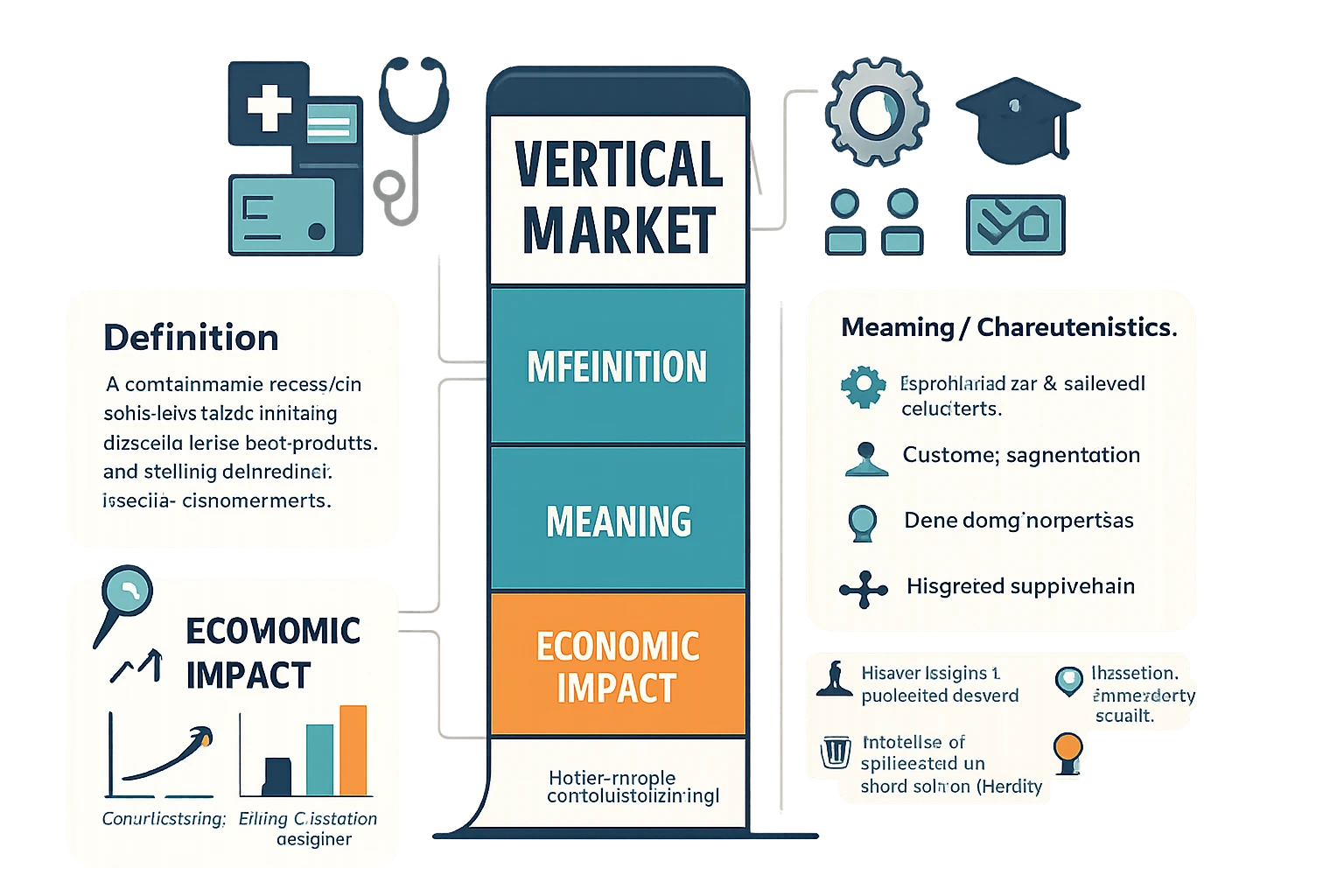
The concept of vertical markets has always fascinated me because it represents one of the most elegant solutions to the complex puzzle of modern commerce. While horizontal markets cast wide nets to capture diverse customer bases, vertical markets dive deep into specific industries, creating laser-focused ecosystems that address unique challenges and opportunities. This specialized approach often yields remarkable results, transforming niche sectors into powerhouses of innovation and economic growth.
A vertical market is a specialized market segment that focuses on a particular industry, trade, or demographic group with specific needs and requirements. Unlike horizontal markets that serve broad, diverse customer bases across multiple industries, vertical markets concentrate on delivering tailored solutions to a narrow but well-defined audience. This exploration will examine vertical markets from multiple perspectives: their structural characteristics, economic implications, technological innovations, and strategic advantages for businesses operating within them.
Throughout this analysis, you'll discover how vertical markets function as economic engines, driving specialization and innovation within specific industries. We'll explore real-world examples, examine the competitive dynamics that make these markets unique, and understand why companies increasingly view vertical specialization as a pathway to sustainable growth and market leadership.
Understanding the Fundamentals of Vertical Market Structure
Vertical markets represent a fundamental shift from the traditional broad-market approach to business. These markets are characterized by their deep focus on specific industries or customer segments, creating ecosystems where every participant understands the unique challenges, regulations, and opportunities within that particular vertical.
The structure of vertical markets typically involves multiple layers of specialization. At the foundation, you'll find companies that provide core products or services specifically designed for that industry. Above them, specialized distributors and resellers who understand the market's nuances facilitate transactions. At the top, consultants and service providers offer expertise that general-market companies simply cannot match.
Key characteristics that define vertical markets include:
• Industry-specific knowledge requirements
• Specialized regulatory compliance needs
• Unique operational challenges and workflows
• Distinct customer behavior patterns
• Specialized distribution channels
• Industry-specific terminology and standards
• Concentrated geographic presence
• Specialized skill sets and expertise requirements
The depth of specialization in vertical markets creates natural barriers to entry that protect established players while simultaneously creating opportunities for innovative newcomers who can demonstrate superior understanding of industry needs. This dynamic tension drives continuous improvement and innovation within these specialized ecosystems.
Economic Impact and Market Dynamics
The economic impact of vertical markets extends far beyond their individual boundaries, creating ripple effects throughout the broader economy. These specialized markets often serve as incubators for innovation, developing solutions that eventually find applications in horizontal markets.
Vertical markets typically demonstrate higher profit margins compared to horizontal markets due to reduced competition and increased customer loyalty. Companies operating in these spaces can command premium pricing because their solutions address specific pain points that generic alternatives cannot adequately resolve.
The concentration of expertise within vertical markets creates knowledge clusters that accelerate innovation. When companies, suppliers, customers, and service providers all focus on the same industry challenges, the collective intelligence generated often leads to breakthrough solutions and technological advances.
"Vertical markets create concentrated pools of expertise where innovation accelerates through focused collaboration and deep industry understanding."
These markets also demonstrate remarkable resilience during economic downturns. While horizontal markets may suffer from broad-based economic pressures, vertical markets often maintain stability because their solutions remain essential to their target industries' operations.
Technology's Role in Vertical Market Evolution
Technology has fundamentally transformed how vertical markets operate and compete. Cloud computing, artificial intelligence, and data analytics have enabled smaller companies to compete effectively with established players by providing sophisticated tools and capabilities that were previously available only to large enterprises.
The rise of Software as a Service (SaaS) platforms has been particularly transformative for vertical markets. These platforms allow companies to develop highly specialized solutions without massive upfront investments, democratizing access to advanced technology capabilities.
Industry-specific software solutions have become the backbone of many vertical markets, providing functionality that generic software simply cannot match. These solutions often integrate seamlessly with industry-standard hardware and processes, creating comprehensive ecosystems that drive efficiency and productivity.
Mobile technology has also revolutionized vertical markets by enabling field workers, remote employees, and distributed teams to access specialized tools and information from anywhere. This mobility has expanded the reach of vertical market solutions and created new opportunities for service delivery.
Strategic Advantages of Vertical Market Focus
Companies that choose to focus on vertical markets often discover significant strategic advantages that compound over time. The deep industry knowledge required to succeed in these markets creates natural competitive moats that protect market position and enable sustainable growth.
Customer relationships in vertical markets tend to be deeper and more strategic than those in horizontal markets. When a company truly understands an industry's challenges and consistently delivers value, customers view them as essential partners rather than mere vendors.
The referral networks within vertical markets are typically more robust and effective than those in horizontal markets. Industry professionals regularly communicate with peers, attend the same conferences, and participate in the same trade associations, creating natural channels for word-of-mouth marketing.
Strategic benefits of vertical market focus include:
• Higher customer lifetime value
• Reduced customer acquisition costs
• Premium pricing opportunities
• Stronger competitive positioning
• Enhanced product development efficiency
• More effective marketing and sales efforts
• Deeper industry relationships and partnerships
Vertical Market Categories and Classifications
Understanding the various types of vertical markets helps illuminate the diversity and complexity of these specialized ecosystems. Markets can be classified by industry sector, customer size, geographic concentration, or regulatory environment.
Industry-Based Vertical Markets represent the most common classification, focusing on specific sectors such as healthcare, financial services, manufacturing, or education. Each of these industries has unique requirements, regulations, and operational characteristics that create distinct market opportunities.
Size-Based Vertical Markets target organizations of specific scales, such as small businesses, mid-market companies, or enterprise-level organizations. These markets recognize that companies of different sizes face distinct challenges and require different solutions approaches.
Geographic Vertical Markets concentrate on specific regions or localities, often driven by unique regulatory requirements, cultural factors, or economic conditions. These markets may serve international, national, regional, or local customer bases.
| Market Type | Characteristics | Examples | Key Success Factors |
|---|---|---|---|
| Industry-Based | Sector-specific needs | Healthcare, Finance, Manufacturing | Deep domain expertise |
| Size-Based | Company scale focus | SMB, Mid-market, Enterprise | Scalable solutions |
| Geographic | Location-specific | Regional, National, Global | Local knowledge |
| Regulatory | Compliance-driven | Government, Defense, Utilities | Compliance expertise |
Competitive Landscape and Market Entry Strategies
The competitive dynamics within vertical markets differ significantly from those in horizontal markets. Competition is often based on expertise and relationship depth rather than price alone, creating opportunities for companies that can demonstrate superior industry knowledge and customer understanding.
New entrants to vertical markets face unique challenges and opportunities. While the barriers to entry may be high due to required industry knowledge and established relationships, the potential rewards for successful entry are often substantial due to reduced competition and higher margins.
Successful market entry strategies typically involve significant upfront investment in industry knowledge, relationship building, and solution development. Companies must demonstrate credibility and expertise before customers will consider switching from established providers.
Partnership strategies play a crucial role in vertical market success. Companies often form alliances with complementary service providers, technology vendors, or industry consultants to create comprehensive solution offerings that address multiple customer needs.
"Success in vertical markets requires patience, persistence, and a genuine commitment to understanding and solving industry-specific challenges."
The role of thought leadership cannot be overstated in vertical markets. Companies that contribute valuable insights to industry discussions through research, publications, and speaking engagements often gain significant competitive advantages.
Customer Behavior and Purchasing Patterns
Customer behavior in vertical markets exhibits distinct patterns that differ markedly from horizontal market dynamics. Purchase decisions are typically more complex, involving multiple stakeholders and longer evaluation periods due to the specialized nature of the solutions being considered.
The buying process in vertical markets often involves extensive research and validation phases. Customers seek proof that potential vendors truly understand their industry's unique challenges and can deliver solutions that integrate seamlessly with existing operations.
Risk aversion tends to be higher in vertical markets, particularly in heavily regulated industries where compliance failures can have serious consequences. This risk aversion creates opportunities for established providers while presenting challenges for new entrants.
Customer loyalty in vertical markets is typically stronger than in horizontal markets due to the switching costs associated with changing specialized solutions and the relationships built over time with trusted providers.
Innovation Drivers and Technology Adoption
Innovation in vertical markets is often driven by specific industry challenges rather than broad technological trends. This focused approach to innovation can lead to highly effective solutions that address real-world problems with precision and efficiency.
The adoption of new technologies in vertical markets follows distinct patterns influenced by industry culture, regulatory requirements, and operational constraints. Some industries embrace new technologies quickly, while others adopt more conservative approaches due to risk considerations.
Innovation drivers in vertical markets include:
• Regulatory changes requiring new compliance approaches
• Industry consolidation creating efficiency pressures
• Competitive threats from new market entrants
• Customer demands for improved service delivery
• Technological advances enabling new solution approaches
• Economic pressures requiring cost optimization
The collaborative nature of innovation in vertical markets often accelerates development cycles. When customers, vendors, and service providers work closely together to address shared challenges, solutions can be developed and refined more quickly than in broader markets.
Regulatory Environment and Compliance Considerations
Regulatory compliance plays a central role in many vertical markets, creating both opportunities and challenges for companies operating within these spaces. Industries such as healthcare, financial services, and energy operate under complex regulatory frameworks that significantly influence market dynamics.
Compliance requirements often create natural barriers to entry that protect established players while simultaneously creating opportunities for companies that can navigate regulatory complexity effectively. Understanding and addressing compliance needs becomes a core competency for success in these markets.
The regulatory environment also drives innovation as companies develop solutions to help customers meet evolving compliance requirements. This regulatory-driven innovation often creates new market segments and opportunities for specialized service providers.
"Regulatory complexity in vertical markets creates opportunities for companies that can transform compliance challenges into competitive advantages."
Changes in regulatory requirements can dramatically impact vertical markets, creating new opportunities while potentially obsoleting existing solutions. Companies that stay ahead of regulatory trends often gain significant competitive advantages.
Financial Performance and Investment Patterns
Vertical markets often demonstrate superior financial performance compared to horizontal markets due to several key factors including higher margins, increased customer loyalty, and reduced competition. These financial advantages make vertical market companies attractive to investors and acquirers.
Investment patterns in vertical markets reflect the specialized nature of these businesses. Investors often seek companies with deep industry expertise, strong customer relationships, and defensible market positions rather than focusing solely on growth metrics.
The capital requirements for vertical market companies can vary significantly depending on the industry served and the nature of the solutions provided. Some markets require substantial upfront investments in specialized equipment or regulatory compliance, while others can be entered with relatively modest capital requirements.
| Financial Metric | Vertical Markets | Horizontal Markets | Key Differences |
|---|---|---|---|
| Gross Margins | 60-80% | 40-60% | Specialization premium |
| Customer Acquisition Cost | Higher initially | Lower initially | Relationship building |
| Customer Lifetime Value | Significantly higher | Moderate | Loyalty and switching costs |
| Revenue Predictability | High | Moderate | Long-term contracts |
Marketing and Sales Strategies
Marketing and sales strategies in vertical markets require specialized approaches that differ significantly from horizontal market tactics. Success depends on demonstrating deep industry knowledge and building credibility within the target market community.
Content marketing plays a crucial role in vertical market success, with companies developing industry-specific resources, case studies, and thought leadership content that addresses the unique challenges faced by their target customers.
Trade shows, industry conferences, and professional associations serve as critical marketing channels in vertical markets. These venues provide opportunities to build relationships, demonstrate expertise, and stay current with industry trends and challenges.
Relationship-based selling is typically more effective in vertical markets than transactional approaches. Sales professionals must understand industry dynamics, speak the customer's language, and position solutions in the context of industry-specific challenges and opportunities.
"Effective marketing in vertical markets requires speaking the industry's language and addressing challenges that only industry insiders truly understand."
Referral programs and customer advocacy initiatives often generate superior results in vertical markets due to the tight-knit nature of industry communities and the high value placed on peer recommendations.
Global Perspectives and International Considerations
Vertical markets exist worldwide, but their characteristics and dynamics can vary significantly based on regional factors including regulatory environments, cultural considerations, and economic conditions. Understanding these variations is crucial for companies seeking to expand internationally.
Some vertical markets are inherently global, such as those serving multinational corporations or industries with standardized global practices. Others remain highly localized due to regulatory requirements, cultural factors, or geographic constraints.
The globalization of many industries has created opportunities for vertical market companies to expand internationally, but success requires careful consideration of local market dynamics and adaptation of solutions to meet regional requirements.
Cross-border partnerships and joint ventures often provide effective pathways for international expansion in vertical markets, allowing companies to leverage local expertise while bringing specialized solutions to new geographic markets.
Future Trends and Market Evolution
The future of vertical markets will be shaped by several key trends including digital transformation, artificial intelligence, sustainability requirements, and changing workforce dynamics. Companies that anticipate and adapt to these trends will be best positioned for future success.
Digital transformation continues to create new opportunities within vertical markets as industries seek to modernize operations and improve efficiency. This transformation often requires specialized solutions that understand both the technology and the industry context.
Artificial intelligence and machine learning are increasingly being applied to solve industry-specific challenges, creating new market opportunities for companies that can effectively combine AI capabilities with deep industry knowledge.
Sustainability and environmental considerations are becoming increasingly important across many vertical markets, driving demand for solutions that help companies meet environmental goals while maintaining operational efficiency.
"The future belongs to companies that can combine deep industry expertise with emerging technologies to solve tomorrow's challenges today."
The changing nature of work, including remote work trends and generational shifts, is creating new requirements within vertical markets that forward-thinking companies are already beginning to address.
Risk Management and Mitigation Strategies
Operating in vertical markets involves unique risks that require specialized management approaches. Market concentration risk is a primary concern, as companies focused on specific industries may be vulnerable to industry-wide downturns or disruptions.
Diversification strategies within vertical markets might involve expanding to related industries, developing complementary service offerings, or extending geographic reach while maintaining industry focus.
Regulatory risk management requires continuous monitoring of regulatory changes and proactive adaptation of solutions to meet evolving compliance requirements. Companies that excel at regulatory risk management often turn this capability into a competitive advantage.
Technology risk in vertical markets involves the challenge of keeping pace with both technological advances and industry-specific requirements. Successful companies balance innovation with stability to meet customer needs effectively.
Key risk mitigation strategies include:
• Diversifying within the vertical market
• Building strong regulatory compliance capabilities
• Maintaining technology currency and innovation
• Developing deep customer relationships
• Creating multiple revenue streams
• Building financial reserves for market volatility
What exactly defines a vertical market?
A vertical market is defined by its focus on a specific industry or niche with unique needs, regulations, and operational characteristics. Unlike horizontal markets that serve diverse customers across multiple industries, vertical markets concentrate on delivering specialized solutions to a well-defined audience within a particular sector.
How do vertical markets differ from horizontal markets?
Vertical markets focus on specific industries with specialized needs, while horizontal markets serve broad customer bases across multiple sectors. Vertical markets typically offer higher margins, deeper customer relationships, and more specialized solutions, but serve smaller addressable markets compared to horizontal approaches.
What are the main advantages of focusing on vertical markets?
The primary advantages include higher profit margins, reduced competition, stronger customer loyalty, deeper industry expertise, more effective marketing efforts, and the ability to command premium pricing due to specialized knowledge and solutions.
What challenges do companies face when entering vertical markets?
Key challenges include the need for deep industry knowledge, longer sales cycles, higher customer acquisition costs initially, regulatory compliance requirements, and the need to build credibility within established industry networks.
How do regulatory requirements impact vertical markets?
Regulatory requirements often create barriers to entry that protect established players while driving innovation in compliance solutions. They can also create new market opportunities when regulations change, requiring specialized expertise to navigate complex compliance landscapes.
What role does technology play in vertical market evolution?
Technology enables smaller companies to compete effectively through cloud computing and SaaS platforms, creates industry-specific solutions that generic software cannot match, and drives innovation through AI, mobile technology, and data analytics tailored to specific industry needs.