
The world of data management has always fascinated me, particularly how systems evolved to handle the exponential growth of information in enterprise environments. Among the various storage access methods that emerged during the mainframe era, VSAM stands out as a revolutionary approach that transformed how organizations store, retrieve, and manage their critical data. This technology didn't just appear overnight; it was born from necessity as businesses demanded more efficient ways to handle increasingly complex data operations.
VSAM, or Virtual Storage Access Method, represents a sophisticated file organization and access technique developed by IBM for their mainframe systems. It serves as a bridge between applications and physical storage, providing multiple organizational methods and enhanced performance capabilities. This discussion will explore VSAM from various angles – its technical architecture, practical applications, advantages, limitations, and its enduring relevance in modern computing environments.
Through this exploration, you'll gain comprehensive insights into how VSAM operates, why it became the preferred choice for mission-critical applications, and how it compares to other storage methods. We'll examine real-world scenarios where VSAM excels, discuss implementation considerations, and address common challenges organizations face when working with this technology. Whether you're a database administrator, system architect, or simply curious about enterprise data management, this deep dive will provide valuable perspectives on one of mainframe computing's most significant innovations.
Understanding VSAM Fundamentals
Core Architecture and Components
VSAM operates on a fundamentally different principle compared to traditional sequential file systems. Instead of treating data as a continuous stream, it organizes information into Control Intervals (CIs) and Control Areas (CAs), creating a hierarchical structure that optimizes both storage utilization and access performance.
Control Intervals serve as the basic unit of data transfer between memory and storage devices. Each CI contains actual data records along with control information that manages the space within that interval. This design allows for efficient insertion and deletion of records without requiring complete file reorganization.
Control Areas group multiple Control Intervals together, forming larger organizational units that facilitate high-level space management and performance optimization. The relationship between CIs and CAs creates a two-tier architecture that balances granular control with broader efficiency considerations.
"The genius of VSAM lies not in its complexity, but in how it simplifies complex data relationships through intelligent organization and indexing mechanisms."
VSAM Dataset Organization Types
VSAM supports four distinct dataset organization methods, each tailored for specific use cases and performance requirements:
Entry Sequenced Data Sets (ESDS) maintain records in the order they were originally inserted. This organization resembles traditional sequential files but incorporates VSAM's advanced space management features. Records cannot be deleted or inserted in the middle; they can only be appended to the end or updated in place if the new version doesn't exceed the original length.
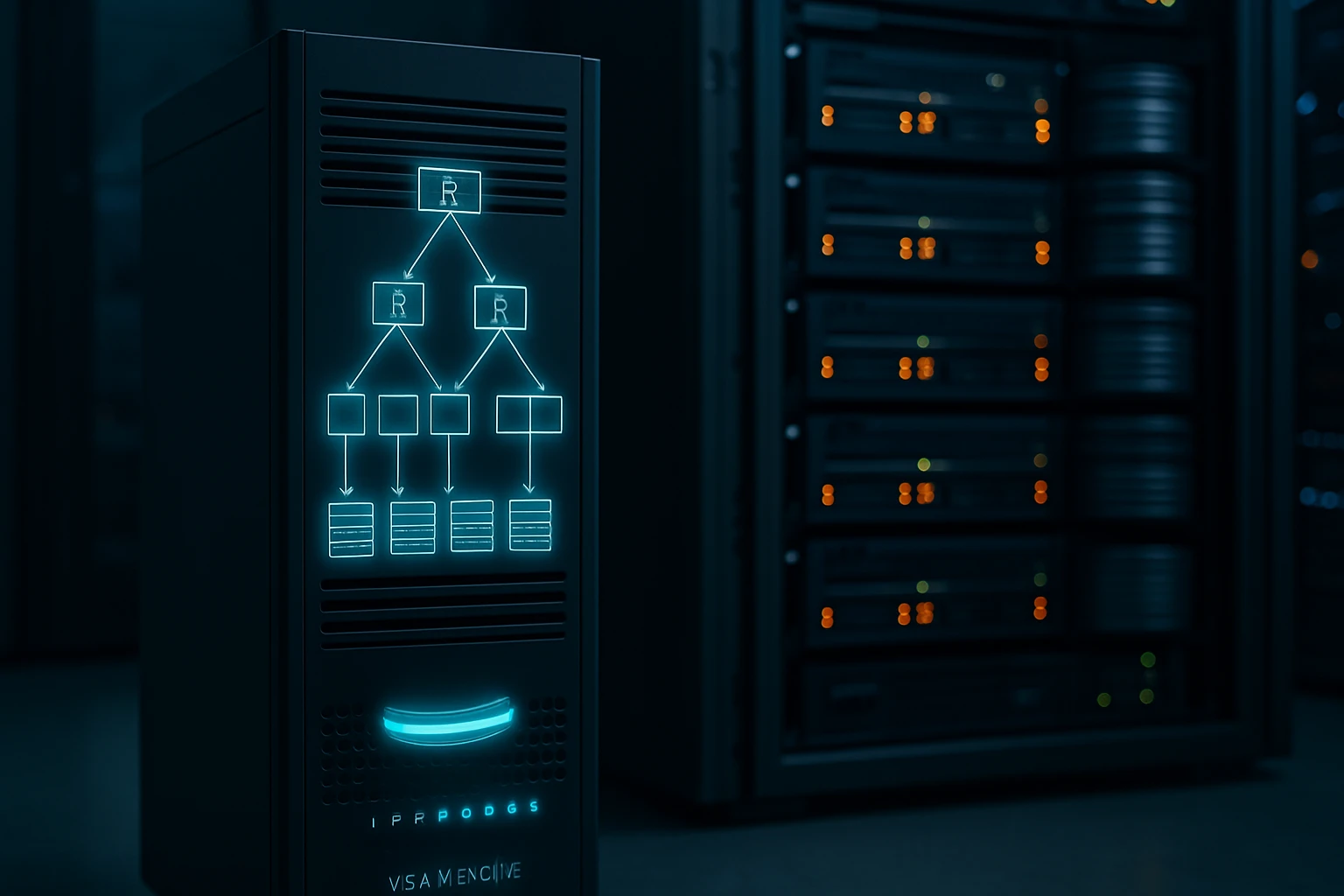
Key Sequenced Data Sets (KSDS) represent VSAM's most sophisticated organization method. Records are maintained in ascending order based on a unique key field, with automatic indexing providing rapid random access capabilities. The system maintains multiple index levels, creating a balanced tree structure that ensures consistent performance regardless of dataset size.
Relative Record Data Sets (RRDS) organize data based on relative record numbers, similar to arrays in programming languages. Each record occupies a specific slot number, allowing direct access through simple arithmetic calculations. This organization proves particularly effective for applications requiring predictable access patterns.
Linear Data Sets (LDS) treat data as a continuous byte stream without internal record structure. Applications assume complete responsibility for data organization and access logic. This method suits specialized applications requiring maximum control over data layout and access patterns.
Technical Implementation and Processing
Index Structure and Management
The indexing mechanism in KSDS represents one of VSAM's most sophisticated features. The system automatically maintains a multi-level index structure that adapts to data growth and access patterns without manual intervention.
The sequence set forms the lowest level of the index hierarchy, containing entries that point directly to Control Intervals holding actual data records. Each sequence set record covers a range of key values, creating logical boundaries that facilitate efficient searching algorithms.
Above the sequence set, index set records create additional hierarchy levels as needed. The system dynamically adds or removes index levels based on dataset size, ensuring that search operations maintain optimal performance characteristics regardless of data volume.
When applications request records by key value, VSAM traverses the index structure from top to bottom, making logarithmic-time decisions at each level. This approach guarantees predictable performance that scales gracefully with dataset growth.
Space Management and Allocation
VSAM's space management philosophy differs significantly from traditional file systems. Instead of allocating space in fixed blocks, it uses dynamic allocation strategies that adapt to actual usage patterns and growth requirements.
Primary allocation defines the initial space reserved for a dataset when it's created. This space gets divided into Control Areas, which in turn contain Control Intervals. The system calculates optimal CI and CA sizes based on record characteristics and expected access patterns.
Secondary allocation handles dataset growth beyond the original primary space. When the system needs additional space, it allocates secondary extents according to predefined parameters. This mechanism ensures continuous operation without manual intervention while maintaining performance characteristics.
The distributed free space feature reserves empty space within Control Intervals and Control Areas to accommodate record insertions and updates. This proactive approach minimizes the need for dataset reorganization and maintains consistent performance over time.
| Space Management Feature | Purpose | Impact on Performance |
|---|---|---|
| Control Interval Free Space | Accommodates record growth and insertions | Reduces CI splits and maintains locality |
| Control Area Free Space | Provides space for new Control Intervals | Minimizes extent fragmentation |
| Secondary Allocation | Handles dataset growth | Ensures continuous operation |
| Distributed Free Space | Optimizes space utilization | Maintains performance over time |
Performance Characteristics and Optimization
Access Method Performance Analysis
VSAM's performance characteristics vary significantly depending on the organization type and access patterns employed by applications. Understanding these performance implications helps organizations make informed decisions about dataset design and implementation strategies.
Sequential processing in VSAM datasets generally delivers excellent performance across all organization types. The Control Interval structure optimizes I/O operations by reading multiple records in single operations, reducing the overhead associated with individual record retrieval.
Random access performance varies considerably between organization types. KSDS excels in random access scenarios due to its sophisticated indexing mechanism, typically achieving sub-millisecond response times for key-based retrievals. RRDS also performs well for random access when applications can calculate relative record numbers efficiently.
Mixed access patterns represent the most challenging scenario for performance optimization. Applications that combine sequential scanning with random updates must carefully balance their approach to avoid performance degradation. VSAM provides various buffering and caching mechanisms to optimize mixed-mode operations.
"Performance optimization in VSAM requires understanding not just the technical capabilities, but also the specific access patterns and business requirements of each application."
Buffering and Caching Strategies
VSAM implements sophisticated buffering mechanisms that significantly impact overall system performance. These strategies operate at multiple levels, from individual Control Interval buffers to comprehensive index caching systems.
Data buffers hold frequently accessed Control Intervals in memory, reducing the need for physical I/O operations. The system automatically manages buffer allocation based on access patterns and available memory resources. Applications can influence buffer management through various parameters and processing options.
Index buffers maintain copies of frequently used index records in memory, dramatically improving key-based access performance. The system prioritizes higher-level index records for buffering since they're accessed more frequently during search operations.
Look-aside buffers provide additional caching for specific access patterns, particularly benefiting applications with predictable sequential or near-sequential processing requirements. These specialized buffers complement the standard buffering mechanisms to optimize overall performance.
Comparison with Alternative Storage Methods
VSAM versus Traditional Sequential Files
The comparison between VSAM and traditional sequential file processing reveals fundamental differences in approach and capabilities. Sequential files offer simplicity and predictability but lack the flexibility and performance characteristics that modern applications demand.
Traditional sequential files process records in strict order from beginning to end. While this approach works well for batch processing scenarios, it becomes inefficient when applications need random access or frequent updates. Every modification potentially requires rewriting the entire file, creating significant performance and resource utilization challenges.
VSAM addresses these limitations through its sophisticated organization methods and space management capabilities. Even ESDS, VSAM's closest equivalent to sequential files, provides superior update capabilities and space utilization compared to traditional approaches.
The update-in-place capability represents one of VSAM's most significant advantages over sequential files. Applications can modify existing records without rewriting entire datasets, dramatically reducing I/O requirements and processing time for update-intensive operations.
Database Management System Integration
Modern database management systems often utilize VSAM as an underlying storage mechanism, particularly in mainframe environments where reliability and performance are paramount. This integration demonstrates VSAM's continued relevance in contemporary computing architectures.
DB2 for z/OS leverages VSAM's capabilities for storing both system catalogs and user data. The database management system benefits from VSAM's indexing mechanisms and space management features while providing higher-level relational interfaces to applications.
IMS databases have historically relied on VSAM for their underlying storage requirements. The hierarchical nature of IMS data structures aligns well with VSAM's organizational capabilities, creating synergies that benefit overall system performance.
CICS transaction processing systems frequently use VSAM datasets for storing application data and system control information. The combination of CICS's transaction management capabilities with VSAM's efficient data organization creates robust platforms for high-volume transaction processing.
| Storage Method | Random Access | Update Efficiency | Space Utilization | Complexity |
|---|---|---|---|---|
| Sequential Files | Poor | Poor | Good | Low |
| VSAM ESDS | Poor | Good | Excellent | Medium |
| VSAM KSDS | Excellent | Excellent | Excellent | High |
| VSAM RRDS | Good | Good | Good | Medium |
| Relational Database | Excellent | Good | Good | High |
Practical Implementation Considerations
Dataset Design and Planning
Successful VSAM implementation requires careful planning and design consideration before dataset creation. The decisions made during this phase significantly impact long-term performance, maintenance requirements, and operational characteristics.
Record length analysis forms the foundation of effective VSAM design. Fixed-length records simplify space management and performance prediction, while variable-length records provide flexibility at the cost of increased complexity. The choice between these approaches depends on data characteristics and application requirements.
Key structure design for KSDS requires careful consideration of uniqueness, distribution, and growth patterns. Keys should distribute records evenly across the dataset to avoid hotspots and ensure consistent performance. Composite keys may be necessary to achieve uniqueness while maintaining logical organization.
Volume and growth projections influence initial allocation parameters and secondary extent definitions. Underestimating growth leads to frequent space allocation operations and potential performance degradation. Overestimating wastes storage resources and may impact overall system efficiency.
"The most elegant VSAM design is worthless if it doesn't align with actual business requirements and operational constraints."
Security and Access Control
VSAM integrates with mainframe security systems to provide comprehensive access control and data protection capabilities. These security features operate at multiple levels, from dataset-level permissions to individual record access controls.
RACF integration allows organizations to define detailed access permissions based on user identities, group memberships, and resource characteristics. Security administrators can control not only who can access datasets but also what operations they can perform and under what circumstances.
Dataset-level security provides coarse-grained access control suitable for many organizational requirements. Applications and users receive permissions to read, write, update, or delete entire datasets based on their roles and responsibilities.
Record-level security offers fine-grained control over individual records within datasets. This capability proves particularly valuable for applications handling sensitive information where different users need access to different subsets of data within the same dataset.
Encryption capabilities protect data both at rest and in transit. Modern VSAM implementations support various encryption algorithms and key management systems, ensuring that sensitive information remains protected even if physical storage media are compromised.
Advanced Features and Capabilities
Backup and Recovery Mechanisms
VSAM provides sophisticated backup and recovery capabilities that ensure data integrity and availability in enterprise environments. These mechanisms operate at multiple levels and integrate with broader system management and disaster recovery strategies.
Forward Recovery utilizes transaction logs to recreate changes made to datasets after a backup was taken. This approach minimizes data loss by replaying all committed transactions that occurred between the backup point and the failure event. The system maintains detailed logs of all update operations, enabling precise reconstruction of dataset states.
Backward Recovery restores datasets to previous consistent states by undoing transactions that occurred after specific points in time. This capability proves valuable when data corruption or logical errors require reverting to known good states rather than simply recovering from hardware failures.
Point-in-time recovery allows organizations to restore datasets to specific moments, providing flexibility in handling various failure scenarios and business requirements. Combined with comprehensive logging mechanisms, this feature enables precise control over recovery operations.
Incremental backup capabilities reduce backup time and storage requirements by capturing only changes made since previous backup operations. This approach proves particularly valuable for large datasets where full backups would consume excessive time and resources.
Performance Monitoring and Tuning
Effective VSAM performance management requires comprehensive monitoring capabilities and systematic tuning approaches. The system provides various metrics and diagnostic tools that help administrators optimize performance and identify potential issues before they impact operations.
SMF record analysis provides detailed insights into VSAM performance characteristics, including I/O patterns, response times, and resource utilization metrics. These records enable trend analysis and capacity planning while identifying optimization opportunities.
Buffer pool monitoring reveals how effectively the system utilizes available memory resources for caching VSAM data and indexes. Administrators can adjust buffer allocations based on actual usage patterns to optimize overall performance.
Space utilization tracking identifies datasets that may benefit from reorganization or parameter adjustments. The system provides detailed statistics about free space distribution, CI and CA utilization, and growth patterns that inform maintenance decisions.
"Performance tuning in VSAM is not a one-time activity but an ongoing process that requires continuous monitoring and adjustment based on changing workload characteristics."
Integration with Modern Technologies
Cloud and Hybrid Environments
The evolution of enterprise computing toward cloud and hybrid architectures has created new opportunities and challenges for VSAM utilization. Organizations increasingly seek ways to leverage their existing VSAM investments while adopting modern cloud technologies and architectures.
Mainframe-as-a-Service offerings allow organizations to maintain their VSAM-based applications while benefiting from cloud economics and operational models. These services provide traditional mainframe capabilities through cloud delivery models, reducing infrastructure management overhead while preserving application compatibility.
Data replication and synchronization technologies enable organizations to maintain VSAM datasets on traditional mainframes while replicating data to cloud-based systems for analytics, reporting, and disaster recovery purposes. These hybrid approaches balance operational requirements with modernization objectives.
API enablement allows modern applications and services to access VSAM data through standard web service interfaces. This approach preserves existing data investments while enabling integration with contemporary application architectures and development practices.
DevOps and Automation Integration
Modern software development and operations practices increasingly emphasize automation, continuous integration, and rapid deployment cycles. VSAM environments have adapted to support these practices while maintaining the reliability and performance characteristics that organizations depend upon.
Automated dataset provisioning enables development teams to create and configure VSAM datasets through self-service interfaces and infrastructure-as-code practices. These capabilities reduce deployment time while ensuring consistency across development, testing, and production environments.
Configuration management tools now support VSAM dataset definitions and parameters, enabling version control and automated deployment of storage configurations alongside application code changes. This integration improves deployment reliability and reduces manual configuration errors.
Monitoring and alerting automation provides real-time insights into VSAM performance and health metrics, enabling proactive identification and resolution of potential issues. These systems integrate with modern DevOps toolchains to provide comprehensive visibility into application and infrastructure performance.
Challenges and Limitations
Complexity and Learning Curve
VSAM's sophisticated capabilities come with corresponding complexity that can challenge organizations seeking to maximize their investment in this technology. The learning curve associated with effective VSAM utilization requires significant time and expertise investment.
Parameter optimization requires deep understanding of both VSAM internals and specific application characteristics. Incorrect parameter choices can significantly impact performance, but determining optimal settings often requires extensive testing and analysis. The interdependencies between various parameters add complexity to the optimization process.
Troubleshooting and diagnostics demand specialized knowledge that may not be readily available in all organizations. VSAM error conditions and performance issues often require detailed analysis of system logs, dump information, and performance metrics that require specific expertise to interpret effectively.
Skills availability represents an ongoing challenge as the mainframe workforce ages and fewer new professionals enter the field with VSAM expertise. Organizations must invest in training and knowledge transfer to maintain their VSAM capabilities over time.
"The sophistication that makes VSAM powerful also makes it demanding of expertise and careful management."
Modernization and Migration Considerations
Organizations face significant challenges when considering modernization strategies that involve VSAM datasets and applications. The deep integration between VSAM and existing applications creates complex migration scenarios that require careful planning and execution.
Application dependencies often extend far beyond simple data access patterns. Many applications rely on specific VSAM behaviors, error handling characteristics, and performance assumptions that may not translate directly to alternative storage systems. Identifying and addressing these dependencies requires comprehensive analysis and testing.
Data migration complexity increases with dataset size, complexity, and integration requirements. Large VSAM datasets may require specialized tools and extended migration windows to transfer to alternative systems while maintaining data integrity and availability requirements.
Performance compatibility challenges arise when migrating from VSAM to alternative storage systems that may not provide equivalent performance characteristics. Applications optimized for VSAM's specific behaviors may require significant modification to achieve acceptable performance on different platforms.
Future Perspectives and Evolution
Technological Advancement Integration
VSAM continues to evolve in response to changing technology landscapes and organizational requirements. IBM regularly enhances VSAM capabilities to address emerging needs while maintaining backward compatibility with existing applications and datasets.
Flash storage optimization represents one area where VSAM has adapted to leverage modern storage technologies. The system now includes optimizations specifically designed for solid-state storage devices, taking advantage of their unique performance characteristics while maintaining compatibility with traditional spinning disk storage.
Compression and encryption enhancements provide improved data protection and storage efficiency capabilities. Modern VSAM implementations support various compression algorithms that reduce storage requirements while maintaining performance, and enhanced encryption options that protect data without significant performance impact.
Analytics integration capabilities enable organizations to leverage VSAM data for business intelligence and analytics purposes without compromising operational performance. These features include support for near-real-time data replication and transformation processes that feed analytical systems.
Industry Trends and Adaptation
The broader technology industry continues to influence VSAM development and utilization patterns. Organizations must balance their existing VSAM investments with emerging trends and technologies that may offer alternative approaches to data management challenges.
Containerization and microservices architectures create new integration requirements for VSAM-based systems. While VSAM itself doesn't run in containers, organizations are developing patterns and practices for integrating VSAM data access into containerized application architectures.
Machine learning and AI applications increasingly require access to historical data stored in VSAM datasets. Organizations are developing approaches to make this data available for training and inference operations while maintaining operational system performance and security requirements.
Regulatory compliance requirements continue to evolve, influencing how organizations manage and protect data stored in VSAM datasets. Enhanced auditing, data lineage, and retention management capabilities help organizations meet these evolving requirements.
"The future of VSAM lies not in replacement but in intelligent integration with emerging technologies and architectural patterns."
Frequently Asked Questions
What makes VSAM different from regular file systems?
VSAM differs from traditional file systems through its sophisticated organization methods, automatic space management, and built-in indexing capabilities. While regular file systems typically store data sequentially, VSAM provides multiple organization types including key-sequenced datasets with automatic indexing, relative record datasets for direct access, and advanced space management that handles insertions and deletions efficiently without requiring file reorganization.
How does VSAM handle data integrity and recovery?
VSAM ensures data integrity through multiple mechanisms including automatic backup and recovery capabilities, transaction logging, and point-in-time recovery options. The system maintains detailed logs of all changes, supports both forward and backward recovery processes, and integrates with enterprise backup systems to provide comprehensive data protection. Additionally, VSAM includes built-in validation and error detection mechanisms that identify and prevent data corruption.
Can VSAM datasets be accessed by modern applications?
Yes, VSAM datasets can be accessed by modern applications through various integration methods. These include API gateways that provide web service interfaces to VSAM data, data replication tools that synchronize VSAM data with modern databases, and middleware solutions that translate between modern application protocols and VSAM access methods. Many organizations successfully integrate VSAM data into contemporary application architectures while preserving performance and reliability characteristics.
What are the main performance considerations when implementing VSAM?
Key performance considerations include proper dataset organization selection based on access patterns, optimal Control Interval and Control Area sizing, appropriate buffer allocation, and effective free space management. Sequential access patterns work well with all VSAM organization types, while random access requires careful consideration of indexing strategies. Mixed access patterns demand balanced approaches that optimize both sequential and random operations through proper buffering and caching configurations.
How does VSAM compare to modern database systems in terms of performance?
VSAM often outperforms general-purpose database systems for specific use cases, particularly high-volume transaction processing and sequential data processing scenarios. Its lower overhead and direct data access capabilities can provide superior performance for applications designed to leverage VSAM's specific characteristics. However, modern databases offer more flexibility, standardized interfaces, and broader tooling ecosystems. The choice depends on specific performance requirements, existing infrastructure, and long-term strategic considerations.
What skills are required to effectively manage VSAM environments?
Effective VSAM management requires understanding of mainframe operating systems, storage management concepts, performance tuning principles, and backup/recovery procedures. Administrators need knowledge of VSAM organization types, space management parameters, security integration, and troubleshooting techniques. Additionally, skills in capacity planning, performance monitoring, and integration with modern systems become increasingly important as organizations adopt hybrid architectures that combine traditional mainframe capabilities with contemporary technologies.