
The rapid evolution of voice technology has fundamentally transformed how we interact with our digital devices, making conversations with machines feel increasingly natural and intuitive. At the heart of this revolution lies a seemingly simple yet sophisticated concept that serves as the gateway between human speech and artificial intelligence response systems. This technology has become so seamlessly integrated into our daily routines that millions of people worldwide now rely on voice commands to control smart homes, search for information, and manage their digital lives.
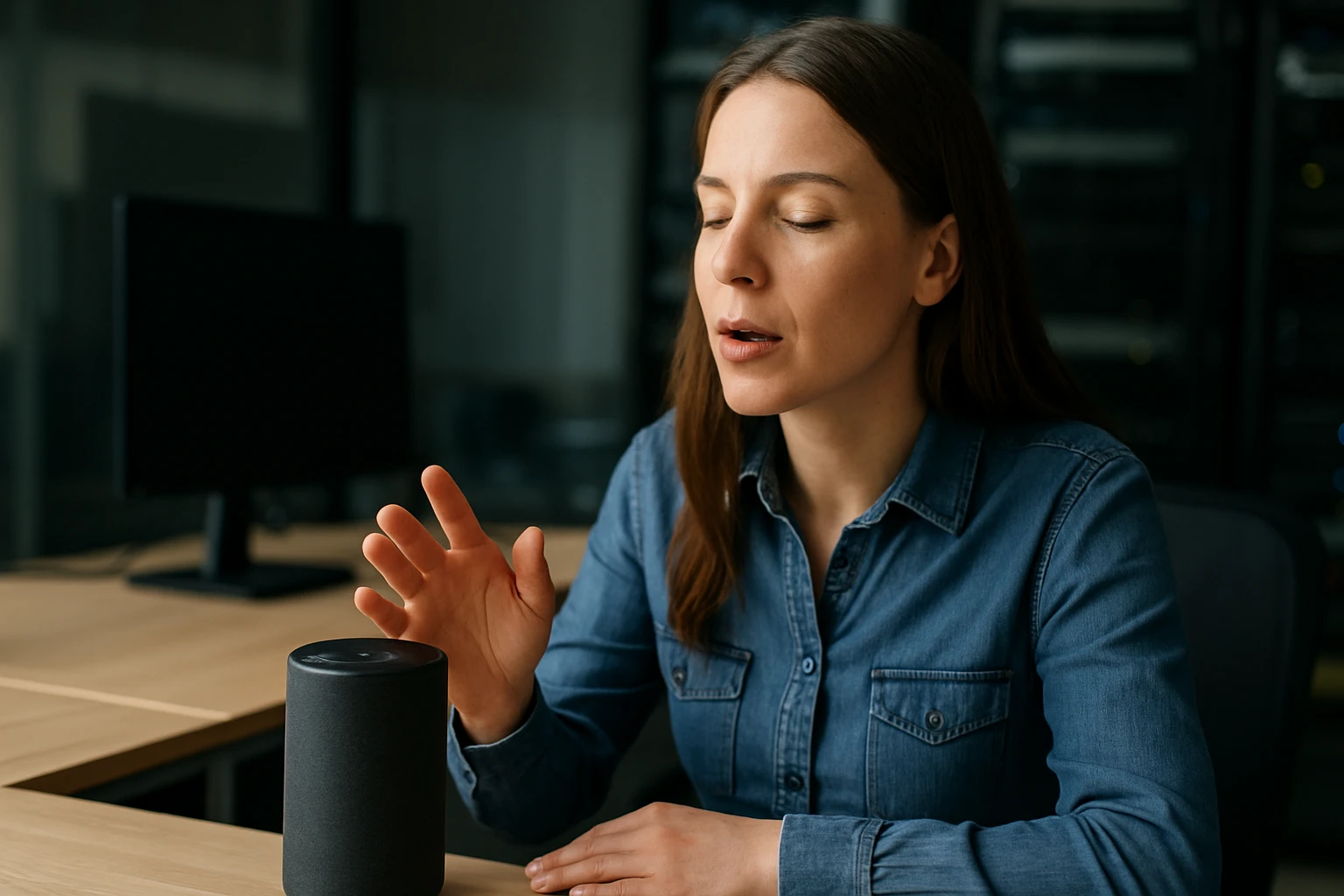
A wake word represents the specific phrase or term that activates voice-enabled devices, serving as the digital equivalent of tapping someone on the shoulder to get their attention. This activation mechanism ensures that virtual assistants remain in a passive listening state until deliberately summoned, balancing convenience with privacy concerns. The concept encompasses far more than simple voice recognition, involving complex algorithms, machine learning models, and sophisticated audio processing techniques that work together to create responsive and reliable voice interfaces.
Throughout this exploration, you'll discover the intricate technical foundations that make wake word detection possible, understand the various types and implementations across different platforms, and learn about the privacy safeguards and customization options available to users. We'll examine real-world applications, troubleshoot common issues, and look ahead to emerging trends that will shape the future of voice-activated technology, providing you with comprehensive knowledge to better understand and utilize these powerful tools in your everyday life.
The Technical Foundation of Wake Word Detection
Wake word detection operates through a sophisticated blend of signal processing, machine learning, and pattern recognition technologies that work continuously in the background of voice-enabled devices. The system begins with always-on microphones that capture ambient audio, feeding it through specialized neural networks trained to recognize specific acoustic patterns. These networks, often called keyword spotting models, are designed to be extremely lightweight and energy-efficient, allowing them to run continuously on device hardware without draining battery life or requiring constant internet connectivity.
The detection process involves multiple layers of analysis, starting with acoustic feature extraction where the system converts raw audio signals into mathematical representations called spectrograms. These visual representations of sound frequencies over time allow the machine learning models to identify distinctive patterns associated with the target wake word. Advanced algorithms then compare these patterns against trained models, calculating confidence scores that determine whether the detected audio matches the expected wake word with sufficient accuracy.
"The challenge lies not just in recognizing the wake word accurately, but in doing so while filtering out millions of other sounds, voices, and acoustic environments that could potentially trigger false activations."
Modern wake word systems employ sophisticated noise reduction and echo cancellation technologies to improve accuracy in challenging acoustic environments. Multiple microphone arrays work together to create directional hearing capabilities, allowing devices to focus on speech from specific directions while suppressing background noise, music, or conversations from other sources. This spatial audio processing significantly enhances the system's ability to distinguish between intentional wake word utterances and incidental speech that might contain similar phonetic patterns.
The training process for wake word models involves exposing neural networks to thousands of hours of diverse speech samples, including variations in accent, speaking speed, emotional tone, and background noise conditions. This extensive training ensures robust performance across different user demographics and environmental conditions, while also incorporating negative examples to reduce false positive activations from similar-sounding words or phrases.
Types and Variations of Wake Words
Wake words can be categorized into several distinct types based on their linguistic structure, cultural adaptation, and intended functionality. Primary wake words represent the default activation phrases that come pre-configured with voice assistant devices, typically chosen for their distinctive phonetic properties and ease of pronunciation across diverse language groups. These words undergo extensive testing to ensure they're unlikely to occur frequently in casual conversation while remaining memorable and natural for users to speak.
Custom wake words offer personalization options that allow users to create their own activation phrases, though this capability varies significantly across different platforms and devices. Some systems support user-defined wake words through voice training processes where individuals repeat their chosen phrase multiple times to create personalized acoustic models. However, custom wake words often face limitations in terms of length, complexity, and phonetic requirements to maintain reliable detection accuracy.
Multilingual wake word systems present unique challenges and opportunities in global markets where users may speak multiple languages or prefer activation phrases in their native tongue. Advanced systems now support language-specific wake words that can coexist on the same device, automatically detecting and responding to activation phrases in different languages without requiring manual switching between language modes.
| Wake Word Type | Characteristics | Examples | Advantages | Limitations |
|---|---|---|---|---|
| Single Word | Short, distinctive | "Alexa," "Siri" | Fast recognition, low false positives | Limited personalization |
| Phrase-based | Multi-word combinations | "Hey Google," "OK Google" | More natural, reduced accidental triggers | Longer processing time |
| Custom | User-defined options | Personalized names | High personalization | Requires training, variable accuracy |
| Multilingual | Language-specific variants | Localized versions | Cultural adaptation | Complex implementation |
The phonetic composition of effective wake words follows specific acoustic principles that optimize detection accuracy while minimizing false activations. Successful wake words typically contain a mix of consonants and vowels that create distinctive frequency patterns, avoid common word combinations that might appear in regular speech, and maintain consistent pronunciation across different accents and speaking styles. Research has shown that wake words with certain phonetic characteristics, such as fricative sounds or unique vowel combinations, tend to perform better in noisy environments and across diverse user populations.
Privacy and Security Considerations
Privacy protection in wake word systems represents one of the most critical aspects of voice-enabled technology, as these devices must continuously monitor audio input while maintaining user trust and data security. Modern wake word detection operates primarily through on-device processing, meaning the actual wake word recognition happens locally without transmitting audio data to external servers. This approach ensures that ambient conversations, private discussions, and background audio remain on the device unless the wake word is successfully detected and confirmed.
The concept of local processing extends beyond simple wake word detection to include sophisticated privacy safeguards that prevent unauthorized data collection. Advanced systems employ multiple validation layers, requiring not only wake word detection but also additional confirmation signals such as voice pattern matching or follow-up command recognition before activating full recording and transmission capabilities. These multi-factor authentication approaches significantly reduce the risk of accidental activations that might inadvertently capture private conversations.
"Privacy by design means that wake word systems should collect the minimum amount of data necessary to function effectively, while providing users with complete transparency and control over their voice interactions."
Data encryption plays a crucial role in protecting voice interactions even when audio transmission becomes necessary for processing complex queries. End-to-end encryption ensures that voice commands and responses remain secure during transmission between devices and cloud services, while advanced anonymization techniques remove personally identifiable information from voice data used for system improvements. Many platforms now offer voice data deletion options, allowing users to remove their voice recordings and associated data from company servers.
Transparency features have become increasingly important as users demand greater visibility into how their voice data is collected, processed, and stored. Modern voice assistant platforms provide detailed activity logs, voice recording playback capabilities, and granular privacy controls that allow users to customize their data sharing preferences. These tools enable users to review their voice interactions, delete specific recordings, and opt out of data collection programs while maintaining full functionality of their voice-enabled devices.
Implementation Across Different Platforms
The implementation of wake word technology varies significantly across different technology platforms, each bringing unique approaches, capabilities, and limitations to voice activation systems. Smart speakers represent the most common implementation, featuring dedicated hardware optimized for continuous audio monitoring and processing. These devices typically include multiple microphones arranged in circular arrays, specialized audio processing chips, and sufficient computational power to handle complex wake word detection algorithms while maintaining always-on functionality.
Mobile devices face distinct challenges in wake word implementation due to battery life constraints, varying hardware capabilities, and the need to balance voice functionality with other system demands. Smartphone implementations often rely on low-power digital signal processors (DSPs) or dedicated neural processing units (NPUs) that can handle wake word detection without significantly impacting battery performance. These systems frequently employ adaptive processing that adjusts sensitivity and functionality based on device usage patterns, charging status, and user preferences.
Automotive integration presents unique requirements for wake word systems, including the need to function effectively in high-noise environments, integrate with existing vehicle systems, and maintain safety standards that prevent driver distraction. Car-based implementations often feature enhanced noise cancellation, directional microphone arrays positioned throughout the vehicle cabin, and specialized acoustic modeling trained on automotive audio environments.
The emergence of edge computing has enabled wake word functionality in increasingly diverse device categories, from smart home appliances to wearable technology. These implementations must balance functionality with severe resource constraints, leading to innovative approaches such as cascaded detection systems that use simple pattern matching for initial screening followed by more sophisticated analysis only when potential wake words are detected.
| Platform Category | Hardware Requirements | Power Consumption | Accuracy Expectations | Typical Use Cases |
|---|---|---|---|---|
| Smart Speakers | Multi-mic arrays, dedicated DSP | 2-5 watts continuous | 95-99% accuracy | Home automation, entertainment |
| Mobile Devices | Single/dual mic, NPU/DSP | <100mW standby | 90-95% accuracy | Personal assistance, quick commands |
| Automotive | Distributed mic system | 5-10 watts | 85-95% accuracy | Navigation, communication, climate |
| IoT Devices | Single mic, basic processor | <50mW standby | 80-90% accuracy | Simple commands, device control |
| Wearables | Miniature mic, ultra-low power | <10mW standby | 75-85% accuracy | Fitness tracking, notifications |
Customization and User Experience
Customization options for wake word systems have evolved from basic sensitivity adjustments to sophisticated personalization features that adapt to individual user preferences, speech patterns, and environmental conditions. Voice training represents one of the most effective customization approaches, allowing systems to learn and adapt to specific user voices, accents, and speaking styles through repeated interactions and feedback mechanisms. This personalization process typically involves users speaking the wake word multiple times under different conditions, enabling the system to build robust acoustic models that improve recognition accuracy over time.
Advanced customization features include sensitivity adjustment controls that allow users to fine-tune how readily their devices respond to potential wake word utterances. Higher sensitivity settings increase responsiveness but may lead to more false activations, while lower sensitivity reduces unwanted triggers but might require users to speak more clearly or loudly. Modern systems often provide automatic sensitivity adjustment based on environmental noise levels, time of day, and historical usage patterns.
"The best wake word systems learn from their users, continuously improving accuracy and responsiveness while respecting individual preferences and usage patterns."
Environmental adaptation represents another crucial aspect of wake word customization, with systems capable of adjusting their behavior based on acoustic conditions, background noise levels, and typical usage scenarios. Some platforms offer location-based profiles that automatically switch between different sensitivity settings when users move between home, office, or mobile environments. These adaptive systems can recognize patterns such as typical speaking distances, ambient noise characteristics, and preferred interaction styles for different contexts.
Multi-user support has become increasingly important as voice-enabled devices serve entire households or shared spaces. Advanced systems can distinguish between different users' voices, maintaining separate customization profiles, preferences, and access permissions for each individual. This capability enables personalized responses, individualized privacy settings, and user-specific device access controls while maintaining the convenience of shared voice activation.
Common Issues and Troubleshooting
False activation represents one of the most frequently encountered issues with wake word systems, occurring when devices incorrectly interpret background speech, television audio, or environmental sounds as valid wake word utterances. These unwanted activations can result from acoustic similarities between the wake word and common phrases, inadequate noise filtering, or overly sensitive detection thresholds. Systematic troubleshooting begins with identifying patterns in false activations, such as specific times of day, audio sources, or environmental conditions that consistently trigger unwanted responses.
Environmental factors significantly impact wake word detection accuracy, with challenges ranging from excessive background noise to acoustic reflections in large or echo-prone spaces. Hard surfaces, multiple speakers, and competing audio sources can create complex acoustic environments that confuse detection algorithms. Solutions often involve strategic device placement, acoustic treatment of problematic spaces, or adjustment of sensitivity settings to better match environmental conditions.
"Understanding the acoustic environment where your voice assistant operates is key to optimizing its performance and minimizing frustrating misinterpretations."
Hardware-related issues can manifest as inconsistent wake word detection, requiring systematic diagnosis of microphone functionality, processing capabilities, and connectivity status. Dust accumulation on microphone ports, physical damage to audio components, or software conflicts can all impact detection performance. Regular maintenance, including cleaning microphone openings and ensuring firmware updates, helps maintain optimal functionality.
Network connectivity problems can affect wake word systems that rely on cloud processing for advanced features or updates to detection models. While basic wake word detection typically occurs locally, many systems depend on internet connectivity for learning improvements, voice profile updates, and access to enhanced recognition capabilities. Troubleshooting network-related issues involves verifying connection stability, checking bandwidth availability, and ensuring proper firewall configurations.
User behavior adaptation plays a crucial role in optimizing wake word performance, with factors such as speaking distance, voice volume, and pronunciation consistency all affecting detection accuracy. Training users to speak clearly, maintain appropriate distances from devices, and understand the limitations of voice recognition technology can significantly improve overall system performance and user satisfaction.
Future Trends and Developments
The evolution of wake word technology is rapidly advancing toward more sophisticated, context-aware systems that promise to revolutionize human-computer interaction through voice interfaces. Artificial intelligence integration is driving the development of wake word systems that can understand context, emotion, and intent beyond simple keyword recognition. These advanced systems will incorporate natural language understanding, sentiment analysis, and behavioral prediction to create more intuitive and responsive voice interactions.
Edge computing advancements are enabling more powerful on-device processing capabilities, reducing latency and improving privacy protection while expanding the complexity of tasks that can be handled locally. Future wake word systems will leverage specialized AI chips, neuromorphic processors, and quantum computing elements to provide real-time processing of increasingly sophisticated voice commands without requiring cloud connectivity.
"The future of wake word technology lies not just in better recognition, but in creating truly conversational interfaces that understand context, emotion, and human intent."
Multimodal integration represents another significant trend, with wake word systems beginning to incorporate visual, gesture, and biometric inputs alongside voice commands. These hybrid systems will enable more natural and flexible interaction methods, allowing users to combine voice activation with facial recognition, hand gestures, or eye tracking for enhanced security and functionality. This convergence of input methods will create more accessible and inclusive interfaces for users with different abilities and preferences.
The development of universal wake word protocols aims to standardize voice activation across different platforms and devices, potentially allowing users to employ consistent wake words regardless of manufacturer or ecosystem. This standardization could simplify user experience while promoting interoperability between different voice-enabled devices and services, creating more seamless smart home and workplace environments.
Personalization technologies are advancing toward systems that can adapt to individual users' speech patterns, preferences, and contexts with minimal explicit training. Machine learning algorithms will automatically adjust to users' voices, environmental conditions, and usage patterns, creating highly personalized voice interaction experiences that improve continuously through use.
Real-World Applications and Use Cases
Wake word technology has found extensive application across diverse industries and use cases, transforming how people interact with technology in both personal and professional environments. Smart home automation represents one of the most visible applications, where wake words enable hands-free control of lighting, climate systems, security devices, and entertainment systems. These implementations often support multiple wake words for different family members or functional areas, allowing for personalized automation routines and access controls.
Healthcare applications leverage wake word technology to enable hands-free documentation, patient monitoring, and medical device control in sterile environments where touch interfaces may be impractical or unsafe. Medical professionals can use voice commands to update patient records, request diagnostic information, or control medical equipment without breaking sterile protocols or interrupting patient care procedures. These systems often require enhanced accuracy and specialized medical vocabulary recognition to ensure reliable operation in critical care environments.
Accessibility applications demonstrate the transformative potential of wake word technology for individuals with mobility limitations, visual impairments, or other disabilities that make traditional interfaces challenging to use. Voice activation provides alternative access methods for computer systems, smart devices, and communication tools, enabling greater independence and participation in digital environments. These implementations often feature enhanced customization options and specialized training capabilities to accommodate diverse speech patterns and abilities.
Automotive integration has evolved beyond basic entertainment control to encompass comprehensive vehicle management, navigation assistance, and safety features. Modern automotive wake word systems enable drivers to control climate settings, make phone calls, send messages, and access navigation information while maintaining focus on driving. Advanced implementations can recognize emergency situations, automatically contact emergency services, and provide hands-free access to vehicle diagnostics and maintenance information.
Educational applications utilize wake word technology to create interactive learning environments where students can access information, submit assignments, and participate in educational activities through voice commands. These systems often incorporate language learning features, pronunciation assessment, and adaptive tutoring capabilities that respond to individual learning styles and progress patterns.
"Wake word technology is democratizing access to digital tools and information, breaking down barriers that have traditionally limited how people can interact with technology."
Industrial and manufacturing applications employ wake word systems for hands-free operation documentation, quality control reporting, and safety compliance in environments where workers' hands may be occupied or where traditional interfaces are impractical. These implementations often require robust noise filtering and specialized vocabulary recognition to function effectively in challenging industrial environments.
Technical Challenges and Solutions
The development and deployment of reliable wake word systems face numerous technical challenges that require innovative solutions and continuous refinement. Acoustic variability presents one of the most significant obstacles, as wake word systems must accurately recognize target phrases across diverse accents, speaking styles, emotional states, and environmental conditions. Advanced machine learning approaches now employ data augmentation techniques, multi-accent training datasets, and adaptive learning algorithms that continuously improve recognition accuracy across different user populations.
False positive reduction remains a critical challenge, particularly as wake word systems become more sensitive to accommodate users with quiet voices or challenging acoustic environments. Modern solutions employ multi-stage verification processes, context-aware filtering, and behavioral analysis to distinguish between intentional wake word utterances and incidental speech patterns. These systems analyze factors such as speaking direction, follow-up command patterns, and user behavior history to validate wake word detections.
Power efficiency optimization represents another crucial technical challenge, especially for battery-powered devices that must maintain always-on listening capabilities without significantly impacting device longevity. Innovative approaches include cascaded detection architectures that use simple pattern matching for initial screening followed by more complex analysis only when necessary, adaptive processing that adjusts computational intensity based on environmental conditions, and specialized hardware designs optimized for low-power voice processing.
"The most successful wake word systems balance accuracy, efficiency, and user experience through carefully engineered compromises and innovative technical solutions."
Latency minimization requires careful optimization of processing pipelines to ensure responsive user experiences while maintaining detection accuracy. Solutions include edge computing implementations that process wake words locally, predictive pre-processing that anticipates likely wake word occurrences, and streamlined algorithms that minimize computational overhead without sacrificing performance.
Cross-platform compatibility challenges arise when wake word systems must function across different hardware configurations, operating systems, and network environments. Standardized APIs, modular software architectures, and cloud-based model distribution systems help address these compatibility issues while maintaining consistent user experiences across diverse device ecosystems.
What exactly is a wake word and how does it work?
A wake word is a specific phrase or term that activates voice-enabled devices, functioning as a trigger that signals the device to start listening for commands. The system works through continuous audio monitoring using specialized neural networks that analyze incoming sound for specific acoustic patterns. When these patterns match the trained wake word model with sufficient confidence, the device activates its full voice recognition capabilities and begins processing user commands.
Can I create my own custom wake word?
The ability to create custom wake words varies significantly across different platforms and devices. Some systems support user-defined wake words through voice training processes, while others limit users to pre-selected options. Custom wake words typically require multiple training sessions where you repeat your chosen phrase to create personalized acoustic models. However, custom options often have limitations regarding phrase length, complexity, and phonetic requirements to maintain reliable detection accuracy.
Why does my device sometimes activate without me saying the wake word?
False activations occur when devices incorrectly interpret background speech, television audio, or environmental sounds as valid wake word utterances. This happens due to acoustic similarities between the wake word and common phrases, inadequate noise filtering, or overly sensitive detection settings. You can reduce false activations by adjusting sensitivity settings, improving device placement away from audio sources, and ensuring your device's software is updated with the latest detection algorithms.
Is my privacy protected when using wake word devices?
Modern wake word systems prioritize privacy through on-device processing, meaning wake word detection happens locally without transmitting audio data to external servers. Audio is only sent to cloud services after successful wake word detection and user command initiation. Most platforms offer privacy controls including activity deletion, voice recording management, and data sharing preferences. However, it's important to review and configure privacy settings according to your comfort level.
How accurate are wake word detection systems?
Wake word accuracy varies depending on factors such as device quality, environmental conditions, user speech patterns, and system implementation. High-end smart speakers typically achieve 95-99% accuracy under optimal conditions, while mobile devices and smaller IoT devices may range from 80-95%. Accuracy can be improved through voice training, proper device placement, environmental optimization, and regular software updates.
What should I do if my wake word isn't being recognized consistently?
Inconsistent wake word recognition can be addressed through several troubleshooting steps: ensure your device's microphones are clean and unobstructed, check for software updates, adjust sensitivity settings, retrain your voice profile if available, verify proper device placement away from noise sources, and speak clearly at an appropriate volume and distance. If problems persist, contact device support for hardware diagnostics or replacement options.