

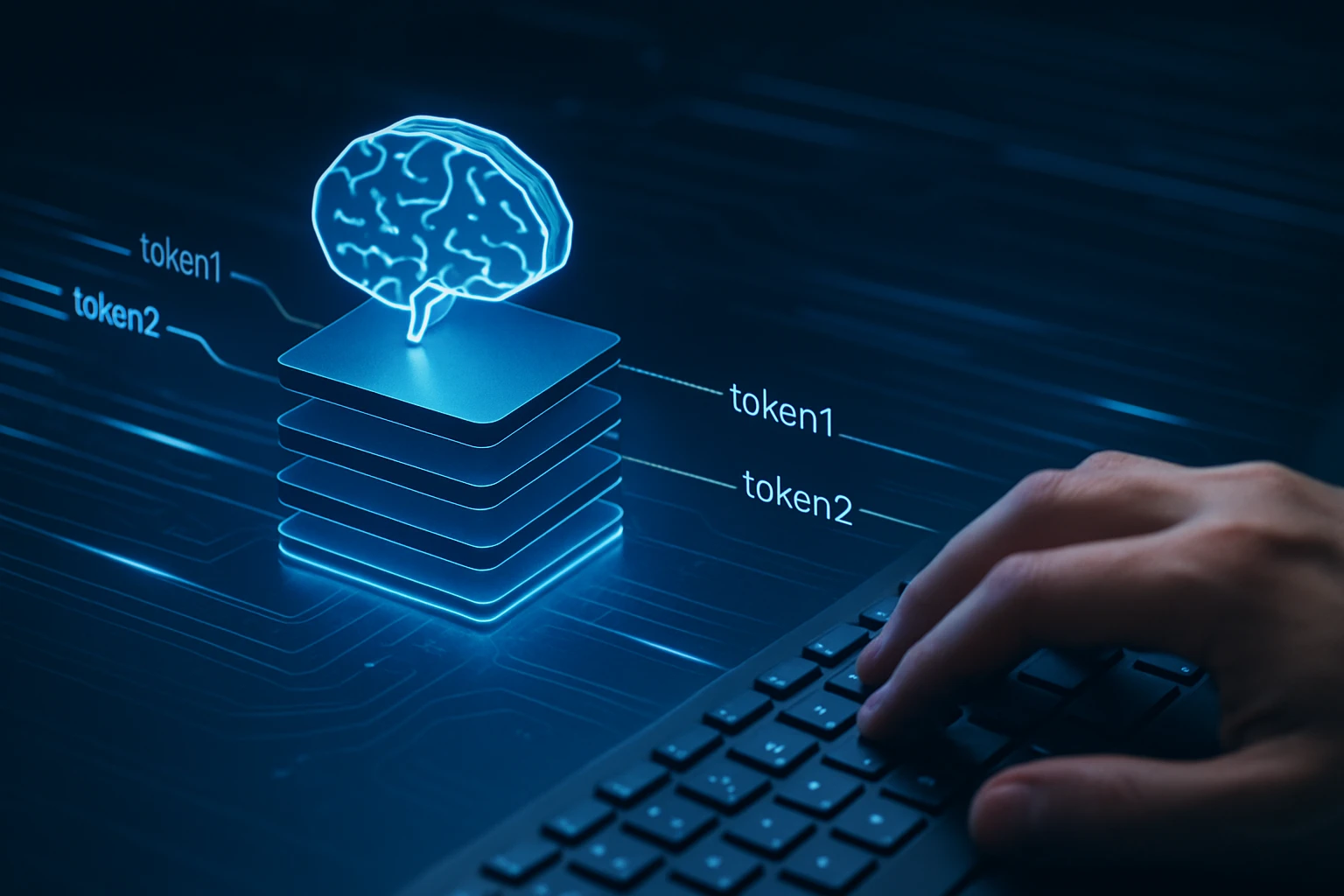
The rapid evolution of artificial intelligence has brought us to a fascinating crossroads where machines can engage in conversations, write poetry, solve complex problems, and even assist in creative endeavors. What captivates me most about large language models is their ability to bridge the gap between human communication and machine understanding, creating a new paradigm where technology feels almost intuitive. These systems represent one of the most significant breakthroughs in computational linguistics and artificial intelligence, fundamentally changing how we interact with digital systems.
Large language models, commonly referred to as LLMs, are sophisticated artificial intelligence systems trained on vast amounts of text data to understand, generate, and manipulate human language. They represent a convergence of advanced machine learning techniques, massive computational power, and unprecedented data processing capabilities. This exploration will examine multiple perspectives on LLMs, from their technical foundations to their societal implications, providing a comprehensive understanding of these remarkable systems.
Through this deep dive, you'll gain insight into the intricate mechanisms that power these AI systems, understand their current capabilities and limitations, and discover how they're reshaping industries and human-computer interaction. Whether you're a technology enthusiast, a business professional, or simply curious about the future of AI, this examination will equip you with the knowledge to navigate our increasingly AI-integrated world with confidence and understanding.
Core Architecture and Technical Foundations
Neural Network Architecture
Large language models are built upon sophisticated neural network architectures, primarily utilizing transformer models that revolutionized natural language processing. These systems employ attention mechanisms that allow them to focus on relevant parts of input text while processing information. The transformer architecture enables parallel processing of sequences, making it significantly more efficient than previous sequential models.
The foundation of modern LLMs lies in their ability to process and understand context through multiple layers of neural networks. Each layer contains numerous neurons that work together to identify patterns, relationships, and semantic meanings within text. These networks are designed to capture both local and global dependencies in language, allowing them to understand how words relate to each other across entire documents.
"The true power of language models lies not in their ability to memorize information, but in their capacity to understand and generate meaningful connections between concepts."
Training Methodologies
The training process for large language models involves multiple phases, each designed to enhance different aspects of language understanding. Pre-training forms the foundation, where models learn from massive datasets containing billions of words from books, articles, websites, and other text sources. This phase teaches the model basic language patterns, grammar, and factual information about the world.
Fine-tuning represents the second crucial phase, where models are refined for specific tasks or domains. This process involves training on smaller, more targeted datasets that align with intended use cases. The fine-tuning process allows models to specialize in particular areas while maintaining their broad language understanding capabilities.
Reinforcement learning from human feedback (RLHF) has emerged as a critical component in modern LLM training. This approach involves human evaluators rating model outputs, which helps align the model's responses with human preferences and values. The feedback loop created through RLHF significantly improves the quality and appropriateness of generated content.
Scale and Parameters
The scale of large language models is truly staggering, with modern systems containing billions or even trillions of parameters. These parameters represent the learned weights and biases that determine how the model processes and generates text. The relationship between model size and performance has generally shown that larger models tend to exhibit better capabilities across various language tasks.
However, the relationship between scale and performance is not purely linear. Researchers have identified specific scaling laws that govern how model capabilities improve with increased parameters, training data, and computational resources. Understanding these scaling relationships helps developers optimize resource allocation and predict future model capabilities.
Fundamental Capabilities and Functions
Language Understanding
Large language models demonstrate remarkable abilities in comprehending human language across multiple dimensions. They can parse complex sentences, understand context-dependent meanings, and interpret nuanced expressions that would challenge traditional rule-based systems. Their understanding extends beyond simple keyword matching to encompass semantic relationships and conceptual connections.
The models excel at tasks requiring reading comprehension, where they must extract information from passages and answer questions based on that content. They can identify main ideas, supporting details, and implicit meanings that require inference. This capability makes them valuable for applications ranging from educational tools to research assistance.
Text Generation
One of the most impressive capabilities of LLMs is their ability to generate coherent, contextually appropriate text across various styles and formats. They can produce everything from technical documentation to creative writing, adapting their tone and style to match specific requirements. The generation process involves predicting the most likely next word or phrase based on the preceding context.
The quality of generated text often rivals human-written content in terms of grammatical correctness and topical relevance. However, the models sometimes struggle with maintaining consistency across very long passages or ensuring factual accuracy without external verification. Understanding these limitations is crucial for effective deployment.
"Language generation is not merely about stringing words together; it's about creating meaning that resonates with human understanding and intent."
Reasoning and Problem-Solving
Modern large language models exhibit surprising capabilities in logical reasoning and problem-solving tasks. They can break down complex problems into smaller components, apply relevant knowledge, and work through multi-step solutions. These abilities emerge from their training on diverse text that includes explanations, tutorials, and problem-solving examples.
The models demonstrate proficiency in various reasoning types, including deductive reasoning, where they draw specific conclusions from general principles, and inductive reasoning, where they identify patterns and make generalizations. They can also engage in analogical reasoning, drawing parallels between different concepts or situations.
Training Data and Learning Processes
Data Sources and Curation
The training datasets for large language models are typically enormous, comprising text from diverse sources across the internet and published materials. These datasets include web pages, books, academic papers, news articles, and reference materials. The diversity of sources helps models develop broad knowledge and understanding across multiple domains.
Data curation presents significant challenges, as training sets must balance comprehensiveness with quality. Researchers employ various filtering techniques to remove low-quality content, duplicate material, and potentially harmful information. The curation process directly impacts model performance and behavior.
| Data Source Type | Contribution to Training | Quality Considerations |
|---|---|---|
| Web Content | Broad coverage, current information | Variable quality, potential misinformation |
| Books and Literature | High-quality writing, narrative structure | Copyright concerns, potential bias |
| Academic Papers | Technical accuracy, specialized knowledge | Limited accessibility, domain-specific |
| News Articles | Current events, factual reporting | Editorial bias, temporal relevance |
| Reference Materials | Factual accuracy, structured information | May lack conversational context |
Learning Mechanisms
Large language models learn through exposure to patterns in text data, developing internal representations of language structure and meaning. The learning process is fundamentally statistical, with models identifying correlations and relationships between words, phrases, and concepts. This statistical approach allows them to generalize from training examples to new, unseen inputs.
The models develop what researchers call "emergent capabilities" – abilities that weren't explicitly programmed but arise from the complex interactions within the neural network. These emergent properties often surprise researchers and can include skills like basic arithmetic, code generation, or creative problem-solving.
Optimization Techniques
Training large language models requires sophisticated optimization techniques to manage the enormous computational requirements. Gradient descent algorithms are used to iteratively adjust model parameters based on prediction errors. Advanced techniques like gradient clipping and learning rate scheduling help ensure stable training across billions of parameters.
Distributed training across multiple computing systems is essential for managing the scale of modern LLMs. This involves coordinating training across hundreds or thousands of processing units, requiring careful synchronization and communication protocols. The optimization process must balance training speed with model quality and stability.
Applications Across Industries
Content Creation and Marketing
Large language models have revolutionized content creation across industries, enabling rapid generation of marketing copy, blog posts, product descriptions, and social media content. They can adapt writing style to match brand voices and target specific audiences. Marketing teams leverage these capabilities to scale content production while maintaining consistency and quality.
The models excel at creating variations of existing content, allowing marketers to test different approaches and optimize messaging. They can generate headlines, email subject lines, and ad copy that resonates with specific demographic groups. However, human oversight remains essential to ensure brand alignment and factual accuracy.
Education and Training
Educational institutions and training organizations increasingly utilize large language models to create personalized learning experiences. These systems can generate practice questions, provide explanations tailored to individual learning styles, and offer interactive tutoring support. They adapt to student needs and can explain complex concepts in multiple ways.
Language learning applications particularly benefit from LLM capabilities, as these models can engage in conversational practice, correct grammar mistakes, and provide cultural context for language usage. They offer unlimited patience and can adjust difficulty levels based on learner progress.
"The democratization of knowledge through AI-powered educational tools has the potential to transform learning opportunities for millions worldwide."
Healthcare and Research
In healthcare, large language models assist with medical documentation, research literature review, and patient communication support. They can help healthcare providers draft clinical notes, summarize patient histories, and identify relevant research findings. However, their use in medical contexts requires careful validation and human oversight due to the critical nature of healthcare decisions.
Research applications include literature synthesis, hypothesis generation, and experimental design assistance. Models can quickly process vast amounts of scientific literature and identify connections that might escape human researchers. They serve as powerful tools for accelerating scientific discovery while maintaining human expertise in critical evaluation.
Software Development
The software development industry has embraced large language models as coding assistants that can generate code, debug programs, and explain complex algorithms. These tools help developers write more efficient code, learn new programming languages, and solve technical challenges. They can translate between programming languages and suggest optimizations.
Code generation capabilities extend beyond simple function writing to include entire application frameworks and architectural suggestions. However, developers must carefully review generated code for security vulnerabilities, efficiency issues, and alignment with project requirements.
Technical Limitations and Challenges
Hallucination and Accuracy Issues
One of the most significant challenges facing large language models is their tendency to generate plausible-sounding but factually incorrect information, a phenomenon known as "hallucination." This occurs because models are trained to produce coherent text based on patterns rather than verified facts. They may confidently present false information that sounds authoritative.
The hallucination problem is particularly concerning in applications requiring high accuracy, such as medical advice, legal guidance, or scientific information. Users must develop critical evaluation skills and implement verification processes when relying on LLM-generated content for important decisions.
Bias and Fairness Concerns
Large language models inherit biases present in their training data, which can lead to unfair or discriminatory outputs. These biases may relate to gender, race, religion, political views, or other sensitive categories. The models can perpetuate stereotypes or exhibit preferences that don't reflect diverse perspectives.
Addressing bias requires ongoing effort in data curation, model training, and output monitoring. Researchers are developing techniques to measure and mitigate bias, but completely eliminating these issues remains an active area of research. Organizations deploying LLMs must implement monitoring systems and bias testing protocols.
Computational Requirements
The computational resources required to train and operate large language models are enormous, presenting both economic and environmental challenges. Training state-of-the-art models can cost millions of dollars in computing resources and consume significant amounts of electricity. This creates barriers to entry and raises sustainability concerns.
Inference costs, while lower than training costs, still represent significant ongoing expenses for organizations deploying LLMs at scale. The energy consumption associated with running these models has prompted research into more efficient architectures and optimization techniques.
"The environmental impact of artificial intelligence development requires us to balance technological advancement with sustainable practices."
Ethical Considerations and Societal Impact
Privacy and Data Security
Large language models raise important privacy concerns related to the data used in training and the information they may inadvertently memorize. Training datasets often contain personal information scraped from the internet, potentially including private communications, personal details, or sensitive documents. Models might reproduce this information in their outputs.
Organizations must implement robust data governance practices when deploying LLMs, ensuring compliance with privacy regulations and protecting user information. This includes careful consideration of what data is processed, how it's stored, and what information might be retained by the model.
Impact on Employment
The capabilities of large language models have sparked discussions about their potential impact on employment across various sectors. Jobs involving content creation, customer service, basic analysis, and routine communication tasks may be particularly affected. However, the technology also creates new opportunities in AI development, model management, and human-AI collaboration.
The transition requires thoughtful consideration of retraining programs, job redesign, and social support systems. Rather than simple replacement, many applications involve human-AI collaboration where models augment human capabilities rather than replacing them entirely.
Misinformation and Manipulation
The ability of large language models to generate convincing text raises concerns about their potential misuse for creating misinformation, propaganda, or deceptive content. Bad actors might use these tools to generate fake news, manipulate public opinion, or create convincing but false documents.
Combating misuse requires a combination of technical solutions, policy frameworks, and public education. Detection tools are being developed to identify AI-generated content, while platform policies and regulations aim to prevent harmful applications.
Future Developments and Emerging Trends
Multimodal Capabilities
The next generation of large language models increasingly incorporates multimodal capabilities, allowing them to process and generate not just text but also images, audio, and video. These systems can understand visual content, generate images from text descriptions, and engage in more natural human-computer interactions.
Multimodal models open new application possibilities, from visual content creation to enhanced accessibility tools. They can describe images for visually impaired users, generate illustrations for written content, and provide more intuitive interfaces for complex software systems.
Specialized Domain Models
While general-purpose large language models demonstrate broad capabilities, there's growing interest in developing specialized models for specific domains. These focused systems can achieve superior performance in areas like medicine, law, science, or finance by training on domain-specific datasets and incorporating specialized knowledge.
Domain-specific models often require smaller computational resources while delivering better results for targeted applications. They can incorporate industry-specific terminology, regulatory requirements, and specialized reasoning patterns that general models might miss.
| Specialization Area | Key Advantages | Current Applications | Future Potential |
|---|---|---|---|
| Medical | Clinical accuracy, terminology | Diagnosis support, documentation | Personalized treatment planning |
| Legal | Regulatory compliance, precedent | Document analysis, research | Automated legal reasoning |
| Scientific | Domain expertise, precision | Literature review, hypothesis | Experimental design optimization |
| Financial | Risk assessment, compliance | Analysis, reporting | Algorithmic trading enhancement |
Improved Efficiency and Accessibility
Research continues into making large language models more efficient and accessible. Techniques like model compression, quantization, and knowledge distillation aim to reduce computational requirements while maintaining performance. These advances could democratize access to advanced AI capabilities.
Edge computing implementations allow models to run on local devices, reducing latency and privacy concerns. Smaller, more efficient models enable deployment on mobile devices and in resource-constrained environments, expanding the potential applications and user base.
"The democratization of AI technology through improved efficiency will unlock innovations we haven't yet imagined."
Integration Strategies and Best Practices
Implementation Considerations
Successfully integrating large language models into existing systems requires careful planning and consideration of various factors. Organizations must evaluate their specific use cases, technical infrastructure, and resource constraints when selecting and deploying LLM solutions. The integration process often involves API selection, custom fine-tuning, and workflow redesign.
Security considerations play a crucial role in implementation planning. Organizations must assess data flow, access controls, and potential vulnerabilities introduced by LLM integration. This includes evaluating third-party services, data transmission security, and output validation mechanisms.
Quality Assurance and Monitoring
Maintaining quality and reliability in LLM-powered applications requires robust monitoring and evaluation systems. Organizations should implement automated testing frameworks that assess output quality, accuracy, and appropriateness. Regular audits help identify drift in model performance or emerging bias issues.
Human oversight remains essential, particularly for high-stakes applications. Establishing clear review processes, escalation procedures, and feedback loops ensures that AI-generated content meets organizational standards and user expectations. Quality metrics should be defined and tracked consistently.
User Experience Design
Designing effective user experiences for LLM-powered applications requires understanding both the technology's capabilities and user expectations. Interfaces should clearly communicate the AI's role, limitations, and confidence levels. Users need guidance on how to interact effectively with these systems.
Transparency features help build user trust and enable more effective collaboration between humans and AI. This includes explaining how the system works, what data it uses, and how confident it is in its responses. Clear error handling and graceful degradation improve the overall user experience.
Measuring Performance and Effectiveness
Evaluation Metrics
Assessing large language model performance requires comprehensive evaluation across multiple dimensions. Traditional metrics like perplexity and BLEU scores provide baseline measurements, but they don't capture the full range of capabilities and limitations. Modern evaluation frameworks incorporate human judgment, task-specific metrics, and real-world performance indicators.
Benchmark datasets help standardize evaluation across different models and research groups. These benchmarks test various capabilities including reading comprehension, logical reasoning, factual knowledge, and creative generation. However, benchmark performance doesn't always translate directly to real-world effectiveness.
Continuous Improvement Processes
Large language models benefit from continuous improvement processes that incorporate user feedback, performance monitoring, and iterative refinement. Organizations should establish feedback collection mechanisms, analyze usage patterns, and identify areas for enhancement. This ongoing optimization helps models better serve their intended purposes.
Version management becomes crucial as models are updated and improved. Organizations need strategies for deploying model updates while maintaining service continuity and managing potential changes in behavior. Testing procedures should validate improvements while checking for unintended consequences.
"Continuous improvement in AI systems requires a delicate balance between innovation and stability, ensuring progress without compromising reliability."
Security and Risk Management
Threat Assessment
Large language models introduce new security considerations that organizations must address. Potential threats include prompt injection attacks, where malicious users attempt to manipulate model behavior through crafted inputs. Data poisoning during training or fine-tuning represents another significant risk vector.
Model theft and intellectual property concerns arise when proprietary models are deployed in accessible environments. Organizations must balance functionality with security, implementing appropriate access controls and monitoring systems to detect suspicious activity.
Mitigation Strategies
Effective risk mitigation requires layered security approaches combining technical controls, policy frameworks, and user education. Input validation and sanitization help prevent malicious prompts from affecting model behavior. Output filtering can catch potentially harmful or inappropriate responses before they reach users.
Access controls and authentication systems ensure that only authorized users can interact with models, particularly for sensitive applications. Regular security audits and penetration testing help identify vulnerabilities before they can be exploited by malicious actors.
What exactly is a large language model?
A large language model is an artificial intelligence system trained on vast amounts of text data to understand, generate, and manipulate human language. These models use neural networks with millions or billions of parameters to process and generate text that closely resembles human communication.
How do large language models learn?
Large language models learn through a process called training, where they analyze patterns in massive datasets containing text from books, websites, articles, and other sources. They use statistical methods to understand relationships between words and concepts, developing the ability to predict and generate appropriate text responses.
What are the main applications of large language models?
Common applications include content creation, customer service chatbots, code generation, language translation, educational tools, research assistance, and creative writing. They're used across industries including technology, healthcare, education, marketing, and finance.
What are the limitations of large language models?
Key limitations include potential for generating false information (hallucination), inheriting biases from training data, high computational requirements, inability to access real-time information, and occasional inconsistency in responses. They also lack true understanding and rely on pattern recognition.
How accurate are large language models?
Accuracy varies significantly depending on the task and domain. While models excel at language-related tasks and general knowledge questions, they can produce convincing but incorrect information. Users should verify important information and understand that these models generate responses based on patterns rather than verified facts.
What ethical concerns surround large language models?
Major ethical concerns include potential bias in outputs, privacy issues related to training data, environmental impact from computational requirements, job displacement effects, potential for misuse in creating misinformation, and questions about intellectual property and content ownership.
How much do large language models cost to run?
Costs vary widely based on model size, usage volume, and implementation method. Training large models can cost millions of dollars, while inference costs depend on the number of requests and model complexity. Many organizations use cloud-based APIs to access models without bearing full infrastructure costs.
Can large language models replace human workers?
While large language models can automate certain tasks, they typically augment rather than completely replace human workers. They excel at routine text-based tasks but require human oversight for quality control, strategic decision-making, and complex problem-solving. The impact varies by industry and specific job functions.