
The devastating images of communities torn apart by natural disasters have always stirred something deep within me – the urgent need to understand how our nation responds when crisis strikes. Having witnessed the aftermath of hurricanes, wildfires, and floods through news coverage and personal accounts, I've become fascinated by the complex machinery that springs into action during America's darkest hours. The coordination required to save lives, restore infrastructure, and rebuild communities represents one of the most challenging aspects of modern governance.
The Federal Emergency Management Agency stands as the cornerstone of America's disaster response system, serving as both coordinator and catalyst for recovery efforts across the nation. This examination promises to unveil multiple perspectives on how FEMA operates, from its bureaucratic structure to its ground-level impact, revealing both remarkable successes and notable shortcomings that have shaped public perception over decades.
Through this exploration, you'll gain comprehensive insight into FEMA's multifaceted operations, understand the intricate web of responsibilities that define modern emergency management, and discover how this federal agency continues to evolve in response to increasingly complex disaster scenarios. Whether you're a concerned citizen, emergency management professional, or simply curious about how government responds to crisis, this deep dive will illuminate the critical mechanisms that protect American communities when nature unleashes its fury.
Origins and Evolution of Federal Emergency Management
Emergency management in the United States emerged from a patchwork of responses to various crises throughout the 20th century. Before FEMA's establishment, disaster response involved multiple federal agencies with overlapping jurisdictions and conflicting priorities. The Civil Defense Act of 1950 marked an early attempt to centralize emergency preparedness, primarily focused on potential nuclear attacks during the Cold War era.
The 1970s brought significant changes as natural disasters increasingly strained existing response mechanisms. President Jimmy Carter recognized the need for streamlined emergency management and issued Executive Order 12127 in 1979, officially creating FEMA. This consolidation brought together functions from the Defense Civil Preparedness Agency, Federal Disaster Assistance Administration, Federal Preparedness Agency, and several other organizations.
"The complexity of modern disasters demands coordination that transcends traditional bureaucratic boundaries, requiring seamless integration of federal, state, and local resources."
FEMA's early years focused heavily on civil defense and nuclear preparedness, reflecting Cold War anxieties. However, the agency gradually shifted toward all-hazards emergency management as natural disasters proved more frequent and devastating than anticipated nuclear conflicts. This transition wasn't smooth, with the agency struggling to balance competing priorities and establish clear operational procedures.
The 1988 Robert T. Stafford Disaster Relief and Emergency Assistance Act provided FEMA with enhanced legal authority and clearer guidelines for federal disaster response. This legislation established the framework for presidential disaster declarations and defined the roles of federal, state, and local governments in emergency management. The Stafford Act remains the primary legal foundation for FEMA's operations today.
Organizational Structure and Leadership Framework
FEMA operates under the Department of Homeland Security, having transferred from independent agency status following the September 11, 2001 attacks. The Administrator, appointed by the President and confirmed by the Senate, leads the organization with support from deputy administrators overseeing specific operational areas. Regional administrators manage ten geographic regions, each responsible for coordinating emergency management activities within their designated states and territories.
The agency's structure reflects the four phases of emergency management: mitigation, preparedness, response, and recovery. Each phase requires specialized expertise and resources, leading to distinct operational divisions within FEMA. The Office of Response and Recovery handles immediate disaster response and long-term recovery operations, while the Federal Insurance and Mitigation Administration focuses on reducing future disaster risks.
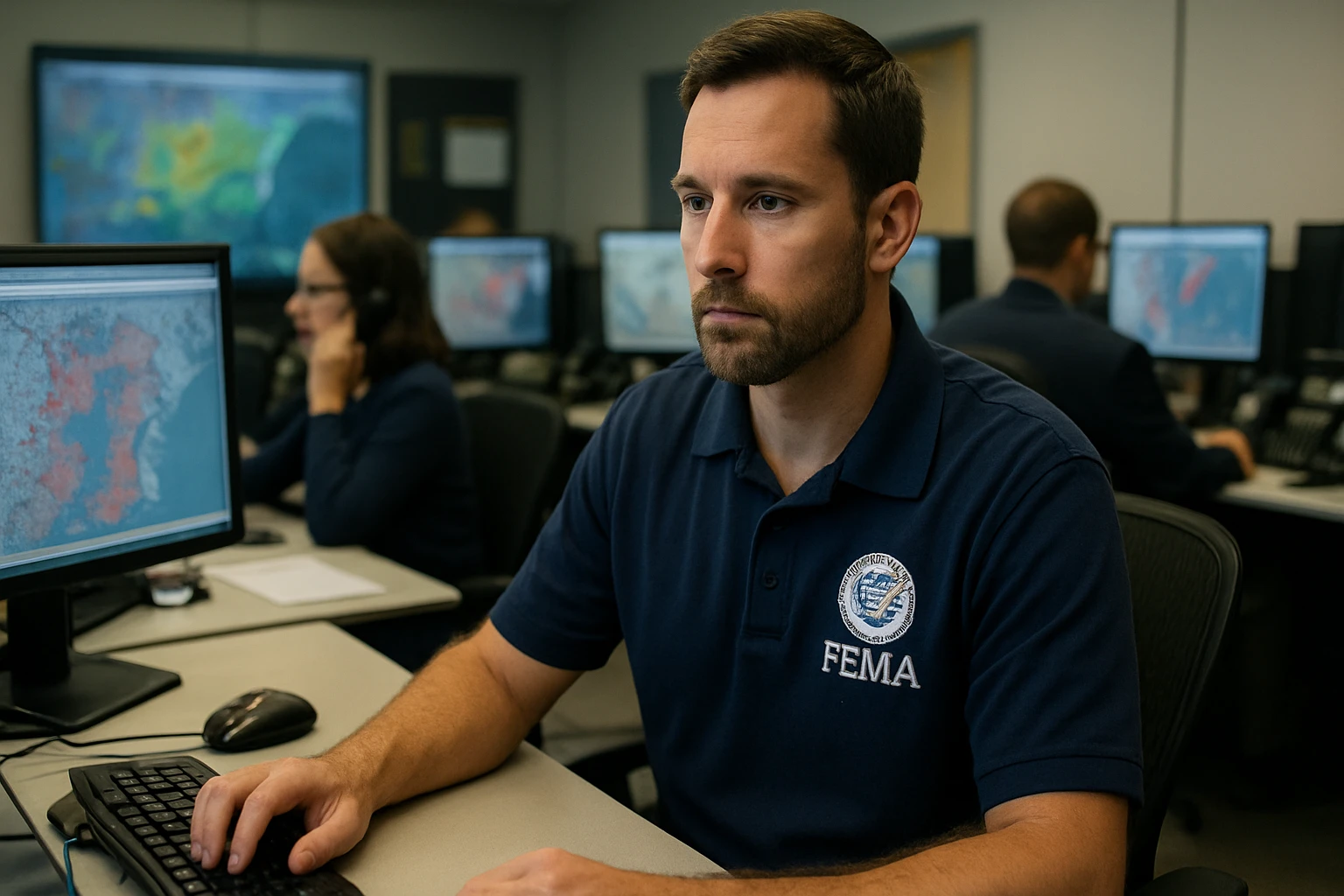
Key operational components include the National Response Coordination Center, which serves as the primary hub for coordinating federal response activities. Regional Response Coordination Centers provide localized command and control capabilities, ensuring rapid deployment of resources where needed most. These facilities maintain constant communication with state and local emergency operations centers, creating an integrated response network.
FEMA's workforce combines federal employees, contractors, and reservists who can be rapidly deployed during major disasters. The Disaster Assistance Employee program allows the agency to quickly scale up personnel during large-scale emergencies. This flexible staffing model enables FEMA to maintain core capabilities while surging capacity when disasters strike.
Core Responsibilities and Mission Areas
FEMA's primary mission encompasses four critical phases of emergency management, each requiring distinct approaches and resources. Mitigation efforts focus on reducing disaster risks before they occur through building codes, floodplain management, and community education programs. These proactive measures often provide the highest return on investment, preventing far greater costs in response and recovery phases.
Preparedness activities ensure communities and individuals are ready to respond effectively when disasters strike. FEMA develops emergency plans, conducts training exercises, and maintains stockpiles of critical supplies. The agency also administers grant programs that help state and local governments enhance their emergency management capabilities. Public education campaigns promote individual preparedness, encouraging citizens to develop family emergency plans and maintain disaster supply kits.
Response operations activate immediately when disasters occur, coordinating federal resources to support state and local authorities. FEMA deploys incident management teams, search and rescue specialists, and emergency supplies to affected areas. The agency also coordinates with other federal departments, ensuring military assets, medical resources, and transportation capabilities are available when needed. Communication systems enable real-time coordination between all levels of government and private sector partners.
"Effective emergency management requires building resilience before disaster strikes, not just responding after damage occurs."
Recovery efforts begin during the response phase and continue long after immediate dangers pass. FEMA provides financial assistance to individuals, families, and communities affected by disasters. Public assistance programs help repair damaged infrastructure, while individual assistance programs support housing, medical expenses, and other disaster-related needs. Long-term recovery planning helps communities rebuild stronger and more resilient than before.
Disaster Response Mechanisms and Protocols
When disasters threaten or occur, FEMA activates a carefully orchestrated response system designed to provide rapid, coordinated assistance. The process begins with monitoring and assessment, using weather forecasting, geological surveys, and intelligence gathering to identify potential threats. Early warning systems alert communities to imminent dangers, providing crucial time for evacuation and protective actions.
The Incident Command System provides the organizational framework for managing disaster response operations. This standardized approach ensures all responding agencies can work together effectively, regardless of their normal organizational structures. Unified command structures bring together federal, state, local, and tribal authorities under a single operational framework, eliminating confusion and duplication of efforts.
Resource deployment follows established protocols that prioritize life safety, incident stabilization, and property protection. FEMA maintains pre-positioned supplies at strategic locations across the country, enabling rapid deployment to disaster areas. The agency also has contracts with private companies for additional resources, including transportation, communications equipment, and emergency supplies.
Emergency Support Functions organize federal response capabilities into fifteen functional areas, each led by a primary agency with specific expertise. These functions cover transportation, communications, public works, firefighting, information planning, mass care, logistics, public health, search and rescue, hazardous materials, agriculture, energy, public safety, long-term recovery, and external affairs. This structure ensures comprehensive response capabilities while maintaining clear lines of authority and responsibility.
| Emergency Support Function | Primary Agency | Key Responsibilities |
|---|---|---|
| ESF-1 Transportation | Department of Transportation | Aviation, highway, rail, water transportation |
| ESF-3 Public Works | U.S. Army Corps of Engineers | Infrastructure protection and restoration |
| ESF-5 Information and Planning | FEMA | Information collection, planning, resource tracking |
| ESF-6 Mass Care | American Red Cross | Sheltering, feeding, emergency assistance |
| ESF-8 Public Health | Department of Health and Human Services | Medical care, behavioral health, public health |
Financial Assistance Programs and Funding Mechanisms
FEMA administers numerous financial assistance programs designed to help individuals, families, and communities recover from disasters. Individual Assistance programs provide direct support to disaster survivors, including temporary housing assistance, repair grants, and replacement assistance for destroyed homes. These programs require presidential disaster declarations and are available only when damage exceeds local and state capabilities.
Public Assistance programs help state, local, tribal, and territorial governments repair damaged infrastructure and facilities. This category includes emergency work such as debris removal and life safety measures, as well as permanent work to repair or replace damaged public facilities. The federal cost share typically covers 75% of eligible costs, with state and local governments responsible for the remaining 25%.
Hazard Mitigation Grant Programs provide funding for long-term risk reduction measures following presidential disaster declarations. These grants support projects that reduce future disaster risks, such as elevating flood-prone structures, retrofitting buildings for earthquakes, or acquiring properties in high-risk areas. The program requires benefit-cost analysis to ensure projects provide value for taxpayers.
"Investment in mitigation today prevents much larger costs tomorrow, making communities safer and more resilient for generations to come."
The National Flood Insurance Program represents FEMA's largest ongoing financial responsibility, providing flood insurance coverage to property owners in participating communities. This program fills a critical gap left by private insurance markets, which typically exclude flood coverage from standard homeowners policies. Premium collections and federal appropriations fund the program, though major flood events sometimes require additional congressional funding.
Pre-disaster mitigation programs provide funding for risk reduction activities before disasters occur. These competitive grant programs support state and local mitigation planning, implementation of mitigation projects, and development of mitigation capabilities. The Building Resilient Infrastructure and Communities program represents the latest evolution of these efforts, emphasizing innovative approaches to disaster risk reduction.
Coordination with State and Local Authorities
FEMA operates within a complex intergovernmental system that recognizes state and local authorities as the primary responders to most disasters. The principle of federalism requires FEMA to support, not supplant, state and local efforts. This relationship demands careful coordination and clear communication to ensure effective response while respecting jurisdictional boundaries and local autonomy.
State emergency management agencies serve as FEMA's primary partners, coordinating federal assistance requests and managing state-level response activities. These agencies maintain emergency operations centers, develop state emergency plans, and administer federal grant programs within their jurisdictions. Strong state emergency management capabilities enhance overall national resilience and ensure more effective federal support when needed.
Local emergency managers represent the front lines of disaster response, possessing intimate knowledge of community vulnerabilities and resources. FEMA supports local capabilities through training programs, technical assistance, and direct financial support. The agency recognizes that local responders typically arrive first and remain longest during disaster operations, making their capabilities crucial to overall success.
Tribal nations maintain unique government-to-government relationships with the federal government, requiring specialized coordination approaches. FEMA has developed specific policies and procedures for working with tribal governments, recognizing their sovereignty while ensuring access to federal disaster assistance. These relationships require cultural sensitivity and understanding of tribal governance structures.
Emergency Management Assistance Compact enables states to share resources and personnel during disasters, with FEMA facilitating coordination when federal support is needed. This interstate mutual aid system has proven invaluable during large-scale disasters that exceed individual state capabilities. FEMA's role includes reimbursing states for assistance provided to disaster-affected areas.
Technology and Innovation in Emergency Management
Modern emergency management increasingly relies on advanced technology to enhance situational awareness, improve decision-making, and coordinate response activities. FEMA has invested heavily in technology systems that provide real-time information about disaster impacts, resource locations, and operational status. These systems enable more effective resource allocation and faster response times.
Geographic Information Systems play crucial roles in disaster management, providing visual representations of disaster impacts, infrastructure damage, and resource deployment. FEMA's Geospatial Resource and Analysis Support Team creates detailed maps and analysis products that support decision-making at all levels. These capabilities have become essential for understanding complex disaster scenarios and planning appropriate responses.
Social media and mobile technologies have transformed how FEMA communicates with the public during disasters. The agency maintains active presence on multiple social media platforms, providing real-time updates, safety information, and assistance guidance. Mobile applications enable disaster survivors to register for assistance and track application status using smartphones and tablets.
"Technology amplifies human capabilities in emergency management, but success still depends on the dedication and expertise of the people who serve their communities in times of crisis."
Satellite communications and deployable communication systems ensure connectivity even when local infrastructure fails. FEMA maintains mobile emergency response support units equipped with satellite communications, power generation, and life support systems. These units provide critical communication links and operational bases in disaster areas where normal infrastructure has been compromised.
Artificial intelligence and machine learning technologies are beginning to enhance FEMA's analytical capabilities. These tools can process vast amounts of data to identify patterns, predict resource needs, and optimize response operations. While still in early stages, these technologies promise to significantly improve emergency management effectiveness in coming years.
Challenges and Criticisms Facing the Agency
FEMA faces persistent challenges that affect its ability to fulfill its mission effectively. Bureaucratic complexity often slows response times and complicates coordination with state and local partners. The agency's size and scope create inherent inefficiencies, while regulatory requirements sometimes conflict with the need for rapid action during emergencies.
Funding limitations constrain FEMA's ability to address all disaster-related needs, particularly for long-term recovery and mitigation projects. Congressional appropriations often fall short of actual needs, forcing difficult decisions about which programs to prioritize. The National Flood Insurance Program faces particular financial challenges, with claims often exceeding premium collections during major flood events.
Public expectations sometimes exceed FEMA's actual capabilities and authorities, leading to criticism when the agency cannot solve all disaster-related problems. Media coverage often focuses on failures rather than successes, creating negative perceptions that persist despite operational improvements. The agency must balance competing demands from different constituencies while operating under intense public scrutiny.
Climate change is increasing the frequency and intensity of natural disasters, straining FEMA's resources and capabilities. Traditional approaches to emergency management may prove inadequate for addressing unprecedented disaster scenarios. The agency must adapt its strategies and capabilities while maintaining effectiveness in current operations.
Political considerations sometimes influence FEMA operations, particularly regarding disaster declarations and resource allocation. Presidential politics can affect agency leadership and priorities, creating instability that hampers long-term planning and capability development. Maintaining operational effectiveness across different political administrations remains an ongoing challenge.
| Challenge Category | Specific Issues | Potential Solutions |
|---|---|---|
| Operational | Slow response times, coordination difficulties | Streamlined procedures, enhanced training |
| Financial | Funding shortfalls, program sustainability | Diversified funding sources, improved cost-benefit analysis |
| Political | Leadership changes, competing priorities | Professional continuity, clear statutory authorities |
| Environmental | Climate change impacts, unprecedented disasters | Adaptive planning, enhanced forecasting capabilities |
Success Stories and Lessons Learned
FEMA's response to Hurricane Sandy in 2012 demonstrated significant improvements in the agency's capabilities since Hurricane Katrina. Proactive positioning of resources, enhanced coordination with state and local authorities, and improved communication systems contributed to more effective response operations. The agency's use of social media and mobile technology helped connect disaster survivors with assistance programs more efficiently than in previous disasters.
The 2020 COVID-19 pandemic response showcased FEMA's ability to adapt to non-traditional disasters requiring sustained, nationwide operations. The agency coordinated distribution of personal protective equipment, supported mass vaccination efforts, and managed temporary medical facilities. These operations demonstrated FEMA's versatility beyond traditional natural disaster response.
Wildfire response improvements reflect FEMA's learning from past experiences and adaptation to changing threat environments. Enhanced coordination with the U.S. Forest Service and state firefighting agencies has improved resource sharing and operational effectiveness. The agency's support for community wildfire protection planning has helped reduce risks in fire-prone areas.
"Every disaster teaches valuable lessons that make us better prepared for the next challenge, building institutional knowledge that saves lives and reduces suffering."
Post-disaster recovery operations have shown measurable improvements in recent years, with faster processing of assistance applications and more comprehensive support for long-term community recovery. FEMA's adoption of case management approaches helps disaster survivors navigate complex assistance programs more effectively. These improvements reflect organizational learning and commitment to continuous improvement.
International disaster response capabilities have expanded FEMA's global engagement and enhanced domestic preparedness through shared learning experiences. The agency's participation in international disaster response operations provides valuable training opportunities while supporting global humanitarian objectives. These experiences inform domestic operations and build relationships with international partners.
Future Directions and Strategic Priorities
FEMA's strategic direction emphasizes building national resilience through enhanced mitigation efforts and community preparedness programs. The agency is shifting from primarily reactive disaster response toward proactive risk reduction and resilience building. This approach recognizes that preventing disasters from becoming catastrophes provides better outcomes than responding after damage occurs.
Climate adaptation represents a growing priority as changing environmental conditions create new challenges for emergency management. FEMA is incorporating climate projections into hazard mitigation planning and encouraging communities to consider future conditions rather than just historical patterns. This forward-looking approach aims to ensure long-term resilience as environmental conditions continue changing.
Equity and environmental justice considerations are becoming central to FEMA's operations, recognizing that disasters disproportionately affect vulnerable populations. The agency is developing policies and procedures to ensure fair distribution of resources and equal access to assistance programs. These efforts aim to address historical disparities and build more inclusive emergency management systems.
"The future of emergency management lies in building communities that can withstand disasters rather than just recover from them, creating lasting resilience that protects all residents."
Technology integration will continue expanding FEMA's capabilities, with artificial intelligence, advanced modeling, and improved communication systems enhancing operational effectiveness. The agency is exploring innovative approaches to disaster prediction, resource optimization, and public communication. These technological advances promise to significantly improve emergency management capabilities in coming decades.
Workforce development remains critical as FEMA faces challenges recruiting and retaining qualified personnel. The agency is developing new training programs, career pathways, and retention incentives to maintain essential capabilities. Investment in human capital ensures FEMA can continue fulfilling its mission as operational demands continue growing.
What is FEMA's primary mission?
FEMA's primary mission is to help people before, during, and after disasters through comprehensive emergency management activities including mitigation, preparedness, response, and recovery operations.
How does someone apply for FEMA assistance after a disaster?
Disaster survivors can apply for FEMA assistance by calling the helpline, visiting DisasterAssistance.gov, using the FEMA mobile app, or visiting a Disaster Recovery Center in person.
What types of disasters does FEMA respond to?
FEMA responds to all types of disasters including natural disasters (hurricanes, floods, earthquakes, wildfires), technological disasters, and acts of terrorism when they exceed state and local capabilities.
How is FEMA funded?
FEMA receives funding through annual congressional appropriations, supplemental disaster relief appropriations, and fees from programs like the National Flood Insurance Program.
What is the difference between Individual Assistance and Public Assistance?
Individual Assistance provides direct support to disaster survivors for housing, medical expenses, and personal property, while Public Assistance helps government entities and certain nonprofits repair damaged infrastructure and facilities.
Can FEMA force evacuations?
No, FEMA cannot force evacuations. Evacuation authority rests with state and local officials, though FEMA can provide resources and support for evacuation operations.
How long does it take to receive FEMA assistance?
Processing times vary depending on the type of assistance and disaster complexity, but FEMA aims to process initial assistance within days of application submission for urgent needs.
Does FEMA provide assistance for all disaster-related losses?
No, FEMA assistance is intended to help with basic needs and is not designed to fully restore pre-disaster conditions. Insurance is the primary source of recovery funding for most property losses.