

The humble serial port represents one of computing's most enduring and fundamental communication methods, yet its profound impact on technological development often goes unrecognized. Having witnessed decades of technological evolution, from the earliest computer terminals to today's sophisticated embedded systems, serial communication continues to serve as the backbone for countless critical applications. This persistence speaks to the elegant simplicity and reliability that made serial ports indispensable long before USB and wireless technologies emerged.
Serial communication, at its core, involves transmitting data one bit at a time over a single communication channel, contrasting sharply with parallel communication that sends multiple bits simultaneously. This seemingly simple concept encompasses a rich ecosystem of protocols, standards, and implementations that have shaped how devices communicate across industries ranging from industrial automation to consumer electronics. The story of serial ports reveals not just technical innovation, but also the evolution of human-machine interaction and the democratization of computing power.
Through exploring the historical development, technical specifications, and modern applications of serial ports, readers will gain comprehensive insight into why these interfaces remain relevant in our increasingly connected world. This examination will illuminate the fundamental principles that govern digital communication, the practical considerations that drive interface design decisions, and the emerging trends that continue to leverage serial communication's inherent advantages in specific applications.
The Genesis of Serial Communication
The origins of serial communication predate modern computers by several decades, emerging from the telegraph systems of the 19th century. Early telegraph operators discovered that transmitting information sequentially over a single wire proved more reliable and cost-effective than attempting parallel transmission across multiple wires. This fundamental insight laid the groundwork for all subsequent serial communication protocols.
The transition from mechanical telegraph systems to electronic communication marked a pivotal moment in technological history. Early computer systems in the 1940s and 1950s adopted serial communication principles for connecting terminals to mainframe computers. These connections required robust, error-resistant protocols capable of maintaining data integrity across potentially long distances.
"The beauty of serial communication lies not in its complexity, but in its fundamental simplicity – one bit, one moment in time, building meaningful information through sequential precision."
The development of standardized serial protocols became crucial as computer systems proliferated. Without consistent communication standards, different manufacturers' equipment remained incompatible, limiting the potential for interconnected systems. This challenge drove the creation of formal specifications that would govern serial communication for decades.
Evolution of Serial Port Standards
RS-232: The Foundation Standard
The Electronic Industries Association introduced RS-232 in 1962, establishing the first widely adopted standard for serial communication. This specification defined electrical characteristics, mechanical connections, and functional protocols that enabled reliable data transmission between data terminal equipment and data communication equipment.
RS-232's voltage levels, ranging from -15V to +15V, provided excellent noise immunity compared to the logic levels used in contemporary digital circuits. The standard specified that a logical "1" (mark) corresponded to a negative voltage between -3V and -15V, while a logical "0" (space) corresponded to a positive voltage between +3V and +15V. This differential approach significantly improved signal integrity over longer cable runs.
The mechanical specifications of RS-232 included the iconic DB-25 connector, later supplemented by the more compact DB-9 connector for personal computers. These connectors provided dedicated pins for data transmission, reception, handshaking signals, and ground references, enabling sophisticated flow control mechanisms.
Enhanced Standards and Variations
Following RS-232's success, the industry developed several enhanced standards to address specific limitations and requirements. RS-422 introduced differential signaling, allowing for longer cable runs and higher data rates by using paired wires for each signal. This approach dramatically improved noise immunity and transmission distances.
RS-485 built upon RS-422's differential signaling while adding multi-drop capability, enabling multiple devices to share a single communication bus. This advancement proved particularly valuable in industrial applications where numerous sensors and controllers needed to communicate over extended distances.
| Standard | Maximum Distance | Maximum Speed | Topology | Voltage Levels |
|---|---|---|---|---|
| RS-232 | 50 feet | 115.2 kbps | Point-to-point | ±15V |
| RS-422 | 4000 feet | 10 Mbps | Point-to-point | ±6V differential |
| RS-485 | 4000 feet | 10 Mbps | Multi-drop | ±6V differential |
| USB Serial | 16 feet | 12 Mbps | Point-to-point | 5V/3.3V logic |
Technical Architecture and Signal Characteristics
Data Transmission Fundamentals
Serial communication operates on the principle of time-division multiplexing, where individual bits are transmitted sequentially over time. Each data frame typically consists of a start bit, data bits (usually 5-8 bits), optional parity bit, and one or more stop bits. This framing structure enables the receiver to synchronize with the transmitter and accurately decode the transmitted information.
The start bit serves as a synchronization signal, alerting the receiver that data transmission is beginning. This bit always represents a logical "0," creating a transition from the idle state (logical "1") that the receiver can detect. Following the start bit, data bits are transmitted least significant bit first, maintaining consistency across different implementations.
Parity bits provide basic error detection capability by ensuring that the total number of "1" bits in each frame conforms to a predetermined pattern (even or odd parity). While not providing error correction, parity checking enables detection of single-bit errors that might occur during transmission.
Timing and Synchronization
Accurate timing represents perhaps the most critical aspect of serial communication. Both transmitter and receiver must operate at precisely the same baud rate to ensure proper data interpretation. The baud rate, measured in bits per second, determines how long each bit occupies the transmission medium.
Clock recovery mechanisms enable receivers to maintain synchronization with incoming data streams. The start bit provides initial timing reference, while the receiver's internal clock must remain sufficiently accurate to properly sample all subsequent bits within the frame. Typical implementations tolerate clock variations of up to 5% without data corruption.
"Timing in serial communication is like a carefully choreographed dance – every step must occur at precisely the right moment, or the entire performance falls apart."
Modern serial implementations often incorporate automatic baud rate detection, analyzing incoming data patterns to determine the appropriate communication speed. This capability simplifies system configuration and enables more flexible device interconnection.
Hardware Implementation and Physical Layer
Connector Types and Pin Assignments
The physical implementation of serial ports has evolved significantly over the decades, reflecting changing requirements for size, cost, and functionality. The original DB-25 connector provided extensive handshaking capabilities through dedicated control signals, supporting complex communication protocols required by early modems and terminals.
Personal computers popularized the more compact DB-9 connector, which retained essential signals while reducing connector size and cost. This configuration included transmit data (TXD), receive data (RXD), request to send (RTS), clear to send (CTS), data terminal ready (DTR), data set ready (DSR), carrier detect (CD), and ring indicator (RI) signals.
Modern implementations increasingly utilize smaller connectors such as RJ-45, RJ-12, or custom designs optimized for specific applications. Embedded systems often expose serial interfaces through simple header pins, minimizing space requirements while maintaining full functionality.
Signal Conditioning and Protection
Proper signal conditioning ensures reliable communication across varying environmental conditions and cable lengths. Line drivers and receivers amplify signals and provide appropriate voltage levels for the chosen standard. These circuits also implement protection against electrostatic discharge, voltage spikes, and other potentially damaging conditions.
Isolation transformers or optocouplers provide galvanic isolation between communicating devices, preventing ground loops and protecting sensitive electronics from voltage differences. This isolation proves particularly important in industrial applications where devices may operate at different ground potentials.
Cable characteristics significantly impact signal quality, especially at higher data rates or longer distances. Proper impedance matching, shielding, and twisted-pair construction minimize signal degradation and electromagnetic interference. High-quality cables incorporate features such as drain wires, foil shields, and carefully controlled impedance to ensure optimal performance.
Software Protocols and Communication Methods
Flow Control Mechanisms
Effective flow control prevents data loss when communicating devices operate at different processing speeds. Hardware flow control utilizes dedicated control signals (RTS/CTS and DTR/DSR) to coordinate data transmission, while software flow control employs special control characters (XON/XOFF) embedded within the data stream.
Hardware flow control provides more reliable operation since control signals operate independently of the data stream. The transmitting device monitors the CTS (Clear to Send) signal from the receiver, halting transmission when the receiver cannot accept additional data. This mechanism prevents buffer overflows and ensures data integrity.
Software flow control relies on the receiver sending XOFF (ASCII 19) to pause transmission and XON (ASCII 17) to resume transmission. While simpler to implement, this method can fail if control characters become corrupted during transmission or if the receiver becomes completely unresponsive.
Error Detection and Correction
Serial communication protocols incorporate various error detection mechanisms to identify transmission problems. Parity checking provides basic single-bit error detection, while more sophisticated protocols implement checksum or cyclic redundancy check (CRC) algorithms for enhanced error detection capability.
Frame check sequences enable detection of multiple-bit errors and provide higher confidence in data integrity. These algorithms generate mathematical signatures based on transmitted data, allowing receivers to verify that received information matches what was originally sent.
"Error detection in serial communication serves as a digital safety net – catching problems before they propagate through the system and cause larger failures."
Automatic repeat request (ARQ) protocols combine error detection with retransmission mechanisms, ensuring reliable data delivery even over noisy communication channels. These protocols maintain sequence numbers and acknowledgment mechanisms to track successful data delivery.
Modern Applications and Use Cases
Industrial Automation and Control Systems
Industrial environments continue to rely heavily on serial communication for connecting sensors, actuators, and control systems. The robust nature of serial protocols, combined with their ability to operate reliably in electrically noisy environments, makes them ideal for factory automation applications.
Programmable logic controllers (PLCs) frequently utilize serial interfaces for communication with human-machine interfaces (HMIs), remote I/O modules, and other control devices. These connections often employ RS-485 networks that can span significant distances while supporting multiple devices on a single communication bus.
Process control systems leverage serial communication for connecting field instruments such as flow meters, pressure transmitters, and temperature sensors. Protocols like Modbus, built on serial communication foundations, enable standardized communication across equipment from different manufacturers.
Embedded Systems and Microcontroller Applications
Modern microcontrollers universally include serial communication peripherals, reflecting the continued importance of these interfaces in embedded system design. Universal Asynchronous Receiver-Transmitters (UARTs) provide hardware-based serial communication capability, reducing software overhead and improving system performance.
Development and debugging tools extensively utilize serial interfaces for programming embedded systems and monitoring runtime behavior. Serial bootloaders enable firmware updates without requiring specialized programming hardware, while debug output through serial ports provides valuable insight into system operation.
Internet of Things (IoT) devices frequently incorporate serial interfaces for sensor communication, configuration, and diagnostics. The low power consumption and simple implementation requirements of serial communication make it particularly attractive for battery-powered applications.
Scientific and Medical Equipment
Laboratory instruments and medical devices rely on serial communication for data acquisition, control, and integration with larger systems. The deterministic nature of serial communication ensures predictable timing and reliable operation in critical applications.
Analytical instruments such as spectrometers, chromatographs, and microscopes utilize serial interfaces for remote control and data retrieval. Standard protocols enable integration with laboratory information management systems (LIMS) and automated analysis workflows.
Medical monitoring equipment employs serial communication for transmitting patient data to central monitoring stations and electronic health record systems. The reliability and well-established nature of serial protocols provide confidence in critical healthcare applications.
Comparison with Modern Interface Technologies
Serial vs. Parallel Communication
The fundamental trade-off between serial and parallel communication involves complexity versus speed. Parallel interfaces can theoretically achieve higher data rates by transmitting multiple bits simultaneously, but this advantage diminishes as signal integrity challenges increase with higher frequencies and longer distances.
Serial communication's sequential nature eliminates many timing challenges associated with parallel interfaces. Clock skew, where different data lines experience slightly different propagation delays, can cause significant problems in parallel systems but is irrelevant in serial communication.
| Aspect | Serial Communication | Parallel Communication |
|---|---|---|
| Cable Complexity | Simple, fewer wires | Complex, many wires |
| Distance Capability | Excellent | Limited |
| Cost | Low | High |
| Speed Potential | Moderate to High | Very High |
| EMI Susceptibility | Low | High |
| Implementation | Simple | Complex |
USB and Modern Serial Implementations
Universal Serial Bus (USB) represents an evolution of serial communication principles, incorporating advanced features such as automatic device detection, standardized power delivery, and high-speed data transmission. USB maintains the sequential data transmission approach while adding sophisticated protocol layers for device management and data routing.
USB-to-serial adapters bridge the gap between legacy serial devices and modern computers lacking traditional serial ports. These adapters maintain compatibility with existing software while leveraging USB's plug-and-play capabilities and higher power delivery capacity.
"USB didn't replace serial communication – it elevated it, wrapping familiar principles in modern packaging with enhanced capabilities."
The success of USB demonstrates that serial communication principles remain relevant when enhanced with appropriate protocol layers and physical implementations. Similar evolutionary approaches appear in other modern interfaces such as SATA, PCIe, and various automotive communication protocols.
Troubleshooting and Diagnostic Techniques
Common Problems and Solutions
Serial communication problems typically manifest as garbled data, missing characters, or complete communication failure. Systematic troubleshooting approaches help identify and resolve these issues efficiently. Baud rate mismatches represent the most common configuration problem, resulting in unintelligible data reception.
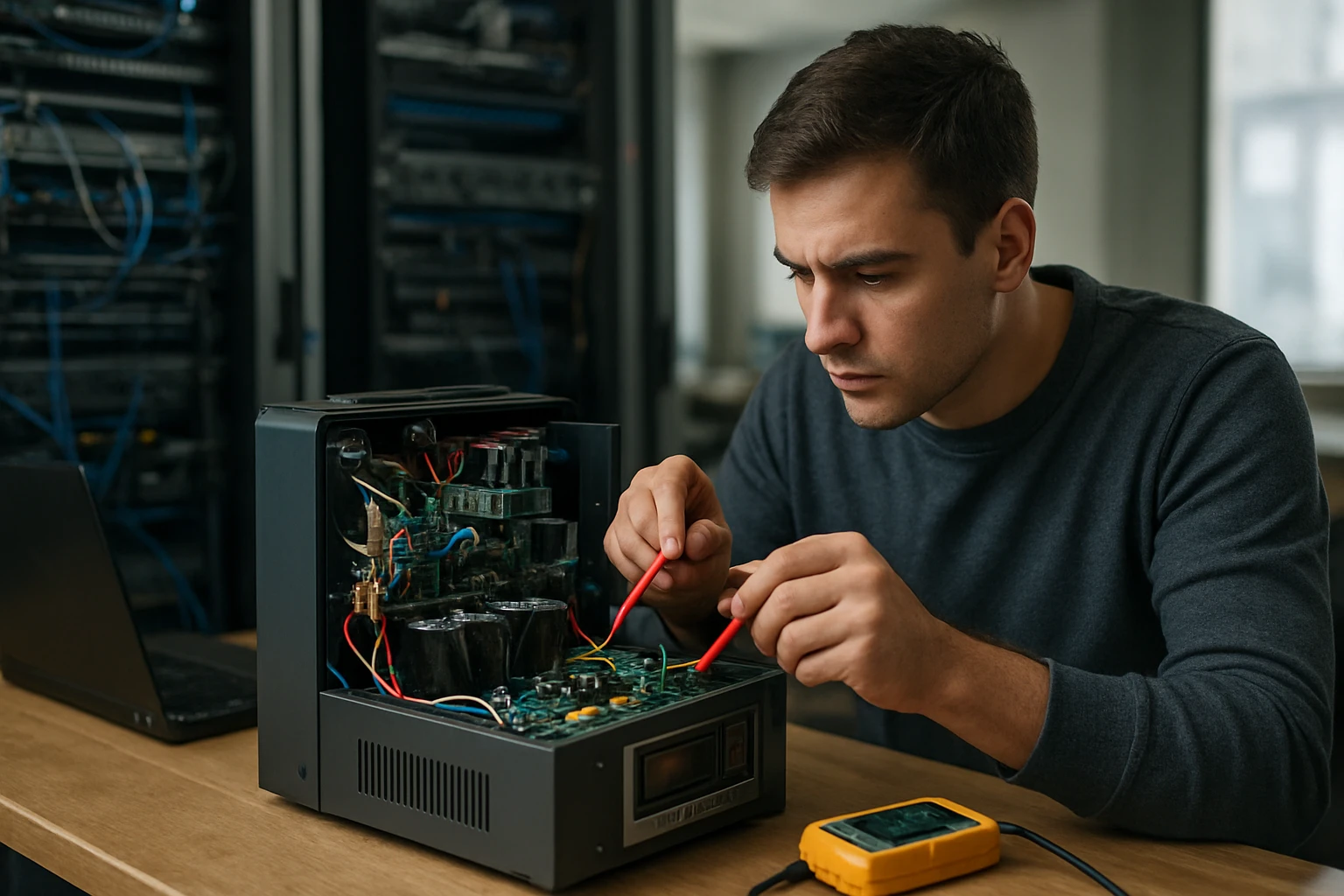
Signal integrity problems often arise from excessive cable lengths, poor cable quality, or electromagnetic interference. These issues may cause intermittent errors that are difficult to diagnose without proper test equipment. Protocol analyzers and oscilloscopes provide valuable insight into signal quality and timing relationships.
Ground potential differences between communicating devices can cause significant signal distortion or complete communication failure. Proper grounding techniques and isolation methods help eliminate these problems while protecting equipment from damage.
Diagnostic Tools and Techniques
Software-based terminal programs enable basic communication testing and data monitoring. These tools allow manual transmission of test data while displaying received information in various formats (ASCII, hexadecimal, binary). Many terminal programs include features for logging communication sessions and analyzing data patterns.
Hardware protocol analyzers provide comprehensive analysis of serial communication, capturing and decoding data streams while measuring signal timing and quality. These instruments prove invaluable for diagnosing complex communication problems and verifying protocol compliance.
Loop-back testing involves connecting the transmit and receive lines of a serial port, enabling verification of basic hardware functionality. This simple test can quickly identify problems with the serial interface itself, distinguishing hardware failures from configuration or software issues.
Future Trends and Emerging Technologies
Integration with Modern Systems
Contemporary system designs increasingly integrate traditional serial communication capabilities with modern interface technologies. System-on-chip (SoC) designs commonly include multiple UART peripherals alongside USB, Ethernet, and wireless communication interfaces, recognizing the continued value of serial communication in specific applications.
Wireless serial communication solutions extend the reach of traditional serial protocols while maintaining familiar programming interfaces. Bluetooth serial port profiles and Wi-Fi-to-serial bridges enable wireless connectivity for legacy equipment without requiring software modifications.
"The future of serial communication lies not in replacement, but in seamless integration with emerging technologies that extend its reach and capabilities."
Field-programmable gate arrays (FPGAs) and programmable system-on-chip devices enable custom serial protocol implementations optimized for specific applications. This flexibility allows designers to create specialized communication solutions that leverage serial communication principles while addressing unique requirements.
Automotive and Aerospace Applications
Modern vehicles incorporate numerous serial communication networks for connecting electronic control units, sensors, and entertainment systems. Controller Area Network (CAN) and Local Interconnect Network (LIN) protocols build upon serial communication foundations while adding automotive-specific features such as error handling and network management.
Aerospace applications continue to rely on serial communication for critical systems where reliability and deterministic behavior are paramount. The proven track record and well-understood characteristics of serial protocols provide confidence in mission-critical applications where failure is not acceptable.
Autonomous vehicle systems utilize serial communication for connecting LIDAR sensors, cameras, and other perception equipment. The real-time nature and predictable timing of serial protocols make them suitable for safety-critical applications requiring immediate response to sensor data.
Security Considerations and Best Practices
Vulnerability Assessment
Serial communication interfaces can present security vulnerabilities if not properly secured. Physical access to serial ports enables potential attackers to monitor communications, inject malicious data, or gain unauthorized system access. Proper physical security measures help mitigate these risks.
Unencrypted serial communication exposes transmitted data to interception and analysis. While traditional serial applications often operated in isolated environments, modern networked systems may expose serial data to broader security threats. Encryption and authentication mechanisms provide protection against these vulnerabilities.
Default configurations and weak authentication mechanisms represent common security weaknesses in serial-connected devices. Regular security assessments and configuration reviews help identify and address potential vulnerabilities before they can be exploited.
Implementation Security
Secure serial communication implementations incorporate authentication mechanisms to verify the identity of communicating devices. Challenge-response protocols and cryptographic certificates provide strong authentication while maintaining the simplicity that makes serial communication attractive.
Input validation and sanitization prevent malicious data from exploiting vulnerabilities in receiving systems. Proper bounds checking and data validation help protect against buffer overflow attacks and other common security threats.
"Security in serial communication requires balancing protection with the simplicity and reliability that makes these interfaces valuable in the first place."
Monitoring and logging capabilities enable detection of unusual communication patterns that might indicate security breaches or system malfunctions. Automated analysis tools can identify anomalies and alert administrators to potential problems.
What is the maximum distance for RS-232 communication?
RS-232 communication is typically limited to approximately 50 feet (15 meters) at standard data rates. However, this distance can be extended using line drivers, repeaters, or by reducing the baud rate. Higher quality cables with better shielding can also support slightly longer distances.
Can modern computers without serial ports use serial devices?
Yes, modern computers can connect to serial devices using USB-to-serial adapters. These adapters convert USB signals to standard serial protocols, maintaining compatibility with existing software and devices. Many operating systems include built-in drivers for common USB-to-serial chipsets.
What's the difference between baud rate and bit rate?
Baud rate refers to the number of signal changes per second, while bit rate refers to the actual data bits transmitted per second. In simple serial communication, these values are often equal, but advanced modulation schemes can transmit multiple bits per signal change, making the bit rate higher than the baud rate.
Why do embedded systems still use serial communication?
Embedded systems continue using serial communication because of its simplicity, reliability, low power consumption, and minimal hardware requirements. Serial interfaces are easy to implement in software, require fewer I/O pins than parallel interfaces, and provide excellent noise immunity in industrial environments.
How do I troubleshoot serial communication problems?
Start by verifying basic configuration parameters: baud rate, data bits, parity, and stop bits must match on both devices. Check physical connections and cable integrity. Use loop-back testing to verify hardware functionality. Monitor signal quality with an oscilloscope if intermittent problems persist.
What is flow control and when is it needed?
Flow control prevents data loss when the receiving device cannot process incoming data as quickly as it's being transmitted. Hardware flow control uses RTS/CTS signals, while software flow control uses XON/XOFF characters. Flow control is essential when devices have different processing speeds or limited buffer capacity.