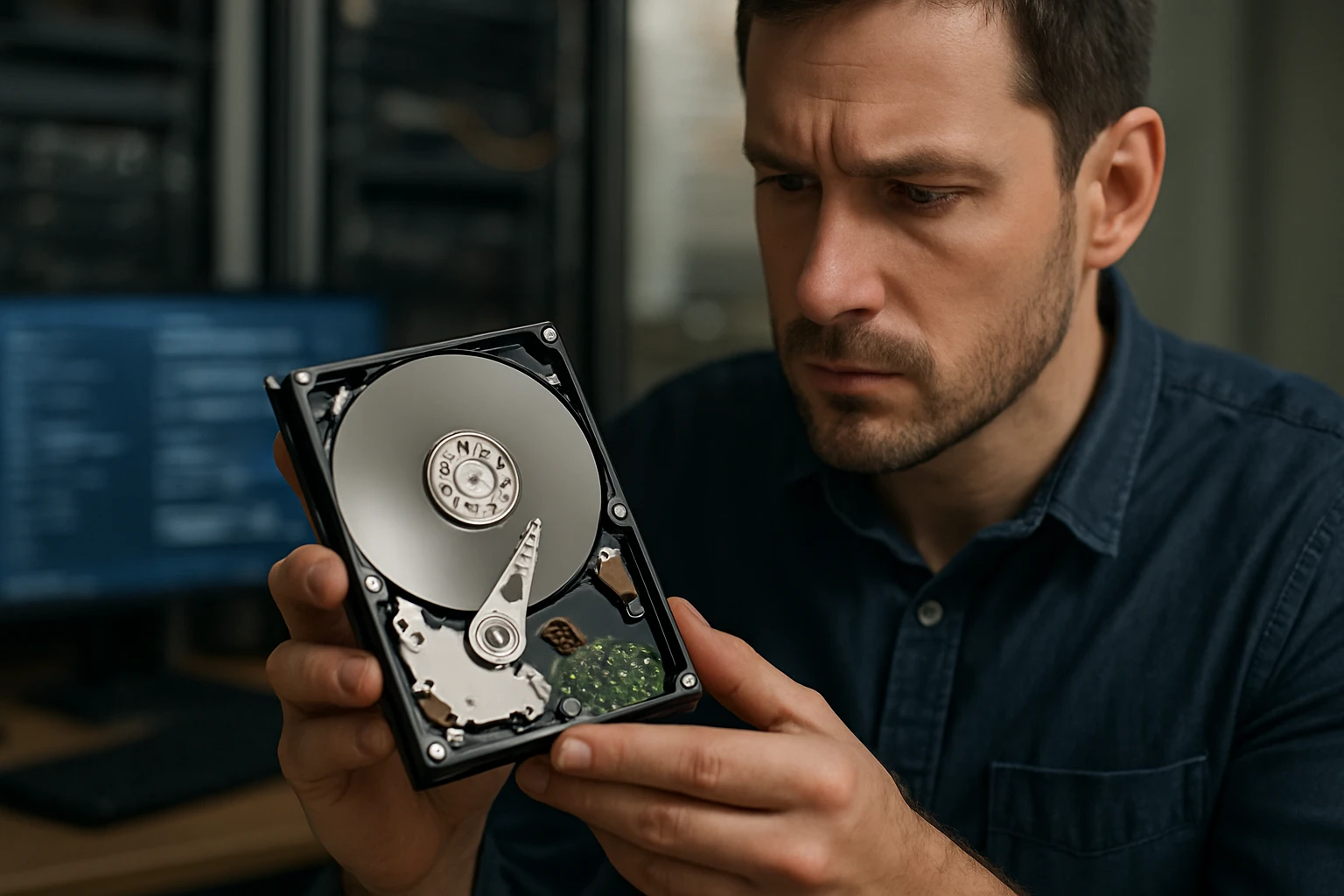


The world of computer storage fascinates me because it represents the foundation upon which all digital experiences are built. Among the various storage technologies, Read-Only Memory stands out as a critical yet often overlooked component that quietly powers countless devices we interact with daily. From the moment you press the power button on your smartphone to the instant your smart TV displays its interface, ROM is working behind the scenes to make these experiences possible.
Read-Only Memory, commonly abbreviated as ROM, is a type of non-volatile storage that retains data permanently, even when power is removed from the system. Unlike its volatile counterpart RAM, ROM serves as a repository for essential instructions and data that remain unchanged throughout a device's operational lifetime. This exploration will examine ROM from multiple angles, including its technical architecture, various implementations, practical applications, and its evolving role in modern computing systems.
Throughout this comprehensive examination, you'll discover how ROM has evolved from simple mask-programmed chips to sophisticated flash-based solutions. You'll gain insights into the different types of ROM technologies, understand their specific use cases, and learn how they compare with other storage solutions. Additionally, we'll explore the advantages and limitations of ROM, its critical role in system boot processes, and emerging trends that are shaping the future of read-only storage technologies.
Understanding the Fundamental Nature of ROM
Read-Only Memory operates on the principle of permanent data storage, where information is written once during manufacturing or programming and remains accessible for reading throughout the device's lifetime. The fundamental characteristic that defines ROM is its non-volatile nature, meaning stored data persists without requiring continuous power supply. This property makes ROM invaluable for storing critical system information that must be available immediately when a device powers on.
The architecture of ROM differs significantly from other memory types due to its specialized design for data permanence. Traditional ROM utilizes a matrix of transistors and fuses that are either connected or disconnected during manufacturing to represent binary data. Once these connections are established, they cannot be altered, creating a permanent storage solution that maintains data integrity over extended periods.
Modern ROM implementations have evolved beyond simple read-only functionality to include various programmable and erasable variants. These advancements have expanded ROM's versatility while maintaining its core advantage of non-volatile storage. The evolution from mask ROM to EPROM, EEPROM, and flash memory represents significant technological progress in achieving greater flexibility without sacrificing reliability.
"The permanence of ROM makes it the digital equivalent of etched stone tablets, preserving essential information that systems need to function properly from the moment they're powered on."
Types of ROM Technologies
Mask ROM
Mask ROM represents the original and most basic form of read-only memory, where data is permanently programmed during the manufacturing process. The term "mask" refers to the photographic masks used during chip fabrication to create specific circuit patterns. Once manufactured, mask ROM cannot be modified, making it suitable only for high-volume applications where the stored data will never change.
The manufacturing process involves creating custom silicon wafers with predetermined bit patterns etched directly into the chip's structure. This approach results in the lowest per-unit cost for large production runs but requires significant upfront investment for mask creation. Mask ROM typically stores firmware, boot loaders, and other essential system software that remains constant throughout a product's lifecycle.
Despite its inflexibility, mask ROM offers several advantages including high reliability, low power consumption, and resistance to external interference. These characteristics make it ideal for mission-critical applications where data integrity is paramount and modifications are unnecessary.
Programmable ROM (PROM)
Programmable ROM emerged as a solution to the inflexibility of mask ROM by allowing users to program data after manufacturing. PROM chips contain fusible links that can be selectively "blown" using a specialized programming device, creating permanent connections that represent stored data. Once programmed, PROM becomes functionally equivalent to mask ROM in terms of permanence.
The programming process involves applying high voltage to specific memory locations, causing fusible elements to melt and create permanent open or closed circuits. This one-time programming capability provides manufacturers with greater flexibility in production scheduling and inventory management while maintaining the reliability benefits of permanent storage.
PROM found widespread adoption in applications requiring custom firmware or configuration data that needed to be determined after manufacturing but before deployment. However, the inability to correct programming errors or update stored information limited its long-term viability in rapidly evolving technology markets.
Erasable Programmable ROM (EPROM)
EPROM revolutionized ROM technology by introducing the ability to erase and reprogram stored data multiple times. These devices utilize floating-gate transistors that can trap electrical charge to represent stored bits. The trapped charge remains stable for decades under normal conditions, providing non-volatile storage with reprogramming capability.
The erasure process requires exposing the EPROM chip to ultraviolet light through a quartz window on the package. UV radiation provides sufficient energy to discharge the floating gates, effectively erasing all stored data and returning the device to its unprogrammed state. After erasure, the EPROM can be reprogrammed using standard programming equipment.
EPROM technology enabled significant improvements in development efficiency and cost reduction for prototype and low-volume production applications. The ability to modify stored firmware during development cycles accelerated product development timelines and reduced the risk of costly mask ROM revisions.
Electrically Erasable Programmable ROM (EEPROM)
EEPROM advanced ROM technology further by enabling electrical erasure and programming without requiring UV exposure or special handling procedures. This innovation utilized improved floating-gate transistor designs with additional control gates that allowed selective erasure and programming of individual memory locations while the device remained in the target system.
The electrical erasure capability eliminated the need for physical chip removal and UV exposure, significantly simplifying the update process for deployed systems. EEPROM devices could be reprogrammed in-circuit, enabling field updates and configuration changes without hardware modifications.
Modern EEPROM implementations support byte-level or block-level erasure and programming, providing fine-grained control over stored data. This flexibility made EEPROM particularly valuable for storing configuration parameters, calibration data, and other information that might require periodic updates throughout a product's operational lifetime.
Flash Memory: The Modern ROM Evolution
Flash memory represents the current pinnacle of ROM evolution, combining the non-volatile characteristics of traditional ROM with the flexibility and performance requirements of modern computing systems. Flash technology builds upon EEPROM principles but implements significant architectural improvements that enable faster operation and higher storage densities.
The key innovation in flash memory is its ability to erase data in large blocks while maintaining fast read access and reasonable write performance. This block-based approach reduces the complexity of control circuitry while enabling higher integration densities and lower manufacturing costs compared to traditional EEPROM.
Flash memory comes in two primary variants: NOR flash and NAND flash, each optimized for different applications. NOR flash provides fast random access and execute-in-place capability, making it ideal for storing firmware and boot code. NAND flash offers higher storage density and better write performance, making it suitable for data storage applications.
| Flash Type | Read Speed | Write Speed | Erase Speed | Primary Use Cases |
|---|---|---|---|---|
| NOR Flash | Very Fast | Slow | Slow | Firmware, Boot Code, Embedded Systems |
| NAND Flash | Moderate | Fast | Fast | Data Storage, SSDs, Memory Cards |
ROM in System Architecture
Boot Process and Firmware Storage
ROM plays a crucial role in computer system initialization by storing the basic input/output system (BIOS) or unified extensible firmware interface (UEFI) code that executes immediately upon system power-up. This firmware contains the essential instructions needed to initialize hardware components, perform system diagnostics, and load the operating system from secondary storage.
The boot process begins with the processor executing instructions stored in ROM at a predetermined memory address. These initial instructions perform critical tasks including memory initialization, hardware detection, and security validation before transferring control to more complex software stored on other storage devices.
Modern systems often implement a multi-stage boot process where ROM-based firmware loads additional boot code from flash memory or other storage devices. This approach balances the reliability of ROM storage with the flexibility needed to support diverse hardware configurations and operating systems.
Embedded System Applications
Embedded systems rely heavily on ROM for storing application code, configuration data, and real-time operating system kernels. The non-volatile nature of ROM ensures that embedded devices can operate immediately upon power application without requiring external storage devices or complex initialization procedures.
Microcontrollers used in embedded applications often integrate ROM directly on-chip, providing fast access to stored instructions and reducing system complexity. This integration enables cost-effective solutions for applications ranging from automotive control systems to consumer appliances.
The reliability and predictable performance characteristics of ROM make it particularly suitable for safety-critical embedded applications where system behavior must be deterministic and verifiable. Real-time systems benefit from ROM's consistent access times and immunity to data corruption from power interruptions.
"In embedded systems, ROM serves as the digital DNA that defines a device's fundamental behavior and ensures consistent operation across millions of deployment scenarios."
Advantages and Limitations of ROM
Key Advantages
ROM technology offers several compelling advantages that make it indispensable for specific applications. Data permanence stands as the primary benefit, ensuring stored information remains intact regardless of power interruptions, electromagnetic interference, or environmental conditions within specified operating parameters.
The reliability of ROM exceeds that of most other storage technologies due to its simple structure and absence of moving parts. Once data is properly stored in ROM, it typically remains readable for decades without degradation, making it ideal for long-term storage of critical system information.
Security represents another significant advantage, as traditional ROM implementations prevent unauthorized modification of stored data. This characteristic provides protection against malicious software attacks and accidental data corruption that could compromise system integrity.
Cost effectiveness emerges in high-volume applications where the per-unit cost of ROM becomes extremely competitive compared to other storage solutions. The manufacturing economies of scale make ROM an attractive option for consumer electronics and other mass-market products.
Notable Limitations
Despite its advantages, ROM technology faces several limitations that restrict its applicability in certain scenarios. Inflexibility represents the most significant constraint, as traditional ROM cannot be modified after programming, making it unsuitable for applications requiring frequent updates or customization.
Programming complexity varies among ROM types, with some requiring specialized equipment and procedures that increase development costs and time-to-market. The inability to correct programming errors in one-time programmable devices can result in significant waste and additional expenses.
Limited capacity compared to modern storage technologies restricts ROM's use to essential system code and small datasets. As software complexity increases, the storage requirements often exceed practical ROM capacity limitations.
Write performance in programmable ROM variants typically lags significantly behind read performance, making them unsuitable for applications requiring frequent data updates or high-throughput write operations.
Comparison with Other Storage Technologies
Understanding how ROM compares with other storage technologies helps clarify its optimal use cases and limitations. The following analysis examines ROM's characteristics relative to common alternatives:
| Storage Type | Volatility | Speed | Capacity | Cost | Rewritability |
|---|---|---|---|---|---|
| ROM | Non-volatile | Fast Read | Low | Low | Limited/None |
| RAM | Volatile | Very Fast | High | Moderate | Unlimited |
| HDD | Non-volatile | Moderate | Very High | Low | Unlimited |
| SSD | Non-volatile | Fast | High | Moderate | High |
| Optical | Non-volatile | Slow | Moderate | Very Low | Limited |
ROM vs. RAM
The fundamental difference between ROM and RAM lies in volatility and intended purpose. RAM provides high-speed temporary storage for active programs and data, while ROM offers permanent storage for essential system code. RAM's volatile nature requires continuous power to maintain data, whereas ROM retains information indefinitely without power.
Performance characteristics also differ significantly, with RAM optimized for both read and write operations at high speeds, while ROM prioritizes read performance and data permanence over write capability. Modern systems utilize both technologies synergistically, with ROM storing boot firmware and RAM providing working space for applications.
The cost structure varies considerably, with RAM pricing based on capacity and performance specifications, while ROM costs depend on programming complexity and production volume. High-performance RAM typically costs more per bit than ROM, but offers greater functionality for active computing tasks.
ROM vs. Secondary Storage
Secondary storage devices like hard drives and solid-state drives provide much higher capacity than ROM but serve different purposes within computer systems. While secondary storage handles user data and application files, ROM focuses on essential system firmware and boot code that must be immediately available.
Access patterns differ significantly between ROM and secondary storage. ROM typically stores small amounts of frequently accessed system code, while secondary storage manages large datasets with varied access patterns. The reliability requirements also vary, with ROM needing absolute data integrity for critical system functions.
Boot dependencies create another distinction, as ROM must be accessible before secondary storage devices are initialized and operational. This timing requirement makes ROM indispensable for system startup, regardless of secondary storage capacity or performance capabilities.
Modern Applications and Use Cases
Consumer Electronics
Consumer electronics extensively utilize ROM for storing firmware, user interfaces, and device-specific software. Smart televisions, streaming devices, and gaming consoles rely on ROM to provide immediate functionality upon power-up without requiring lengthy boot sequences from mechanical storage devices.
Mobile devices represent one of the largest ROM application areas, with smartphones and tablets using flash-based ROM variants to store operating systems, pre-installed applications, and device drivers. The integration of ROM with other system components enables compact designs and extended battery life.
Home automation systems and Internet of Things (IoT) devices depend on ROM for storing control algorithms, communication protocols, and device configuration data. The reliability and low power consumption of ROM make it ideal for devices that must operate continuously with minimal maintenance.
"Modern consumer electronics would be impossible without ROM technology providing the instant-on functionality that users expect from their digital devices."
Automotive Applications
The automotive industry has become one of the largest consumers of ROM technology, with modern vehicles containing dozens of electronic control units (ECUs) that rely on ROM for storing control software and calibration data. Engine management systems, anti-lock braking systems, and airbag controllers all depend on ROM for reliable operation.
Advanced driver assistance systems (ADAS) and autonomous driving technologies require ROM to store complex algorithms and sensor fusion software that must operate reliably under all conditions. The automotive environment's extreme temperature variations and electromagnetic interference make ROM's robust characteristics particularly valuable.
Infotainment systems in vehicles use ROM to store multimedia codecs, navigation software, and user interface applications. The ability to provide immediate functionality upon vehicle startup enhances user experience and system reliability.
Industrial and Medical Equipment
Industrial automation systems utilize ROM for storing programmable logic controller (PLC) firmware, human-machine interface software, and safety-critical control algorithms. The harsh industrial environment and reliability requirements make ROM an essential component for maintaining consistent operation.
Medical devices rely on ROM for storing diagnostic software, treatment protocols, and device calibration parameters. Regulatory requirements for medical equipment often mandate the use of validated, unchangeable software stored in ROM to ensure patient safety and treatment consistency.
Laboratory instruments and scientific equipment use ROM to store measurement algorithms, calibration data, and quality control procedures. The long-term stability and accuracy requirements of scientific applications align well with ROM's characteristics.
Programming and Development Considerations
Development Tools and Workflows
ROM development requires specialized tools and methodologies different from traditional software development. Cross-compilation environments enable developers to create ROM-compatible code on development systems before transferring it to target hardware. These tools account for the specific memory layouts and execution constraints of ROM-based systems.
Programming devices and in-circuit programmers provide the hardware interface needed to transfer compiled code into ROM devices. Modern development workflows often include automated programming and verification steps to ensure data integrity and reduce human error during the programming process.
Version control and configuration management become critical in ROM development due to the difficulty or impossibility of correcting errors after programming. Rigorous testing procedures and code reviews help prevent costly mistakes that could require hardware replacement or redesign.
Testing and Validation
ROM testing requires comprehensive verification procedures to ensure stored data integrity and functional correctness. Automated test equipment can verify bit-level accuracy and detect programming defects before devices are integrated into final products.
Functional testing validates that ROM-stored software operates correctly under various conditions and edge cases. This testing often requires specialized hardware platforms that can simulate target system environments and operating conditions.
Long-term reliability testing evaluates ROM data retention characteristics under accelerated aging conditions. These tests help predict device lifetime and establish appropriate warranty periods for products incorporating ROM technology.
"Thorough testing of ROM-based systems is not just good practice—it's essential insurance against costly field failures and product recalls."
Code Optimization Techniques
ROM's limited capacity necessitates aggressive code optimization to maximize functionality within available storage space. Compiler optimizations focus on reducing code size while maintaining performance, often accepting slight speed penalties in exchange for significant space savings.
Dead code elimination and unused function removal become critical optimization steps for ROM applications. Static analysis tools help identify and remove unnecessary code paths that would otherwise consume valuable storage space.
Assembly language optimization may be necessary for critical code sections where compiler-generated code exceeds size constraints. Hand-optimized assembly routines can achieve significant space savings in performance-critical applications.
Future Trends and Developments
Emerging Technologies
Next-generation ROM technologies are exploring new materials and architectures to overcome current limitations while maintaining the fundamental advantages of non-volatile storage. Resistive RAM (ReRAM) and phase-change memory represent promising alternatives that could provide higher density and better performance characteristics.
Three-dimensional memory architectures enable significant capacity increases by stacking memory cells vertically, potentially allowing ROM devices to store much larger firmware images and application code. These 3D structures maintain the reliability benefits of traditional ROM while addressing capacity limitations.
Quantum storage technologies, while still in early research phases, could eventually provide unprecedented storage densities and security characteristics for specialized ROM applications. These technologies might enable new classes of secure, high-capacity ROM devices for advanced computing systems.
Integration with Modern Computing
System-on-chip (SoC) designs increasingly integrate ROM directly with processors and other system components, reducing interconnect complexity and improving performance. This integration enables more sophisticated firmware capabilities while maintaining cost effectiveness for mass-market applications.
Artificial intelligence and machine learning applications are driving demand for ROM devices capable of storing neural network weights and inference algorithms. These AI-specific ROM implementations optimize for the unique access patterns and data structures required by machine learning workloads.
Edge computing applications require ROM solutions that can store complex algorithms and data processing capabilities in resource-constrained environments. The development of specialized ROM architectures for edge computing could enable new classes of intelligent devices and systems.
Security Enhancements
Hardware-based security features are being integrated into modern ROM implementations to protect against unauthorized access and tampering. These security enhancements include encryption, authentication, and secure boot capabilities that leverage ROM's inherent resistance to modification.
Blockchain and distributed ledger technologies are exploring ways to utilize ROM for storing cryptographic keys and verification algorithms in tamper-resistant hardware implementations. These applications could enable new security architectures for financial and identity management systems.
Quantum-resistant cryptography algorithms may require specialized ROM implementations optimized for storing and executing post-quantum cryptographic operations. The development of these specialized ROM devices will be crucial for maintaining security in the quantum computing era.
"The future of ROM lies not just in storing data, but in becoming an active participant in system security and intelligent processing capabilities."
Maintenance and Reliability Considerations
Data Integrity and Error Detection
ROM reliability depends on maintaining data integrity over extended operational periods under varying environmental conditions. Error detection and correction mechanisms help identify and compensate for bit errors that may occur due to radiation, temperature cycling, or device aging.
Cyclic redundancy checks (CRC) and other checksumming techniques provide methods for detecting data corruption in ROM devices. These techniques add minimal overhead while providing strong assurance of data integrity throughout the device lifetime.
Redundant storage schemes can improve reliability by storing critical data in multiple ROM locations, enabling error recovery through voting algorithms or backup data retrieval. These approaches trade storage efficiency for improved fault tolerance in mission-critical applications.
Environmental Factors
Temperature cycling represents one of the primary stress factors affecting ROM reliability, as repeated thermal expansion and contraction can cause mechanical stress on device structures. Proper thermal management and component selection help mitigate these effects in demanding applications.
Electromagnetic interference (EMI) can potentially affect ROM operation, particularly in high-frequency environments or near strong electromagnetic sources. Proper shielding and circuit design techniques help maintain reliable operation under adverse electromagnetic conditions.
Radiation exposure in aerospace, nuclear, or high-altitude applications can cause bit flips and cumulative damage to ROM devices. Radiation-hardened ROM variants provide enhanced resistance to these effects for specialized applications.
Lifecycle Management
ROM device lifecycle management involves planning for eventual device obsolescence and ensuring long-term availability of critical system firmware. Proactive migration planning helps avoid supply chain disruptions that could affect product support and manufacturing.
Documentation and version control become critical for managing ROM-based systems over their operational lifetime. Comprehensive records of ROM contents, programming procedures, and validation results enable effective maintenance and troubleshooting.
End-of-life planning must account for ROM device disposal and data security considerations. Proper disposal procedures ensure that sensitive information stored in ROM devices cannot be recovered after system retirement.
"Effective ROM lifecycle management requires thinking beyond initial deployment to encompass the entire operational lifetime of systems and devices."
What is the main difference between ROM and RAM?
ROM (Read-Only Memory) is non-volatile storage that retains data permanently without power, primarily used for storing essential system firmware and boot code. RAM (Random Access Memory) is volatile storage that requires continuous power to maintain data and provides high-speed temporary storage for active programs and data processing.
Can ROM be modified after manufacturing?
Traditional mask ROM cannot be modified after manufacturing, but programmable variants like PROM, EPROM, EEPROM, and flash memory offer different levels of reprogramming capability. PROM can be programmed once, EPROM can be erased with UV light and reprogrammed, while EEPROM and flash memory support electrical erasure and reprogramming.
Why is ROM important for computer boot processes?
ROM stores the firmware (BIOS/UEFI) that executes immediately when a computer powers on, performing critical initialization tasks like hardware detection, memory testing, and loading the operating system. Without ROM, computers would have no way to begin the boot sequence since other storage devices aren't accessible until after initial system initialization.
What are the advantages of flash memory over traditional ROM?
Flash memory combines ROM's non-volatile characteristics with greater flexibility, offering electrical erasure and reprogramming capabilities, higher storage densities, and faster operation compared to traditional ROM types. Flash also supports in-system updates and can be integrated more easily into modern electronic designs.
How long does data stored in ROM typically last?
Data stored in ROM typically retains integrity for 10-20 years or more under normal operating conditions, with some implementations lasting several decades. The actual retention time depends on the specific ROM technology, environmental conditions, and quality of the manufacturing process.
What applications commonly use ROM technology?
ROM is commonly used in embedded systems, automotive electronics, consumer devices, industrial equipment, and medical devices for storing firmware, boot code, configuration data, and control algorithms. Applications range from smartphone operating systems to automotive engine control units and medical device software.