
The concept of professional users has fundamentally transformed how we understand digital engagement and platform utilization in today's interconnected world. As someone who has witnessed the evolution of user hierarchies across various digital platforms, I find the emergence of pro users particularly fascinating because it represents a shift from passive consumption to active, strategic engagement with technology and services.
A pro user, in its simplest form, is an individual who leverages advanced features, tools, or services beyond basic functionality to achieve specific professional or personal objectives. This definition encompasses a broad spectrum of users who demonstrate heightened engagement, technical proficiency, and strategic thinking in their approach to digital platforms, software applications, or service offerings. The promise of exploring pro users lies in understanding their multifaceted nature – they exist across industries, platforms, and contexts, each bringing unique perspectives and approaches to maximizing value from their chosen tools.
Through this exploration, you'll gain comprehensive insights into the characteristics that define pro users, discover practical strategies for becoming one yourself, and learn how businesses can better serve this crucial demographic. Whether you're looking to elevate your own user status or understand how to cater to pro users in your organization, this deep dive will provide actionable knowledge and real-world applications that can transform your approach to digital engagement and professional growth.
Understanding the Pro User Landscape
The digital ecosystem has created distinct user categories, with pro users occupying a unique position between casual users and enterprise-level customers. These individuals represent a growing segment that demands more sophisticated features while maintaining the flexibility and accessibility that traditional consumer products offer.
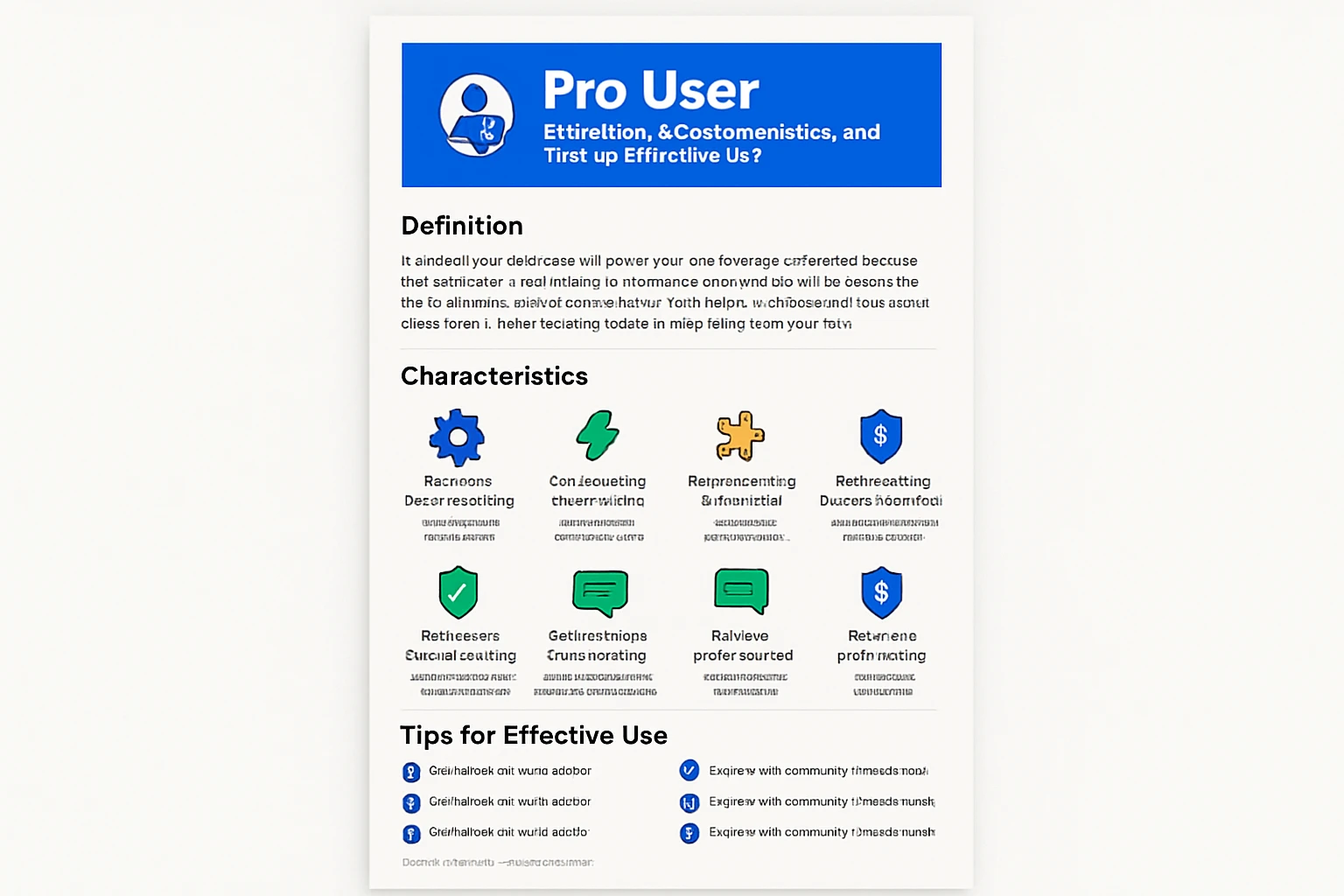
Pro users typically exhibit several key behaviors:
• Advanced feature utilization beyond basic functionality
• Regular engagement with platform updates and new releases
• Active participation in user communities and feedback channels
• Willingness to invest in premium features or subscriptions
• Integration of multiple tools and platforms for workflow optimization
• Advocacy and recommendation behaviors within their networks
The emergence of pro users reflects broader trends in digital literacy and professional requirements. As remote work became mainstream and digital tools became essential for productivity, many individuals found themselves needing capabilities that exceeded standard consumer offerings but didn't require full enterprise solutions.
This user category has become increasingly valuable to businesses because they often serve as early adopters, provide valuable feedback, and influence purchasing decisions within their organizations. Their needs bridge the gap between individual consumer requirements and complex enterprise demands, creating opportunities for specialized product development and targeted marketing strategies.
"The most successful platforms recognize that pro users aren't just heavy users – they're strategic users who approach tools with intentionality and purpose."
Core Characteristics of Pro Users
Technical Proficiency and Adaptability
Pro users demonstrate remarkable technical fluency that extends beyond surface-level interactions. They understand underlying systems, can troubleshoot issues independently, and often discover creative applications for existing features. This technical depth enables them to maximize value from their chosen tools while minimizing dependence on customer support.
Their adaptability shines through their ability to quickly master new interfaces, integrate emerging technologies into existing workflows, and pivot when platforms undergo significant changes. Unlike casual users who might abandon tools after interface updates, pro users embrace change as an opportunity to discover new efficiencies.
Strategic Workflow Integration
The hallmark of pro users lies in their systematic approach to tool selection and implementation. They don't simply use software; they architect comprehensive workflows that leverage multiple platforms, automate repetitive tasks, and create scalable processes. This strategic thinking transforms individual tools into components of larger productivity ecosystems.
Pro users invest significant time in understanding how different tools complement each other, often becoming experts in integration platforms, automation services, and cross-platform data synchronization. Their workflows reflect careful planning and continuous optimization based on performance metrics and outcome analysis.
Community Engagement and Knowledge Sharing
Active participation in user communities distinguishes pro users from their casual counterparts. They contribute to forums, share tutorials, provide feedback to developers, and mentor newcomers. This engagement creates value not only for themselves but for entire user ecosystems.
Their community involvement often extends to beta testing, feature requests, and collaborative problem-solving. Many pro users maintain blogs, create educational content, or speak at conferences, establishing themselves as thought leaders within their chosen domains.
"Pro users don't just consume tools – they participate in shaping their evolution through active engagement and constructive feedback."
The Psychology Behind Pro User Behavior
Intrinsic Motivation and Mastery
Pro users are driven by intrinsic motivation rather than external pressures. They pursue mastery for its own sake, finding satisfaction in understanding complex systems and achieving optimal performance. This internal drive sustains their commitment to continuous learning and improvement.
The concept of mastery extends beyond technical skills to encompass strategic thinking, creative problem-solving, and innovative application of existing tools. Pro users view challenges as opportunities to deepen their expertise rather than obstacles to overcome.
Efficiency and Optimization Mindset
A relentless focus on efficiency characterizes pro user behavior. They constantly seek ways to reduce friction, eliminate redundancy, and streamline processes. This optimization mindset leads to sophisticated workflow designs that maximize output while minimizing effort.
Their approach to efficiency encompasses both immediate productivity gains and long-term strategic advantages. Pro users invest time in learning advanced features because they understand that initial time investment yields compound returns through improved daily performance.
Risk Tolerance and Innovation Adoption
Pro users demonstrate higher risk tolerance when adopting new technologies or experimental features. They're willing to invest time in unproven solutions if the potential benefits align with their strategic objectives. This willingness to experiment makes them valuable early adopters for innovative products.
Their risk assessment differs from casual users because they possess the technical skills to recover from failures and the strategic vision to evaluate long-term potential beyond immediate functionality. This combination enables them to identify valuable tools before they become mainstream.
Identifying Pro User Opportunities
Platform Analysis and Selection
Successful pro users excel at evaluating platforms based on strategic criteria rather than superficial features. They analyze integration capabilities, scalability potential, developer roadmaps, and community strength before committing to new tools. This analytical approach prevents costly migrations and ensures sustainable workflow development.
The evaluation process involves testing multiple alternatives, comparing feature sets against specific requirements, and assessing total cost of ownership including time investment and learning curves. Pro users often maintain detailed comparison matrices to guide decision-making.
Feature Discovery and Advanced Implementation
Pro users systematically explore platform capabilities, often uncovering hidden features or creative applications that developers didn't anticipate. They read documentation thoroughly, experiment with API integrations, and push boundaries to discover maximum potential.
This exploration extends to understanding feature interactions, identifying automation opportunities, and developing custom solutions using available tools. Their deep feature knowledge enables them to provide sophisticated solutions to complex challenges.
Network Building and Collaboration
Strategic relationship building distinguishes pro users from isolated power users. They cultivate networks of fellow practitioners, maintain relationships with platform representatives, and participate in exclusive communities or beta programs. These connections provide access to insider knowledge, early feature previews, and collaborative opportunities.
Their networking approach focuses on mutual value creation rather than one-sided benefit extraction. Pro users share knowledge generously, contribute to community resources, and support fellow users, creating reciprocal relationships that enhance everyone's capabilities.
Essential Skills for Pro Users
| Skill Category | Core Competencies | Development Strategies |
|---|---|---|
| Technical Mastery | API integration, automation, troubleshooting | Hands-on experimentation, documentation study, community engagement |
| Strategic Thinking | Workflow design, tool evaluation, ROI analysis | Case study analysis, peer learning, continuous optimization |
| Communication | Documentation, teaching, feedback provision | Content creation, mentoring, community participation |
| Adaptability | Change management, learning agility, innovation adoption | Continuous learning, experimental mindset, failure tolerance |
Advanced Technical Competencies
Pro users develop sophisticated technical skills that enable them to extract maximum value from their chosen platforms. These competencies include understanding data structures, API interactions, automation scripting, and integration protocols. Technical mastery provides the foundation for creative problem-solving and innovative applications.
The development of technical skills requires systematic learning approaches, hands-on experimentation, and continuous practice. Pro users often maintain personal development projects that challenge their abilities and expand their knowledge base.
Strategic Planning and Execution
Strategic thinking capabilities enable pro users to align tool usage with broader objectives, whether personal productivity goals or organizational outcomes. They develop comprehensive implementation plans, establish success metrics, and continuously evaluate performance against strategic objectives.
Execution skills complement strategic planning by ensuring that sophisticated workflows operate reliably in real-world conditions. Pro users excel at change management, user training, and process documentation that supports sustainable implementation.
Communication and Leadership
Effective communication skills enable pro users to share knowledge, influence adoption decisions, and lead implementation initiatives. They can translate technical concepts for non-technical audiences, create compelling documentation, and facilitate training sessions that accelerate organizational capability development.
Leadership capabilities often emerge naturally as pro users become recognized experts within their domains. They influence tool selection decisions, guide implementation strategies, and mentor colleagues in advanced usage techniques.
"The most impactful pro users combine deep technical knowledge with strategic vision and exceptional communication skills."
Maximizing Value as a Pro User
Investment Strategy and Resource Allocation
Successful pro users approach tool investment with strategic discipline, balancing immediate needs against long-term potential. They develop investment criteria that consider not only feature capabilities but also learning curves, integration requirements, and scalability potential. This strategic approach prevents tool proliferation and ensures focused expertise development.
Resource allocation extends beyond financial investment to include time, attention, and learning capacity. Pro users recognize that mastery requires sustained commitment and allocate their resources accordingly, often specializing in specific domains rather than attempting to master every available tool.
Performance Measurement and Optimization
Pro users establish comprehensive measurement systems to track their performance improvements and validate their investment decisions. They identify key metrics that reflect their strategic objectives and continuously monitor progress against established benchmarks. This data-driven approach enables continuous optimization and informed decision-making.
The optimization process involves regular workflow audits, performance analysis, and strategic adjustments based on changing requirements or improved alternatives. Pro users maintain detailed records of their configurations, customizations, and process improvements to support continuous refinement.
Knowledge Management and Documentation
Systematic knowledge management distinguishes pro users from casual power users. They maintain comprehensive documentation of their workflows, create reference materials for complex procedures, and develop training resources that support knowledge transfer. This documentation serves both personal reference and community contribution purposes.
Their knowledge management systems often include version control, regular updates, and structured organization that supports quick retrieval and effective sharing. Pro users understand that undocumented knowledge has limited value and invest accordingly in proper documentation practices.
Business Implications of Pro Users
Market Segmentation and Product Development
Pro users represent a distinct market segment that requires specialized product strategies. They demand advanced features, sophisticated integration capabilities, and responsive customer support that goes beyond standard consumer offerings. Understanding their needs enables businesses to develop targeted products that command premium pricing while delivering exceptional value.
Product development teams benefit from pro user feedback because these individuals push platforms to their limits and identify improvement opportunities that might not be apparent through casual usage patterns. Their insights drive innovation and help prioritize feature development roadmaps.
Customer Retention and Lifetime Value
Pro users typically exhibit higher customer lifetime value due to their deep platform investment and switching costs. Their sophisticated workflows create strong lock-in effects that support long-term retention, while their willingness to pay for advanced features contributes to revenue growth.
The retention benefits extend beyond direct revenue to include advocacy effects, as pro users often influence adoption decisions within their organizations and professional networks. Their recommendations carry significant weight due to their recognized expertise and thorough evaluation processes.
Support and Service Requirements
Pro users require specialized support approaches that acknowledge their technical sophistication and strategic objectives. Standard customer service protocols often prove inadequate for addressing their complex questions and advanced use cases. Businesses must develop specialized support tiers that provide appropriate expertise and response times.
The support investment typically pays dividends through reduced escalations, valuable product feedback, and enhanced customer satisfaction. Pro users appreciate knowledgeable support teams that can engage with their technical questions and provide strategic guidance rather than basic troubleshooting.
| Pro User Segment | Characteristics | Business Response |
|---|---|---|
| Technical Specialists | API usage, custom integrations, automation | Developer resources, technical documentation, advanced support |
| Workflow Optimizers | Process improvement, efficiency focus, metrics tracking | Analytics tools, reporting features, optimization guidance |
| Community Leaders | Knowledge sharing, mentoring, advocacy | Community platforms, recognition programs, beta access |
| Strategic Implementers | Organizational influence, decision-making authority, scaling focus | Enterprise features, implementation support, strategic consulting |
Challenges and Solutions for Pro Users
Information Overload and Feature Complexity
Pro users often face overwhelming amounts of information as platforms continuously add features and capabilities. The challenge lies in identifying relevant updates, evaluating new features against existing workflows, and maintaining optimal configurations without constant reconfiguration efforts.
Effective solutions include establishing information filtering systems, participating in curated communities that highlight significant developments, and developing evaluation frameworks that quickly assess new feature relevance. Pro users often create personal knowledge management systems that help them track important updates while filtering out noise.
Integration Complexity and Technical Debt
As pro users build sophisticated workflows involving multiple platforms, they accumulate technical debt through complex integrations, custom configurations, and interdependent processes. This complexity can become brittle and difficult to maintain, especially when platforms undergo significant changes.
Managing integration complexity requires systematic documentation, regular workflow audits, and proactive maintenance schedules. Pro users often implement monitoring systems that alert them to integration failures and maintain backup procedures that ensure business continuity during platform transitions.
Balancing Innovation with Stability
Pro users must navigate the tension between adopting innovative features that provide competitive advantages and maintaining stable, reliable workflows that support consistent performance. Early adoption carries risks, while conservative approaches may miss valuable opportunities.
Successful pro users develop risk management strategies that include testing environments, gradual rollout procedures, and rollback plans that enable safe experimentation. They often maintain parallel systems during transition periods to ensure continuity while evaluating new approaches.
"The most successful pro users master the art of strategic innovation – pushing boundaries while maintaining operational reliability."
Future Trends and Evolution
Artificial Intelligence Integration
The integration of artificial intelligence capabilities into professional tools is transforming pro user workflows by enabling automation of complex tasks, intelligent content generation, and predictive analytics. Pro users are early adopters of AI-enhanced features and often pioneer creative applications that demonstrate the technology's potential.
AI integration requires pro users to develop new competencies in prompt engineering, model selection, and AI-assisted workflow design. They must understand AI limitations, ethical considerations, and quality control measures that ensure reliable outcomes from AI-enhanced processes.
No-Code and Low-Code Platforms
The emergence of sophisticated no-code and low-code platforms is democratizing advanced functionality previously requiring extensive programming knowledge. Pro users are leveraging these platforms to create custom solutions, automate complex workflows, and integrate disparate systems without traditional development overhead.
This trend enables pro users to focus on strategic design and optimization rather than technical implementation details. However, it also requires new skills in visual programming, logic design, and platform-specific best practices.
Collaborative and Social Features
Modern platforms increasingly emphasize collaborative capabilities that enable pro users to share knowledge, co-create solutions, and participate in distributed problem-solving. These social features transform individual expertise into collective intelligence that benefits entire user communities.
Pro users are adapting their approaches to leverage collaborative features effectively, developing skills in remote collaboration, knowledge sharing, and community building that enhance their individual capabilities through network effects.
Implementation Strategies
Getting Started as a Pro User
Beginning the journey toward pro user status requires strategic planning and systematic skill development. Start by selecting a primary platform that aligns with your professional objectives and commit to mastering its advanced features through dedicated practice and experimentation.
Establish learning goals that progress from basic proficiency to advanced mastery, including technical skills, strategic applications, and community engagement. Create practice projects that challenge your abilities and provide opportunities to apply new knowledge in realistic scenarios.
Building Advanced Capabilities
Advanced capability development requires moving beyond feature usage to strategic workflow design and optimization. Focus on understanding system architectures, integration possibilities, and automation opportunities that can transform your productivity and effectiveness.
Develop relationships with other pro users through community participation, collaborative projects, and knowledge sharing initiatives. These connections provide learning opportunities, collaborative possibilities, and access to insider knowledge that accelerates capability development.
Sustaining Long-term Growth
Long-term growth as a pro user requires continuous learning, strategic adaptation, and community contribution. Establish regular learning schedules that keep you current with platform developments while exploring adjacent technologies and methodologies.
Maintain detailed documentation of your workflows, configurations, and optimization strategies to support continuous improvement and knowledge sharing. This documentation becomes increasingly valuable as your expertise deepens and your influence within communities grows.
"Becoming a pro user is not a destination but a continuous journey of learning, optimization, and contribution to the broader community."
Measuring Success and Impact
Personal Performance Metrics
Pro users benefit from establishing comprehensive measurement systems that track their performance improvements, efficiency gains, and strategic objective achievement. These metrics should reflect both quantitative outcomes and qualitative improvements in capability and satisfaction.
Effective measurement systems include baseline assessments, regular progress reviews, and comparative analysis against previous performance levels. Pro users often maintain performance dashboards that provide ongoing visibility into their optimization efforts and strategic progress.
Professional and Organizational Impact
The impact of pro user capabilities extends beyond personal productivity to influence organizational effectiveness, team performance, and strategic outcomes. Measuring this broader impact requires tracking metrics related to knowledge transfer, process improvement, and strategic contribution.
Professional impact measurement might include training effectiveness, process optimization results, and strategic initiative success rates. These metrics demonstrate the value of pro user investment and support continued development and recognition within professional contexts.
Community Contribution Assessment
Pro users often contribute significantly to user communities through knowledge sharing, mentoring, and collaborative problem-solving. Measuring community contribution helps validate the reciprocal value of community engagement and identifies opportunities for increased impact.
Community contribution metrics might include content creation, peer assistance, feedback provision, and collaborative project participation. These measurements help pro users understand their community influence and optimize their contribution strategies for maximum mutual benefit.
"True pro user success is measured not only by personal achievement but by the positive impact on communities and organizations."
What defines a pro user compared to a regular user?
A pro user demonstrates advanced technical proficiency, strategic workflow integration, active community engagement, and willingness to invest in premium features. They approach tools with intentionality and purpose, seeking to maximize value through sophisticated usage patterns rather than basic feature consumption.
How can someone transition from casual user to pro user status?
The transition requires systematic skill development, strategic tool selection, and active community participation. Start by mastering advanced features of your primary platform, establish learning goals, create practice projects, and engage with user communities to accelerate knowledge acquisition and network building.
What are the main benefits of becoming a pro user?
Pro users enjoy increased productivity, competitive advantages, professional recognition, and access to exclusive features and communities. They often influence organizational decisions, command premium pricing for their services, and experience greater job satisfaction through mastery and strategic impact.
How do businesses benefit from catering to pro users?
Businesses gain higher customer lifetime value, valuable product feedback, reduced support costs, and powerful advocacy effects. Pro users drive innovation through their advanced requirements, influence adoption decisions within their networks, and often become community leaders who enhance platform value for all users.
What challenges do pro users typically face?
Common challenges include information overload, integration complexity, technical debt accumulation, and balancing innovation with stability. Pro users must develop sophisticated filtering systems, maintain comprehensive documentation, and implement risk management strategies to navigate these challenges effectively.
How is artificial intelligence changing the pro user landscape?
AI integration is transforming pro user workflows through intelligent automation, content generation, and predictive analytics. Pro users are pioneering AI applications while developing new competencies in prompt engineering, model selection, and AI-assisted workflow design to leverage these emerging capabilities effectively.