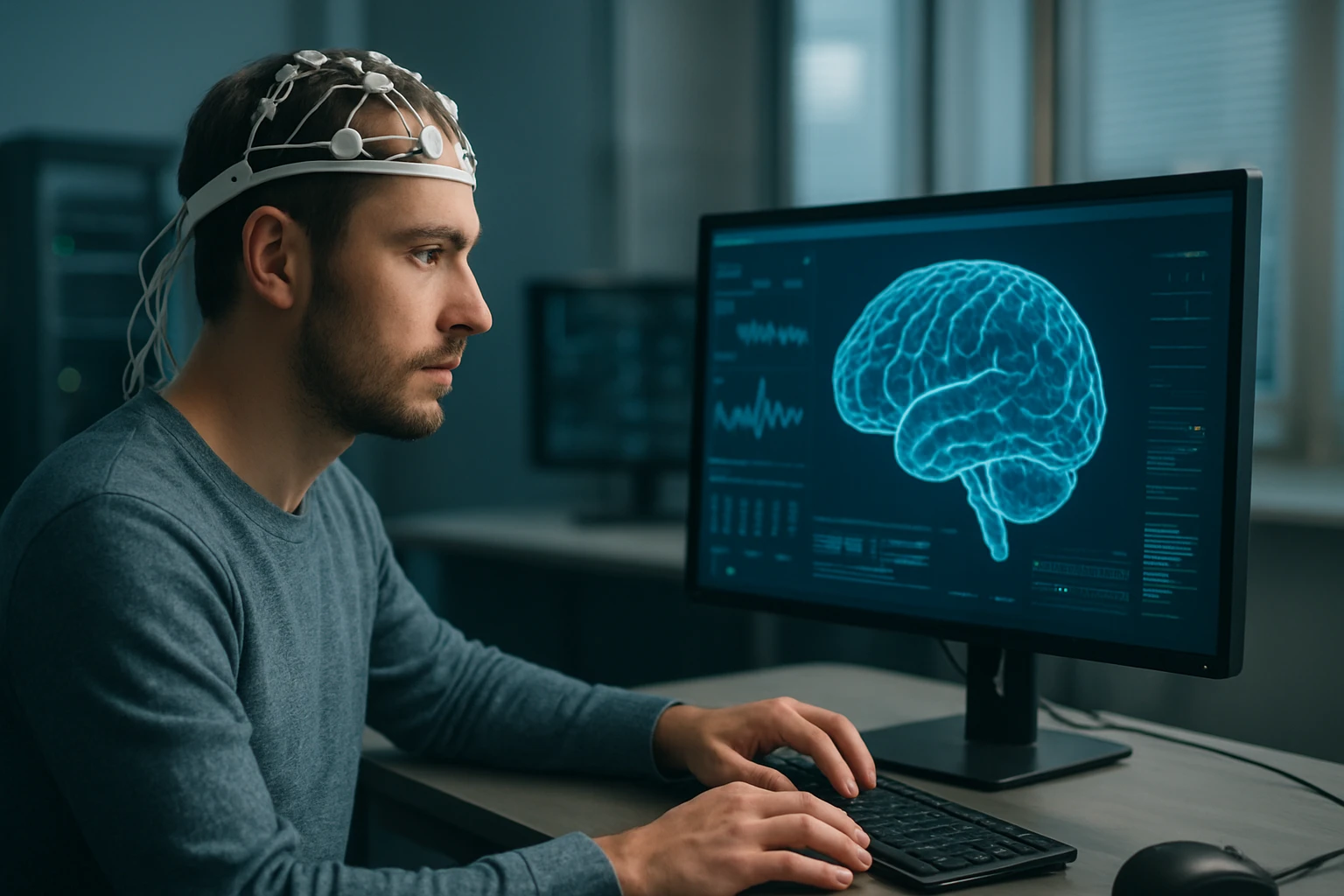


The relationship between our minds and brains has captivated thinkers for centuries, yet it feels more pressing today than ever before. As we witness unprecedented advances in neuroscience and artificial intelligence, the question of whether our thoughts, emotions, and consciousness are simply brain states takes on new urgency. This isn't just an abstract philosophical puzzle—it's a fundamental question about what makes us human and how we understand ourselves in an increasingly technological world.
Mind-brain identity theory proposes that mental states are literally identical to brain states, suggesting that when you experience joy, pain, or contemplate a complex idea, these experiences are nothing more—and nothing less—than specific patterns of neural activity. This perspective offers a compelling framework for understanding consciousness while raising profound questions about free will, personal identity, and the nature of human experience. The theory has evolved significantly since its inception, branching into multiple sophisticated approaches that attempt to reconcile our subjective experiences with objective scientific understanding.
Throughout this exploration, you'll discover how identity theory emerged from earlier philosophical traditions, examine its various forms and interpretations, and understand both its explanatory power and its limitations. We'll investigate the compelling arguments that support this materialist approach to mind, confront the significant challenges it faces, and consider what this theory means for our understanding of consciousness, artificial intelligence, and human nature itself.
The Historical Foundation of Identity Theory
The roots of mind-brain identity theory stretch back to ancient materialist philosophies, but its modern form emerged in the mid-20th century as a response to the limitations of behaviorism. Early philosophers like Democritus proposed that everything, including the soul, consisted of atoms, laying groundwork for materialist approaches to mind. However, the systematic development of identity theory required both philosophical sophistication and scientific understanding that wouldn't coalesce until much later.
The theory gained momentum in the 1950s and 1960s as philosophers began seriously grappling with advances in neuroscience and psychology. Unlike behaviorism, which focused solely on observable behaviors, identity theorists sought to account for the rich inner life of consciousness while maintaining scientific rigor. They proposed that mental states weren't just correlated with brain states—they were brain states, viewed from different perspectives.
This historical development reflected broader shifts in both philosophy and science. The decline of dualistic thinking, combined with growing confidence in scientific materialism, created fertile ground for theories that could bridge subjective experience and objective reality. Identity theory emerged as an attempt to preserve the reality of mental phenomena while grounding them firmly in physical processes.
The philosophical landscape of the time demanded solutions that could address both the explanatory gap between physical processes and conscious experience, and the methodological challenges of studying subjective phenomena scientifically. Identity theory offered a bold answer: there was no gap to bridge because mental and physical were different descriptions of the same underlying reality.
Understanding Type-A Identity Theory
Type-A identity theory, also known as type physicalism, represents the most straightforward version of mind-brain identity. This approach proposes that each type of mental state corresponds to a specific type of brain state across all individuals and potentially all conscious beings. According to this view, pain in humans always corresponds to the same neural configuration, and this same configuration would constitute pain in any conscious creature.
The elegance of Type-A theory lies in its simplicity and scientific compatibility. It suggests that mental state categories map directly onto neural state categories, creating the possibility of universal laws connecting psychological and neurological phenomena. This one-to-one correspondence would allow for precise predictions and interventions, making psychology as rigorous as physics or chemistry.
"The beauty of reducing mental states to brain states lies not in diminishing human experience, but in revealing the extraordinary complexity and sophistication of our neural architecture."
However, Type-A theory faces significant challenges from multiple realizability—the observation that the same mental state might be realized by different physical states. Consider pain: humans, dolphins, and potentially artificial systems might all experience pain through entirely different neural or computational architectures. This diversity suggests that mental states might be better understood as functional patterns rather than specific physical configurations.
The theory also struggles with the apparent flexibility of mental states. Neuroplasticity demonstrates that the same mental function can be performed by different brain regions following injury or learning. This adaptability challenges the rigid type-identity that Type-A theory proposes, suggesting that the relationship between mind and brain might be more complex than simple one-to-one mapping.
Despite these challenges, Type-A theory continues to influence neuroscientific research. Many studies implicitly assume that specific mental functions correspond to identifiable brain regions or networks, reflecting the enduring appeal of this straightforward materialist approach.
Token Identity Theory: A More Flexible Approach
Token identity theory emerged as a response to the limitations of type identity, offering a more nuanced understanding of the mind-brain relationship. Rather than claiming that all instances of a mental state type correspond to the same brain state type, token identity theory proposes that each individual mental event is identical to some brain event, without requiring that all similar mental events share identical neural realizations.
This approach acknowledges the biological diversity and neuroplasticity that challenge Type-A theory while maintaining the fundamental materialist commitment. Your experience of joy today might correspond to a different pattern of neural activity than your joy tomorrow, but both experiences are nonetheless identical to specific brain states. This flexibility accommodates individual differences, developmental changes, and species variation.
Token identity theory aligns well with contemporary neuroscience, which reveals enormous complexity and variability in brain function. Different individuals can achieve the same cognitive outcomes through different neural pathways, and the same individual can reorganize neural resources following injury or learning. This variability supports the token identity approach while challenging more rigid type-identity claims.
The theory also provides a framework for understanding mental causation without invoking non-physical forces. If each mental event is identical to a brain event, then mental causation simply reflects the causal power of neural processes. This eliminates concerns about how immaterial minds could influence physical bodies while preserving our intuitive sense that thoughts and decisions have real causal efficacy.
However, token identity theory faces its own philosophical challenges. Critics argue that if mental states can be realized by virtually any physical configuration, the identity claim becomes so weak as to be meaningless. The theory might collapse into property dualism, where mental and physical properties are distinct even if they're realized by the same underlying substance.
Functionalism: Beyond Simple Identity
Functionalism represents a significant evolution in thinking about mind-brain relationships, moving beyond simple identity claims to focus on the functional organization of mental states. According to functionalist approaches, what makes something a mental state isn't its physical composition but its functional role—its patterns of inputs, outputs, and internal relationships within a broader cognitive system.
This perspective emerged partly from computer science and artificial intelligence research, which demonstrated that the same computational processes could be implemented on radically different physical platforms. Just as software can run on various hardware configurations while maintaining its essential character, mental states might be defined by their functional properties rather than their physical substrates.
Functionalism offers several advantages over traditional identity theory. It naturally accommodates multiple realizability, explaining how different physical systems can have genuine mental states. It also provides a framework for understanding mental states in terms of their roles within larger cognitive architectures, emphasizing the importance of organization and information processing over mere physical composition.
The theory has profound implications for artificial intelligence and consciousness studies. If mental states are defined functionally rather than by their biological implementation, then sufficiently sophisticated artificial systems could potentially achieve genuine consciousness and mental life. This possibility has driven decades of AI research and continues to shape contemporary debates about machine consciousness.
"Understanding mind as function rather than substance opens unprecedented possibilities for both comprehending consciousness and creating it artificially."
However, functionalism faces significant philosophical objections. The famous "inverted spectrum" thought experiment challenges whether functional organization alone can capture the qualitative aspects of conscious experience. Two individuals might be functionally identical while having systematically different color experiences, suggesting that something essential about consciousness transcends functional description.
The Multiple Realizability Challenge
Multiple realizability poses one of the most significant challenges to traditional identity theory, questioning whether mental states can be reduced to specific physical configurations. The core insight is that the same mental state—such as pain, belief, or desire—might be realized by radically different physical systems across species, individuals, or even within the same individual over time.
Consider the diversity of nervous systems in the animal kingdom. Octopuses possess sophisticated cognitive abilities despite having nervous systems organized completely differently from mammalian brains. Their distributed neural networks can support complex behaviors, learning, and possibly conscious experiences, yet their physical architecture bears little resemblance to human brain organization.
This biological diversity extends to artificial systems. If we eventually create artificial intelligence with genuine mental states, these systems might operate on silicon-based computers, quantum processors, or entirely novel computational substrates. The possibility that consciousness could emerge from non-biological systems challenges any theory that ties mental states too closely to specific biological configurations.
Even within individual humans, neuroplasticity demonstrates multiple realizability. Following brain injury, other regions can sometimes assume functions previously performed by damaged areas. Children who undergo hemispherectomy (removal of half the brain) can develop relatively normal cognitive abilities, suggesting that the same mental functions can be supported by dramatically different neural configurations.
| System Type | Neural Organization | Cognitive Capabilities | Implications for Identity Theory |
|---|---|---|---|
| Human Brain | Centralized, hierarchical | Complex reasoning, consciousness | Standard baseline for comparison |
| Octopus Brain | Distributed, decentralized | Problem-solving, learning | Challenges neural specificity |
| Artificial Networks | Digital, parallel processing | Pattern recognition, decision-making | Questions biological necessity |
| Damaged Human Brain | Reorganized, compensatory | Adapted but functional cognition | Demonstrates plasticity |
The multiple realizability challenge has led many philosophers to abandon strict identity theory in favor of more flexible approaches. However, some defenders argue that apparent multiple realizability might reflect our incomplete understanding of underlying commonalities. Perhaps all conscious systems share deeper organizational principles that aren't immediately apparent.
Contemporary Neuroscientific Evidence
Modern neuroscience provides unprecedented insight into brain function, offering both support for and challenges to identity theory. Advanced neuroimaging techniques allow researchers to observe brain activity in real-time, revealing correlations between specific mental states and neural patterns. These findings provide compelling evidence for close mind-brain relationships while raising complex questions about the nature of that relationship.
Functional magnetic resonance imaging (fMRI) studies consistently show that different mental activities correspond to distinct patterns of brain activation. Mathematical reasoning activates different networks than emotional processing, and these patterns are remarkably consistent across individuals. Such findings support the basic identity theory premise that mental states correspond to specific brain states.
However, the relationship proves more complex than simple one-to-one mapping. The same brain region often participates in multiple cognitive functions, and the same mental task can activate different neural networks in different individuals or contexts. This complexity aligns better with token identity theory or functionalist approaches than with rigid type identity.
Neuroscientific research also reveals the dynamic nature of brain-mind relationships. Neural networks constantly reorganize themselves based on experience, attention, and context. The brain that thinks about philosophy differs from the brain that experiences music, not just in terms of activation patterns but in terms of underlying connectivity and structure.
"The brain's remarkable ability to reorganize itself challenges any static conception of mind-brain identity, revealing consciousness as an dynamic, ever-changing process."
Studies of neurological conditions provide additional evidence for identity theory while highlighting its complexities. Specific brain lesions can produce predictable cognitive deficits, suggesting that particular brain regions are necessary for certain mental functions. However, the same lesion can produce different effects in different individuals, and recovery patterns vary enormously.
Recent research on default mode networks, global workspace theory, and integrated information theory attempts to identify the neural correlates of consciousness itself. These approaches suggest that consciousness might emerge from specific patterns of information integration and processing rather than from activity in particular brain regions.
Arguments Supporting Identity Theory
Identity theory draws strength from several compelling philosophical and scientific arguments that address fundamental questions about the nature of mind and reality. The principle of causal closure provides one of the strongest foundations, arguing that if mental events can cause physical events, they must themselves be physical events to avoid violating the laws of physics.
Consider how your decision to raise your hand results in actual physical movement. If mental states were non-physical, they would somehow need to influence physical neurons and muscles without being part of the physical causal network. This seems to violate everything we know about physics and causation. Identity theory elegantly resolves this puzzle by identifying mental events with brain events, making mental causation simply a form of physical causation.
The argument from parsimony also supports identity theory by favoring simpler explanations over more complex ones. Rather than postulating two distinct types of substances or properties—mental and physical—identity theory requires only one. This ontological simplicity aligns with scientific methodology, which typically prefers theories that explain phenomena with fewer fundamental assumptions.
Evolutionary considerations provide additional support. If consciousness and mental states provided survival advantages, they must have causal efficacy in the physical world. Identity theory explains this efficacy naturally, while dualistic theories struggle to explain how non-physical minds could influence physical behavior and thus be subject to natural selection.
The success of neuroscientific interventions offers practical support for identity theory. Psychoactive drugs, brain stimulation, and neurosurgical procedures can predictably alter mental states by changing brain states. These interventions suggest that mental phenomena are intimately connected to—if not identical with—brain processes.
"The seamless way that physical interventions in the brain produce mental changes suggests a fundamental unity between mind and neural activity."
Identity theory also provides a framework for understanding mental disorders as brain disorders. Depression, schizophrenia, and other psychiatric conditions increasingly appear to involve specific neural abnormalities. This medical model has led to effective treatments and suggests that mental health is fundamentally about brain health.
Major Objections and Criticisms
Despite its strengths, identity theory faces substantial philosophical objections that challenge its core assumptions and explanatory adequacy. The knowledge argument, popularized through thought experiments about color-blind scientists, suggests that conscious experience involves qualitative aspects that cannot be captured by physical descriptions alone.
The argument contends that even complete physical knowledge about brain states cannot fully account for the subjective, qualitative nature of conscious experience—what philosophers call "qualia." The redness of red, the painfulness of pain, or the joy of happiness seem to possess properties that resist reduction to neural firing patterns or computational processes.
The conceivability argument presents another significant challenge. Critics argue that we can coherently conceive of zombies—beings physically identical to conscious humans but lacking inner experience. If such scenarios are genuinely conceivable, they suggest that consciousness involves something beyond mere physical organization, undermining identity theory's reductive claims.
The unity of consciousness poses additional difficulties. Our conscious experience feels unified and coherent despite arising from massively parallel and distributed brain processes. Identity theory struggles to explain how millions of separate neural events combine into a single, unified conscious experience. This "binding problem" remains one of neuroscience's most challenging puzzles.
| Objection | Core Claim | Challenge to Identity Theory | Potential Response |
|---|---|---|---|
| Knowledge Argument | Physical facts miss qualitative aspects | Explanatory gap remains unbridged | Qualia are cognitive illusions |
| Conceivability Argument | Zombies are conceivable | Consciousness transcends physical | Conceivability doesn't imply possibility |
| Unity Problem | Experience is unified despite neural distribution | Cannot explain conscious unity | Unity emerges from integration |
| Multiple Realizability | Same mental states, different physical states | Undermines type identity | Supports token identity instead |
The problem of mental causation creates paradoxes even within identity theory. If mental states are identical to brain states, then mental causation should be straightforward. However, the relationship between different levels of description—neural, psychological, and behavioral—remains puzzling. How do high-level mental concepts relate to low-level neural processes?
Personal identity over time presents another challenge. If you are identical to your brain states, and brain states constantly change, what maintains your identity as the same person? Identity theory must explain continuity of personal identity despite continuous neural flux, a problem that connects to broader questions about persistence and change.
Implications for Artificial Intelligence
Identity theory has profound implications for artificial intelligence research and our understanding of machine consciousness. If mental states are identical to physical states organized in appropriate ways, then artificial systems could potentially achieve genuine consciousness and mental life through suitable physical implementation.
This possibility has driven decades of AI research aimed at creating systems that don't merely simulate intelligence but genuinely possess it. Identity theory suggests that the substrate doesn't matter—silicon-based computers could theoretically support the same mental states as biological brains if they implement the right functional organization.
However, the theory also raises challenging questions about what constitutes "appropriate" organization. Current AI systems excel at specific tasks but lack the integrated, flexible intelligence characteristic of human consciousness. Identity theory doesn't specify exactly what physical or functional properties are necessary for consciousness, leaving open fundamental questions about machine sentience.
The development of large language models and neural networks has renewed interest in these questions. These systems exhibit increasingly sophisticated behavior that sometimes appears to involve understanding, reasoning, and even creativity. Identity theory suggests that if these systems implement the right functional organization, they might genuinely possess mental states rather than merely simulating them.
"The question is not whether machines can think, but whether the physical processes underlying thought can be implemented in artificial systems."
Different versions of identity theory have different implications for AI consciousness. Type-A identity theory might require artificial systems to replicate specific biological neural architectures, making machine consciousness extremely difficult to achieve. Token identity theory and functionalism are more permissive, allowing for consciousness in any system that implements appropriate functional relationships.
The possibility of artificial consciousness raises ethical questions that identity theory helps clarify. If AI systems can genuinely suffer or experience well-being, we might have moral obligations toward them. Identity theory provides a framework for thinking about when such obligations might arise, though it doesn't resolve the difficult question of how to detect consciousness in artificial systems.
The Hard Problem of Consciousness
The hard problem of consciousness represents perhaps the most significant challenge to identity theory and materialist approaches to mind generally. While identity theory can explain many aspects of mental life—cognitive functions, behavioral patterns, and information processing—it struggles to account for the subjective, experiential aspects of consciousness.
David Chalmers articulated this distinction between "easy" and "hard" problems of consciousness. Easy problems involve explaining cognitive functions like attention, memory, and decision-making. These problems are challenging but seem amenable to standard scientific approaches. The hard problem concerns why there is subjective experience at all—why cognitive processing is accompanied by inner, qualitative experience.
Identity theory addresses easy problems effectively by identifying mental functions with neural processes. We can explain how brains process information, form memories, and control behavior through detailed neuroscientific investigation. However, explaining why these processes are accompanied by subjective experience remains mysterious.
The explanatory gap between objective brain processes and subjective experience appears particularly challenging for identity theory. Even if we accept that mental states are identical to brain states, the identity seems to leave something unexplained. Why should specific neural firing patterns be accompanied by the experience of pain rather than pleasure, or by any experience at all?
Some identity theorists argue that the hard problem reflects conceptual confusion rather than a genuine empirical challenge. They suggest that once we fully understand brain function, the mystery of consciousness will dissolve. Subjective experience might be nothing over and above complex information processing, making the hard problem an artifact of incomplete understanding.
Others propose that identity theory needs supplementation with additional principles or properties. Panpsychist approaches suggest that consciousness is a fundamental feature of reality, present even in simple physical systems. Integrated information theory proposes that consciousness corresponds to integrated information, providing a mathematical framework for understanding subjective experience.
"The persistence of the hard problem suggests that consciousness might require conceptual innovations as radical as those that enabled quantum mechanics or relativity theory."
The hard problem also connects to questions about the nature of scientific explanation itself. Perhaps consciousness requires new forms of explanation that go beyond the reductive approaches that work well for other natural phenomena. Identity theory might need to evolve into more sophisticated frameworks that can accommodate both objective and subjective aspects of reality.
Modern Developments and Variations
Contemporary philosophy of mind has developed numerous sophisticated variations of identity theory that address traditional objections while maintaining materialist commitments. These modern approaches reflect advances in neuroscience, cognitive science, and philosophy of science, offering more nuanced accounts of mind-brain relationships.
Nonreductive physicalism represents one significant development, arguing that mental properties are physical properties without being reducible to lower-level physical descriptions. This approach maintains that mental states are grounded in brain states while acknowledging that mental-level descriptions might capture patterns and regularities that aren't visible at the neural level.
Emergence theories propose that consciousness arises from complex neural organization without being identical to any specific brain configuration. These approaches suggest that mental properties emerge from neural activity in ways analogous to how life emerges from chemistry or chemistry emerges from physics. Emergence preserves the reality of mental phenomena while grounding them in physical processes.
Dual-aspect theories offer another sophisticated approach, suggesting that mental and physical descriptions refer to different aspects of the same underlying reality. Rather than claiming that mental states are identical to brain states, these theories propose that both mental and physical concepts describe different facets of more fundamental processes or properties.
Predictive processing frameworks represent a recent development that reconceptualizes the mind-brain relationship. These approaches suggest that brains are primarily prediction machines that generate models of the world and update them based on sensory input. Consciousness might emerge from the brain's predictive modeling rather than from specific neural states or processes.
Enactive approaches emphasize the role of embodied interaction with the environment in constituting mental phenomena. Rather than locating mind purely within the brain, these theories suggest that mental states emerge from dynamic interactions between brains, bodies, and environments. This perspective challenges traditional identity theory while maintaining naturalistic commitments.
The development of computational neuroscience has also influenced identity theory. Mathematical models of neural networks provide precise frameworks for understanding how mental functions might be implemented in biological systems. These models suggest that mental states might be identical to specific computational processes rather than static neural configurations.
Future Directions and Implications
The future of mind-brain identity theory will likely be shaped by continued advances in neuroscience, artificial intelligence, and philosophy of mind. Emerging technologies for brain imaging and manipulation provide unprecedented opportunities to test theoretical predictions and refine our understanding of mind-brain relationships.
Optogenetics and other precise intervention techniques allow researchers to manipulate specific neural populations and observe resulting changes in behavior and experience. These tools might eventually enable direct tests of identity theory by determining whether specific mental states can be reliably produced through targeted brain stimulation.
The development of brain-computer interfaces raises practical questions about the boundaries of mind and brain. If artificial devices can be integrated with neural systems to enhance or replace cognitive functions, what does this mean for personal identity and the nature of mind? Identity theory provides frameworks for thinking about these possibilities while raising new questions about hybrid biological-artificial systems.
Advances in artificial intelligence will continue to inform debates about consciousness and identity theory. As AI systems become more sophisticated, questions about their potential consciousness become more pressing. Identity theory suggests criteria for evaluating these possibilities while acknowledging the difficulty of detecting consciousness in non-biological systems.
"The future of consciousness studies lies not in choosing between competing theories, but in developing frameworks sophisticated enough to encompass the full complexity of mind-brain relationships."
The integration of different scientific approaches—neuroscience, psychology, computer science, and physics—will likely produce new insights into consciousness and identity. Interdisciplinary research might reveal principles of organization or information processing that bridge the explanatory gap between brain and mind.
Philosophical developments will also shape the theory's evolution. New conceptual frameworks for understanding causation, emergence, and reduction might resolve current puzzles about mind-brain relationships. The development of new logical and mathematical tools might enable more precise formulations of identity claims.
The practical implications of identity theory will become increasingly important as we develop technologies that can modify brain function. Understanding the relationship between mental and neural states will be crucial for treating psychiatric disorders, enhancing cognitive abilities, and addressing the ethical challenges posed by brain interventions.
What is mind-brain identity theory?
Mind-brain identity theory is the philosophical position that mental states are identical to brain states. According to this view, when you experience thoughts, emotions, or sensations, these mental phenomena are literally the same as specific patterns of neural activity in your brain, just described using different vocabulary.
What's the difference between Type-A and Token identity theory?
Type-A identity theory claims that each type of mental state (like pain) corresponds to the same type of brain state across all individuals. Token identity theory is more flexible, proposing that each individual mental event is identical to some brain event, but different people might have different brain states for the same type of mental experience.
How does identity theory address the mind-body problem?
Identity theory solves the mind-body problem by denying that there are two separate substances (mind and body) that need to interact. Instead, it proposes that mental and physical are simply different ways of describing the same underlying reality—brain states viewed from different perspectives.
What is multiple realizability and why is it problematic for identity theory?
Multiple realizability is the idea that the same mental state can be realized by different physical systems. For example, pain might be experienced by humans, animals with different brain structures, or potentially artificial systems. This challenges identity theory because it suggests mental states aren't tied to specific brain configurations.
Does identity theory deny the reality of consciousness?
No, identity theory doesn't deny consciousness—it attempts to explain it. The theory argues that conscious experiences are real and identical to brain processes. However, critics argue that this explanation fails to capture the subjective, qualitative aspects of conscious experience.
What implications does identity theory have for artificial intelligence?
Identity theory suggests that artificial systems could potentially achieve genuine consciousness if they implement the right physical or functional organization. This has important implications for AI development and raises ethical questions about our obligations toward potentially conscious machines.
How does neuroscience support or challenge identity theory?
Modern neuroscience provides evidence for close correlations between mental states and brain activity, supporting identity theory's basic premise. However, findings about neuroplasticity, individual differences in brain organization, and the complexity of neural networks challenge simpler versions of the theory.
What is the hard problem of consciousness and how does it relate to identity theory?
The hard problem concerns why subjective experience exists at all—why brain processes are accompanied by inner, qualitative experience rather than occurring unconsciously. This poses a significant challenge to identity theory, which struggles to explain the subjective aspects of consciousness in purely physical terms.
Can identity theory explain mental causation?
Identity theory attempts to explain mental causation by arguing that mental events are identical to brain events, so mental causation is simply physical causation described at a different level. However, questions remain about how higher-level mental descriptions relate to lower-level neural processes.
What are the main alternatives to identity theory?
Major alternatives include property dualism (mental and physical properties are distinct), functionalism (mental states are defined by their functional roles rather than physical implementation), and emergentism (consciousness emerges from but isn't reducible to brain activity). Each approach attempts to address different aspects of the mind-brain relationship.