
The world of financial transactions moves at lightning speed, processing millions of checks and documents daily with remarkable precision. Yet behind this seamless efficiency lies a technology that has quietly revolutionized banking operations for over six decades. Magnetic Ink Character Recognition represents one of those rare innovations that fundamentally transformed an entire industry while remaining largely invisible to end users.
Magnetic Ink Character Recognition serves as the backbone of automated check processing, utilizing specially formulated magnetic ink to encode essential banking information in a machine-readable format. This technology promises to unveil the intricate mechanisms that enable banks to process vast volumes of paper-based transactions with unprecedented accuracy and speed, while exploring its expanding applications beyond traditional banking.
Readers will discover the technical foundations of MICR systems, understand how magnetic ink properties enable reliable character recognition, and explore the diverse applications spanning from check processing to document security. The following exploration will illuminate both current implementations and emerging trends that continue to shape this enduring technology.
Understanding MICR Technology Fundamentals
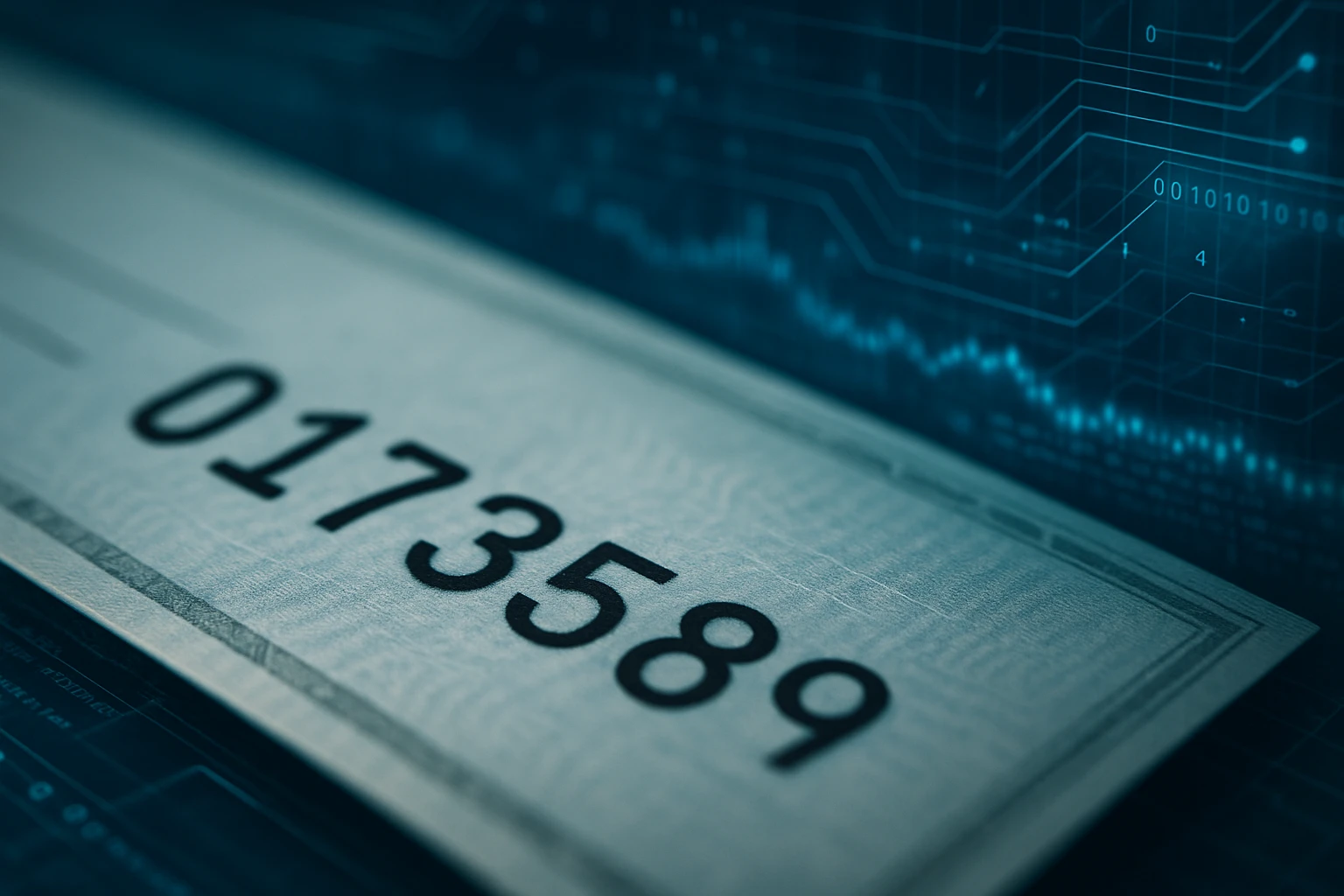
Magnetic Ink Character Recognition operates on the principle of magnetizable particles suspended within specially formulated inks. These particles, typically iron oxide compounds, respond predictably to magnetic fields during the reading process. The technology employs specific character fonts designed for optimal magnetic recognition, with each character producing a unique magnetic signature when scanned.
The reading process involves magnetizing the printed characters and then sensing the magnetic flux changes as the document passes through specialized scanners. This magnetic approach provides exceptional reliability compared to optical character recognition systems, particularly when documents are damaged, folded, or partially obscured. The magnetic properties remain detectable even when visual clarity is compromised.
"The magnetic properties of MICR characters provide unparalleled reliability in document processing, maintaining readability even under adverse conditions that would render optical systems ineffective."
MICR systems utilize two primary font standards: E-13B and CMC-7. The E-13B font, predominantly used in North America, features 14 characters including ten digits and four special symbols. The CMC-7 font, common in Europe and other regions, incorporates 15 characters with additional special symbols for enhanced functionality.
Core Components of MICR Systems
The fundamental architecture of MICR technology encompasses several critical components working in harmony. Magnetic ink formulations represent the foundation, requiring precise iron oxide concentrations to achieve consistent magnetic properties. These inks must maintain stability across various printing conditions while ensuring optimal magnetic response during reading operations.
Reading hardware consists of specialized scanners equipped with magnetic heads capable of detecting minute variations in magnetic fields. These devices employ sophisticated signal processing algorithms to convert magnetic signatures into digital character representations. The scanning process typically operates at high speeds, enabling rapid document processing in commercial banking environments.
Document transport mechanisms ensure precise positioning and movement of checks and other documents through the reading zone. These systems incorporate advanced paper handling technologies to accommodate various document sizes, thicknesses, and conditions while maintaining consistent reading accuracy.
Technical Specifications and Standards
MICR technology operates under stringent technical specifications established by banking industry standards organizations. The American National Standards Institute (ANSI) and International Organization for Standardization (ISO) have developed comprehensive guidelines governing MICR implementation across different regions and applications.
Character dimensions follow precise measurements to ensure universal compatibility. E-13B characters measure 0.116 inches in height with specific width variations for each character type. The baseline positioning and character spacing adhere to exact tolerances, typically within 0.005 inches, to maintain consistent reading performance across different systems.
| MICR Font Standard | Character Count | Primary Regions | Key Features |
|---|---|---|---|
| E-13B | 14 characters | North America, Australia | Stylized numerals, 4 special symbols |
| CMC-7 | 15 characters | Europe, South America | Barcode-like appearance, 5 special symbols |
Magnetic ink specifications require specific iron oxide content, typically ranging from 50-70% by weight. The particle size distribution must fall within narrow parameters to ensure consistent magnetic properties and print quality. Ink viscosity, surface tension, and drying characteristics are carefully controlled to optimize both printing performance and magnetic readability.
Print Quality Requirements
Print quality standards for MICR applications exceed typical commercial printing requirements. Character edges must be sharp and well-defined, with minimal bleeding or feathering that could compromise magnetic reading accuracy. The magnetic ink must achieve uniform coverage across the entire character area, avoiding gaps or thin spots that might create reading errors.
Signal strength measurements evaluate the magnetic response of printed characters under standardized conditions. Acceptable signal levels typically range from 50-200% of baseline standards, with consistency requirements ensuring minimal variation between characters on the same document or across different printing batches.
"Maintaining consistent print quality in MICR applications requires precise control over ink formulation, printing parameters, and environmental conditions throughout the production process."
Testing procedures involve both magnetic and visual inspection methods. Magnetic testing employs calibrated readers to verify signal strength and character recognition accuracy. Visual inspection examines character formation, positioning, and overall print quality using standardized criteria and measurement tools.
Banking and Financial Applications
The banking industry represents the primary domain for MICR technology implementation, with virtually all check processing operations relying on this magnetic encoding system. Check processing workflows begin with MICR encoding during check printing, where account numbers, routing codes, and other essential information are printed using magnetic ink in designated areas of the check.
Automated clearing house operations depend heavily on MICR technology to sort and process millions of checks daily. High-speed reader-sorter machines can process up to 2,400 documents per minute, reading MICR codes and directing checks to appropriate destinations based on routing information. This automation has dramatically reduced processing times and operational costs while improving accuracy rates.
Commercial banks utilize MICR systems for various internal operations beyond check processing. Deposit slips, money orders, and other financial instruments frequently incorporate magnetic encoding to streamline handling and reduce manual data entry requirements. The technology enables seamless integration between paper-based transactions and electronic banking systems.
Check Clearing and Settlement
The check clearing process relies fundamentally on MICR technology to facilitate efficient inter-bank transactions. When checks are deposited, MICR readers extract routing and account information, enabling automated sorting and forwarding to appropriate financial institutions. This process occurs multiple times as checks move through the clearing system, with each handling point depending on accurate MICR reading.
Federal Reserve Banks and private clearing houses operate extensive MICR-based processing facilities that handle billions of checks annually. These operations require exceptional reliability and speed, with error rates typically maintained below 0.01% through rigorous quality control and system monitoring procedures.
| Processing Stage | MICR Function | Typical Volume | Error Rate Target |
|---|---|---|---|
| Initial Deposit | Account/Routing Read | 100-500 items/minute | <0.005% |
| Bank Processing | Sorting/Encoding | 1,000-2,400 items/minute | <0.01% |
| Clearing House | Inter-bank Routing | 500-1,200 items/minute | <0.001% |
International check processing presents unique challenges for MICR implementation, particularly when dealing with different font standards and currency requirements. Cross-border transactions often require format conversion and additional verification steps to ensure compatibility between different banking systems and regulatory frameworks.
"The reliability of MICR technology in check processing has enabled the banking industry to maintain paper-based transaction capabilities while achieving electronic-level efficiency and accuracy."
Security Features and Fraud Prevention
MICR technology incorporates several inherent security features that make document forgery and alteration significantly more challenging. The magnetic properties of MICR ink cannot be replicated using standard printing methods or common materials, creating a natural barrier against counterfeiting attempts. Sophisticated detection equipment can easily distinguish between genuine magnetic ink and non-magnetic substitutes.
The specialized nature of MICR printing equipment and materials creates additional security layers. Legitimate MICR printing requires access to approved magnetic inks, calibrated printing systems, and technical expertise that is not readily available to potential fraudsters. This limited accessibility helps maintain the integrity of MICR-encoded documents.
Authentication processes can verify MICR authenticity through multiple testing methods. Magnetic signal strength analysis reveals whether proper magnetic ink was used, while character formation examination can detect printing irregularities that might indicate fraudulent reproduction attempts. These verification techniques are often integrated into automated processing systems.
Advanced Security Implementations
Modern MICR applications incorporate enhanced security measures beyond basic magnetic encoding. Microprinting techniques embed extremely small text within MICR characters that is difficult to reproduce accurately using standard counterfeiting methods. These microscopic details are typically invisible to casual observation but can be detected through specialized examination equipment.
Chemical protection features may be integrated into MICR ink formulations to provide additional tampering resistance. Some implementations include reactive compounds that change color or magnetic properties when exposed to common alteration chemicals, making document modification attempts readily apparent during processing.
"The combination of magnetic properties, specialized printing requirements, and advanced security features makes MICR technology one of the most fraud-resistant document encoding methods available today."
Holographic elements and other optical security features are sometimes combined with MICR encoding to create multi-layered protection systems. These hybrid approaches leverage the strengths of different security technologies to provide comprehensive protection against various types of fraudulent activities.
Industrial and Commercial Applications
Beyond banking applications, MICR technology has found significant adoption in various industrial and commercial sectors where reliable document processing and security are paramount. Manufacturing industries utilize MICR encoding for inventory tracking, quality control documentation, and production workflow management. The technology's resistance to environmental factors makes it particularly suitable for industrial environments where documents may be exposed to dust, moisture, or handling stress.
Retail operations employ MICR systems for gift certificates, store credit vouchers, and promotional materials that require secure encoding and automated processing capabilities. The magnetic encoding provides both security against counterfeiting and efficient processing through point-of-sale systems equipped with MICR reading capabilities.
Government agencies have implemented MICR technology for various official documents including licenses, permits, and certificates where security and automated processing are essential. The durability and reliability of magnetic encoding make it particularly valuable for documents that must maintain readability over extended periods or under challenging storage conditions.
Healthcare and Insurance Applications
The healthcare industry has embraced MICR technology for patient identification systems, prescription tracking, and insurance claim processing. Medical facilities utilize magnetic encoding on patient wristbands and medical records to ensure accurate identification and reduce administrative errors. The technology's reliability under various environmental conditions makes it ideal for healthcare settings.
Insurance companies implement MICR systems for policy documents, claim forms, and payment processing operations. The security features inherent in magnetic encoding help prevent fraudulent document creation while enabling efficient automated processing of legitimate transactions. This dual benefit of security and efficiency has driven widespread adoption across the insurance sector.
"The versatility of MICR technology extends far beyond banking applications, providing reliable document processing and security solutions across diverse industries and commercial sectors."
Educational institutions utilize MICR encoding for student identification, transcript security, and financial aid processing. The technology enables efficient administrative operations while providing security features that help prevent document fraud and unauthorized modifications.
Printing Technologies and Equipment
MICR printing requires specialized equipment and techniques to achieve the precise magnetic properties and print quality necessary for reliable character recognition. Laser printing systems designed for MICR applications incorporate specific toner formulations containing magnetic particles that provide the required magnetic response characteristics. These systems must maintain precise temperature and pressure controls to ensure consistent magnetic particle distribution.
Inkjet printing technologies have been adapted for MICR applications through the development of magnetic ink formulations compatible with inkjet printing mechanisms. These systems offer advantages in terms of print quality and flexibility but require careful ink management to prevent nozzle clogging and maintain consistent magnetic properties throughout the printing process.
Offset printing remains a primary method for high-volume MICR production, particularly for check printing and other financial documents. Commercial offset presses equipped with magnetic ink systems can produce thousands of documents per hour while maintaining the strict quality standards required for MICR applications.
Quality Control and Testing Procedures
Print quality assessment for MICR applications involves both automated testing systems and manual inspection procedures. Automated readers evaluate magnetic signal strength, character recognition accuracy, and positioning precision across sample documents from each production run. These systems can detect variations that might compromise reading performance in downstream processing operations.
Visual inspection procedures examine character formation, print density, and overall document quality using standardized criteria and measurement tools. Inspectors check for common defects such as broken characters, misalignment, or contamination that could affect both magnetic and visual readability.
Environmental testing ensures that printed MICR documents maintain their magnetic properties and readability under various storage and handling conditions. These tests may include exposure to temperature variations, humidity changes, and mechanical stress to verify long-term performance reliability.
Technology Evolution and Future Trends
The evolution of MICR technology continues to be driven by changing industry requirements and advancing technological capabilities. Digital transformation in banking and finance has created new demands for MICR systems that can integrate seamlessly with electronic processing workflows while maintaining the security and reliability advantages of magnetic encoding.
Hybrid systems combining MICR technology with other identification methods are becoming increasingly common. These implementations may incorporate RFID chips, barcodes, or other electronic elements alongside traditional magnetic encoding to provide enhanced functionality and security features for modern applications.
Sustainability considerations are influencing MICR technology development, with manufacturers working to develop more environmentally friendly magnetic ink formulations and printing processes. These efforts focus on reducing environmental impact while maintaining the performance characteristics essential for reliable MICR operations.
Emerging Applications and Markets
New market opportunities for MICR technology are emerging in sectors previously dominated by other identification and security methods. The gaming industry has shown interest in magnetic encoding for casino chips and gaming tokens, where the security and durability advantages of MICR provide significant benefits over traditional marking methods.
Luxury goods authentication represents another growing application area where MICR technology's security features can help combat counterfeiting. High-end products may incorporate magnetic encoding elements that are difficult to reproduce and can be verified through specialized reading equipment.
"The future of MICR technology lies not in replacing existing applications but in expanding into new markets where its unique combination of security, reliability, and durability provides distinct advantages."
Transportation and logistics applications are exploring MICR implementation for cargo tracking, shipping documentation, and supply chain management. The technology's resistance to environmental factors and tampering makes it particularly suitable for applications where documents must maintain integrity throughout complex distribution networks.
Implementation Considerations and Best Practices
Successful MICR implementation requires careful attention to multiple factors that influence system performance and reliability. Equipment selection must consider processing volume requirements, accuracy specifications, and integration needs with existing systems. Organizations should evaluate both current needs and future growth projections when designing MICR processing capabilities.
Staff training represents a critical success factor for MICR operations, as proper handling procedures and quality control measures require specialized knowledge and skills. Training programs should cover equipment operation, troubleshooting procedures, and quality assessment techniques to ensure consistent performance and rapid problem resolution.
Maintenance schedules and procedures must be established to maintain optimal system performance over time. Regular cleaning, calibration, and component replacement help prevent degradation in reading accuracy and processing efficiency. Preventive maintenance approaches typically prove more cost-effective than reactive repair strategies.
Cost-Benefit Analysis Framework
Economic evaluation of MICR implementation should consider both direct costs and indirect benefits across the entire operational lifecycle. Direct costs include equipment acquisition, installation, training, and ongoing maintenance expenses. These must be weighed against benefits such as reduced processing time, improved accuracy, and enhanced security capabilities.
Return on investment calculations should account for productivity improvements, error reduction, and labor cost savings that result from MICR automation. Many organizations find that processing efficiency gains and reduced error rates provide substantial long-term value that justifies initial implementation investments.
Risk mitigation benefits may provide additional economic value through reduced fraud losses, improved audit capabilities, and enhanced regulatory compliance. These factors can be particularly significant for organizations handling high-value transactions or operating in heavily regulated industries.
"Successful MICR implementation requires a comprehensive approach that considers technical requirements, operational procedures, staff capabilities, and long-term economic factors to achieve optimal results."
What is MICR technology and how does it work?
MICR (Magnetic Ink Character Recognition) is a technology that uses magnetic ink containing iron oxide particles to print characters that can be read by specialized magnetic scanners. The system works by magnetizing the printed characters and detecting the unique magnetic signatures they produce when scanned, enabling automated document processing with high accuracy even when documents are damaged or partially obscured.
What are the main applications of MICR technology?
MICR technology is primarily used in banking for check processing, but applications extend to various industries including retail (gift certificates), healthcare (patient identification), government (official documents), insurance (claim processing), and manufacturing (inventory tracking). Any application requiring secure, reliable document processing can benefit from MICR implementation.
What types of magnetic ink are used in MICR printing?
MICR printing uses specially formulated inks containing iron oxide particles, typically comprising 50-70% of the ink by weight. These inks are available for different printing technologies including laser printing (magnetic toner), inkjet printing (magnetic ink), and offset printing (magnetic ink). The specific formulation must meet strict standards for magnetic properties and print quality.
How secure is MICR technology against fraud and counterfeiting?
MICR technology provides excellent security against fraud due to several factors: the magnetic properties cannot be replicated with standard printing methods, specialized equipment and materials are required for legitimate MICR printing, and authentication systems can easily detect non-magnetic substitutes. Additional security features like microprinting and chemical protection may be integrated for enhanced protection.
What are the technical standards for MICR implementation?
MICR technology operates under strict standards established by ANSI and ISO organizations. Key specifications include character dimensions (E-13B characters are 0.116 inches high), precise positioning tolerances (within 0.005 inches), magnetic ink composition requirements, and signal strength parameters (typically 50-200% of baseline standards). Two primary font standards are used: E-13B (North America) and CMC-7 (Europe).
How does MICR compare to other document recognition technologies?
MICR offers superior reliability compared to optical character recognition (OCR) systems, particularly when documents are damaged, folded, or dirty, as magnetic properties remain detectable even when visual clarity is compromised. While OCR may be more versatile for general text recognition, MICR provides unmatched accuracy and security for specific applications requiring robust document processing capabilities.