
The relentless demand for digital storage continues to reshape how we approach data preservation and management. As our digital footprints expand exponentially—from high-resolution media files to comprehensive backup solutions—the storage industry faces mounting pressure to deliver higher capacities without proportional increases in physical space or cost. This challenge has driven innovative approaches to magnetic recording technology, fundamentally changing how data is written and stored on traditional hard drives.
Shingled Magnetic Recording represents a paradigm shift in storage technology, offering a sophisticated solution to the capacity constraints of conventional recording methods. This approach reimagines the fundamental architecture of data tracks on magnetic media, promising significant density improvements while introducing unique operational characteristics. The technology presents both remarkable opportunities and distinct challenges that storage professionals and consumers must carefully consider.
Readers exploring this technology will discover the intricate mechanisms behind SMR implementation, understand the trade-offs between capacity and performance, and gain insights into optimal use cases. This comprehensive examination will illuminate the technical foundations, practical applications, and future implications of shingled recording technology, empowering informed decisions about storage solutions in an increasingly data-driven world.
Understanding the Fundamentals of Shingled Magnetic Recording
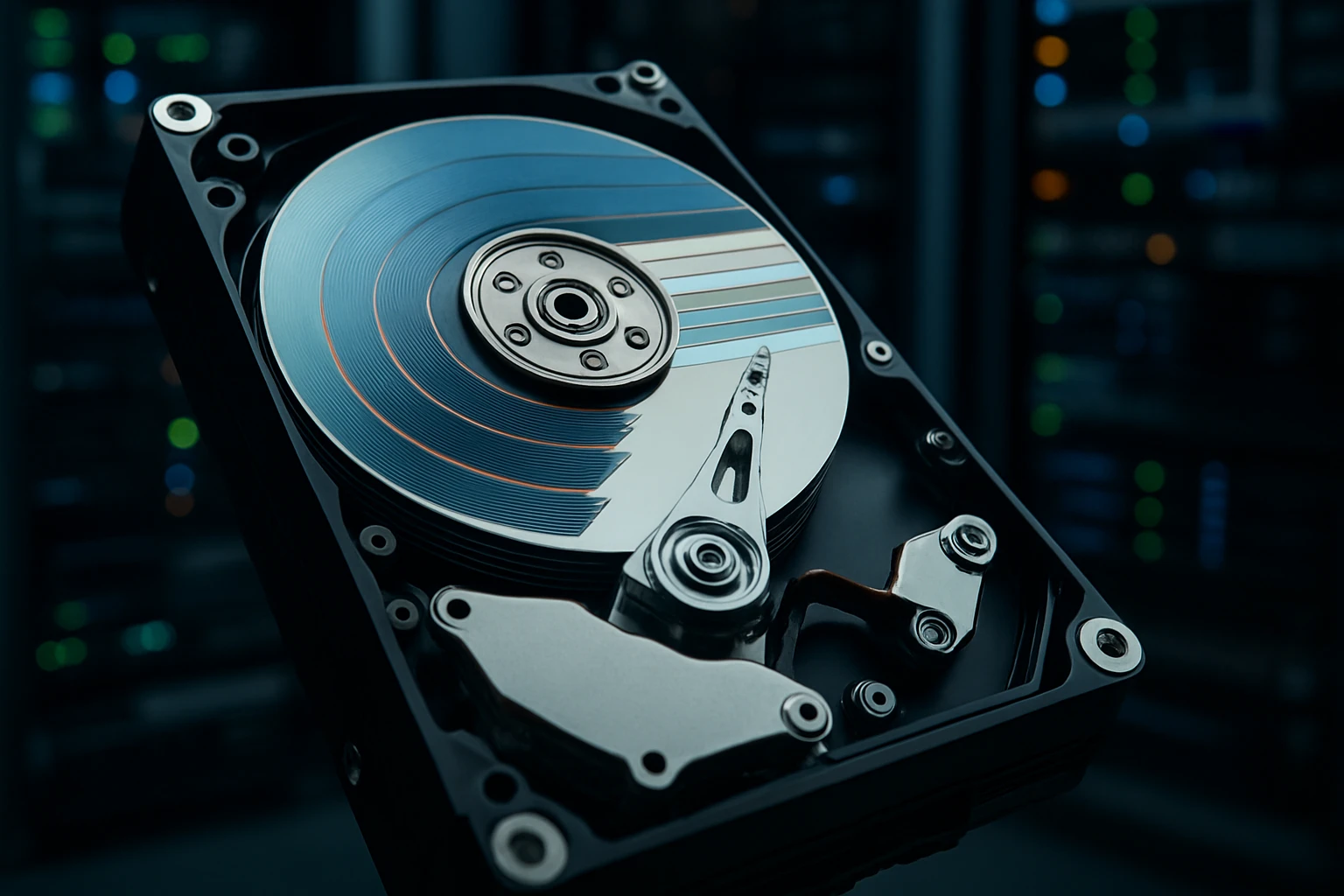
Shingled Magnetic Recording fundamentally alters the traditional approach to data storage by overlapping magnetic tracks, similar to how roof shingles overlap to provide complete coverage. In conventional perpendicular magnetic recording (PMR), each data track maintains distinct boundaries with guard bands separating adjacent tracks. SMR eliminates these guard bands by allowing tracks to partially overlap, creating a "shingled" pattern that maximizes the utilization of available magnetic surface area.
The technology leverages the asymmetric nature of magnetic read and write operations. Write heads are inherently wider than read heads due to the physical requirements of magnetic field generation. SMR exploits this difference by writing tracks that partially overwrite the edges of previously written tracks, while the narrower read heads can still accurately retrieve data from the remaining track portions.
This overlapping approach requires sequential writing patterns within shingled zones. When data needs modification in the middle of a shingled zone, the drive must rewrite all subsequent overlapping tracks in that zone. This characteristic fundamentally distinguishes SMR drives from traditional drives and influences their optimal applications and performance profiles.
Key Technical Components
The implementation of SMR technology involves several critical components working in concert:
- Shingled zones: Logical groupings of overlapping tracks
- Conventional zones: Traditional PMR areas for metadata and frequently accessed data
- Write pointer management: Systems tracking the current write position within each zone
- Zone management algorithms: Software controlling data placement and garbage collection
- Enhanced error correction: Additional redundancy to handle increased track density
The Physics Behind Increased Storage Density
SMR achieves remarkable density improvements through precise control of magnetic domain interactions. The overlapping track structure reduces the effective track pitch—the distance between track centers—from approximately 100 nanometers in PMR drives to as low as 70 nanometers in advanced SMR implementations. This reduction directly translates to increased tracks per inch (TPI) and higher areal density.
The magnetic properties of modern recording media enable this approach through improved grain structure and thermal stability. Advanced perpendicular recording media exhibits sufficient coercivity to maintain data integrity even when adjacent tracks are partially overwritten. The remaining track width, though reduced, provides adequate signal strength for reliable data retrieval using sensitive magnetoresistive read heads.
Thermal considerations play a crucial role in SMR implementation. Heat-assisted magnetic recording (HAMR) technologies complement SMR by enabling more precise magnetic domain control during the write process. This combination allows for even tighter track spacing while maintaining data reliability and longevity.
Density Comparison Analysis
| Technology | Track Pitch (nm) | Typical Capacity Gain | Implementation Complexity |
|---|---|---|---|
| PMR | 90-100 | Baseline | Low |
| SMR | 70-80 | 20-25% | Medium |
| SMR + HAMR | 60-70 | 35-40% | High |
| Advanced SMR | 50-60 | 45-50% | Very High |
Zone Management and Data Organization
SMR drives organize storage space into distinct zones, each containing multiple shingled tracks. Zone management represents one of the most critical aspects of SMR implementation, directly impacting performance, reliability, and capacity utilization. These zones typically range from several hundred megabytes to multiple gigabytes in size, depending on the specific drive design and intended application.
Device-managed SMR (DM-SMR) drives handle zone management transparently through internal firmware and algorithms. The drive controller maintains mapping tables, manages write operations, and performs background optimization without requiring host system awareness. This approach provides compatibility with existing systems while potentially introducing performance variability during internal maintenance operations.
Host-managed SMR (HM-SMR) drives expose zone information to the host system, allowing applications and file systems to optimize data placement and access patterns. This approach enables superior performance for applications designed with SMR awareness but requires specific software support and may not be compatible with legacy systems.
Zone Types and Characteristics
SMR drives typically implement multiple zone types to optimize different data access patterns:
- Sequential write required zones: Standard SMR zones requiring sequential data writing
- Sequential write preferred zones: Zones optimizing for sequential access but allowing random writes
- Conventional zones: Traditional PMR zones for metadata and random access data
- Reserved zones: Areas allocated for drive maintenance and wear leveling
Performance Implications and Trade-offs
The shingled architecture introduces unique performance characteristics that significantly differ from traditional drives. Sequential write performance in SMR drives often matches or exceeds PMR drives when data is written in alignment with zone boundaries. Applications streaming large amounts of data—such as video recording, backup operations, or data archival—can achieve excellent throughput with properly optimized SMR implementations.
Random write performance presents the most significant challenge for SMR technology. Writing small amounts of data randomly across the drive can trigger extensive internal reorganization as the drive controller manages zone updates and maintains data consistency. This process, known as write amplification, can result in significantly reduced performance and increased wear on the storage medium.
Read performance generally remains comparable to PMR drives, as the narrower read heads can efficiently access data regardless of the underlying track structure. However, concurrent read and write operations may experience performance degradation if the drive controller must perform extensive background maintenance activities.
"The key to successful SMR deployment lies in understanding workload characteristics and aligning application behavior with the technology's strengths while mitigating its limitations."
Performance Optimization Strategies
Effective SMR utilization requires careful consideration of data access patterns and system design:
- Workload analysis: Identifying sequential vs. random access requirements
- Zone-aware applications: Software designed to leverage SMR characteristics
- Caching strategies: Using faster storage tiers for random access data
- Batch processing: Grouping operations to minimize zone management overhead
- Capacity planning: Accounting for background maintenance impact on available performance
Implementation Approaches and Drive Types
The storage industry has developed multiple SMR implementation strategies to address diverse market requirements and application scenarios. Each approach represents different trade-offs between capacity, performance, compatibility, and cost, enabling manufacturers to target specific market segments and use cases.
Drive-managed SMR implementations prioritize compatibility and ease of deployment. These drives appear identical to traditional drives from the host perspective, handling all SMR-specific operations internally. The drive firmware manages zone allocation, data placement, and background maintenance automatically, requiring no changes to existing applications or operating systems.
Host-aware SMR drives provide zone information to compatible host systems while maintaining backward compatibility with legacy software. This hybrid approach enables optimized performance for SMR-aware applications while ensuring functional operation with traditional software stacks.
Host-managed SMR drives require explicit zone management from the host system, providing maximum performance and efficiency for properly designed applications. These drives typically target enterprise and specialized applications where software can be optimized for SMR characteristics.
Capacity Gains and Market Impact
SMR technology delivers substantial capacity improvements that directly translate to cost advantages and enhanced storage density. Modern SMR implementations achieve 20-40% capacity increases compared to equivalent PMR drives, with advanced implementations reaching even higher gains through combination with complementary technologies.
The economic impact of these capacity improvements extends beyond simple cost per gigabyte calculations. Higher density storage enables more efficient data center utilization, reduced power consumption per unit of storage, and decreased physical infrastructure requirements. These factors contribute to significant total cost of ownership improvements for large-scale storage deployments.
Market adoption of SMR technology has been particularly strong in specific segments where the technology's characteristics align well with application requirements. Archive storage, backup systems, and content distribution applications benefit significantly from SMR's capacity advantages while being less sensitive to the performance trade-offs associated with random write operations.
Capacity Progression Analysis
| Drive Generation | PMR Capacity | SMR Capacity | Improvement | Market Segment |
|---|---|---|---|---|
| 2.5" Consumer | 2TB | 2.5TB | 25% | Mobile/Laptop |
| 3.5" Desktop | 8TB | 10TB | 25% | Consumer/SOHO |
| 3.5" Enterprise | 10TB | 14TB | 40% | Data Center |
| 3.5" Archive | 12TB | 18TB | 50% | Cold Storage |
Application Scenarios and Use Cases
SMR technology excels in specific application scenarios where its characteristics align with workload requirements. Cold storage applications represent an ideal use case, as archived data is typically written once and read infrequently. The sequential write requirements of SMR zones align perfectly with archival workflows, while the capacity advantages provide significant economic benefits for long-term data retention.
Backup and disaster recovery systems benefit substantially from SMR implementation. Backup operations typically involve large sequential writes that match SMR's optimal performance characteristics. The increased capacity enables longer retention periods and more comprehensive backup coverage within the same physical footprint.
Content delivery networks and media storage systems leverage SMR's strengths effectively. Video content, software distributions, and other large files are typically written once and read many times, matching SMR's performance profile. The additional capacity enables more content caching and improved service delivery capabilities.
"SMR technology transforms storage economics by delivering substantial capacity gains in applications where write patterns can be optimized for sequential access."
Workload Compatibility Assessment
Understanding workload compatibility is crucial for successful SMR deployment:
- Excellent fit: Archival, backup, streaming media, batch processing
- Good fit: Log files, time-series data, content distribution
- Moderate fit: Database applications with optimization
- Poor fit: Random transactional workloads, virtual machine storage
- Incompatible: Applications requiring frequent random writes
Technical Challenges and Solutions
SMR implementation faces several significant technical challenges that manufacturers and system designers must address. Write amplification represents the most prominent challenge, as modifying data within shingled zones can require rewriting substantial amounts of adjacent data. Advanced algorithms and caching strategies help mitigate this issue by optimizing data placement and minimizing unnecessary rewrites.
Garbage collection processes in SMR drives can impact performance unpredictably, particularly during periods of high write activity. Sophisticated scheduling algorithms and background processing optimization help minimize the impact of these maintenance operations on user-facing performance.
Zone management complexity increases system overhead and requires careful firmware design to maintain reliability and performance. Modern SMR implementations employ advanced mapping structures and predictive algorithms to optimize zone utilization and minimize management overhead.
"Successful SMR implementation requires sophisticated algorithms and careful system design to balance capacity gains with performance requirements."
Mitigation Strategies
Effective SMR deployment incorporates multiple mitigation strategies:
- Intelligent caching: Using faster storage for frequently modified data
- Write optimization: Batching and scheduling write operations
- Zone allocation algorithms: Optimizing data placement for access patterns
- Background maintenance: Scheduling intensive operations during idle periods
- Hybrid storage architectures: Combining SMR with faster storage technologies
Future Developments and Evolution
The evolution of SMR technology continues with ongoing research into advanced recording techniques and system integration approaches. Heat-assisted magnetic recording (HAMR) integration promises even greater density improvements by enabling more precise magnetic control and tighter track spacing. Early implementations suggest potential capacity gains of 50-70% compared to conventional PMR drives.
Microwave-assisted magnetic recording (MAMR) represents another promising advancement, offering alternative approaches to achieving higher recording densities. These technologies complement SMR by enabling more precise magnetic domain control and potentially reducing some of the write performance penalties associated with current SMR implementations.
Software ecosystem development continues expanding SMR compatibility and optimization. File systems, database engines, and application frameworks increasingly incorporate SMR-aware features that optimize performance and reliability. This software evolution is crucial for broader SMR adoption across diverse application scenarios.
"The future of SMR technology lies in the convergence of advanced recording techniques, intelligent software optimization, and hybrid storage architectures."
Emerging Technologies Integration
Next-generation SMR implementations will likely incorporate:
- AI-driven zone management: Machine learning algorithms optimizing data placement
- Advanced error correction: Enhanced reliability for higher density recordings
- Hybrid recording zones: Combining SMR and PMR within single drives
- Predictive maintenance: Anticipating and preventing performance degradation
- Cross-layer optimization: Coordinating hardware and software for optimal performance
Economic and Environmental Considerations
SMR technology delivers significant economic advantages through improved storage density and reduced infrastructure requirements. The 20-40% capacity improvements translate directly to cost savings in large-scale deployments, reducing the number of drives required for equivalent storage capacity. This reduction impacts multiple cost factors including hardware acquisition, power consumption, cooling requirements, and physical space utilization.
Environmental benefits of SMR adoption are substantial, particularly in large-scale data center deployments. Reduced drive counts decrease power consumption, heat generation, and electronic waste production. The improved efficiency contributes to sustainability goals while maintaining or improving storage capabilities.
Total cost of ownership calculations consistently favor SMR technology in appropriate applications. While individual SMR drives may carry slight price premiums, the capacity advantages and reduced infrastructure requirements typically result in lower overall costs for storage systems designed to leverage SMR characteristics effectively.
"SMR technology represents a significant step toward sustainable storage solutions, delivering both economic and environmental benefits through improved efficiency."
"The economic impact of SMR extends beyond simple capacity gains to encompass reduced infrastructure requirements and improved operational efficiency."
Integration Considerations and Best Practices
Successful SMR integration requires careful planning and consideration of system-wide implications. Workload analysis represents the critical first step, identifying data access patterns, write frequency, and performance requirements. This analysis informs decisions about SMR suitability and optimal implementation approaches.
Storage tiering strategies often provide the most effective SMR integration approach. Combining SMR drives with faster storage technologies enables systems to leverage SMR's capacity advantages while maintaining performance for latency-sensitive operations. Intelligent data placement algorithms can automatically optimize data location based on access patterns and performance requirements.
Application optimization may be necessary to fully realize SMR benefits. Database configurations, backup software settings, and file system parameters often require adjustment to align with SMR characteristics. These optimizations can significantly improve performance and reliability while maximizing capacity utilization.
Implementation Guidelines
Effective SMR deployment follows established best practices:
- Comprehensive workload assessment before technology selection
- Pilot testing with representative data and applications
- Gradual rollout to identify and address integration challenges
- Performance monitoring to validate expected benefits
- Staff training on SMR-specific management and optimization techniques
What is the main advantage of SMR technology over traditional PMR drives?
SMR technology primarily offers significant capacity improvements, typically 20-40% higher storage density compared to traditional PMR drives. This is achieved by overlapping magnetic tracks in a shingled pattern, eliminating the guard bands between tracks that are required in PMR technology. The increased capacity translates to better cost efficiency and reduced physical space requirements for equivalent storage amounts.
How does SMR affect drive performance compared to conventional drives?
SMR drives exhibit different performance characteristics depending on the workload. Sequential write performance often matches or exceeds PMR drives when data is written in alignment with zone boundaries. However, random write performance can be significantly impacted due to the need to rewrite entire zones when modifying data in the middle of shingled tracks. Read performance generally remains comparable to PMR drives.
What types of applications are best suited for SMR drives?
SMR drives excel in applications with predominantly sequential write patterns and infrequent data modification. Ideal use cases include cold storage and archival systems, backup and disaster recovery operations, content delivery networks, media storage, and batch processing applications. These workloads benefit from SMR's capacity advantages while avoiding the performance penalties associated with random write operations.
What are the different types of SMR implementations available?
There are three main SMR implementation approaches: Device-managed SMR (DM-SMR) handles all zone management internally and maintains compatibility with existing systems; Host-aware SMR provides zone information to compatible systems while maintaining backward compatibility; and Host-managed SMR requires explicit zone management from the host system but offers maximum performance for optimized applications.
How can organizations optimize their systems for SMR drives?
Optimization strategies include conducting thorough workload analysis to ensure compatibility, implementing storage tiering to combine SMR with faster technologies, configuring applications and file systems for sequential access patterns, utilizing intelligent caching for frequently modified data, and scheduling intensive operations during idle periods to minimize impact on user-facing performance.
What future developments are expected in SMR technology?
Future SMR developments include integration with Heat-Assisted Magnetic Recording (HAMR) and Microwave-Assisted Magnetic Recording (MAMR) for even higher densities, AI-driven zone management algorithms, enhanced error correction for improved reliability, hybrid recording zones combining SMR and PMR technologies, and continued software ecosystem development for better application compatibility and optimization.