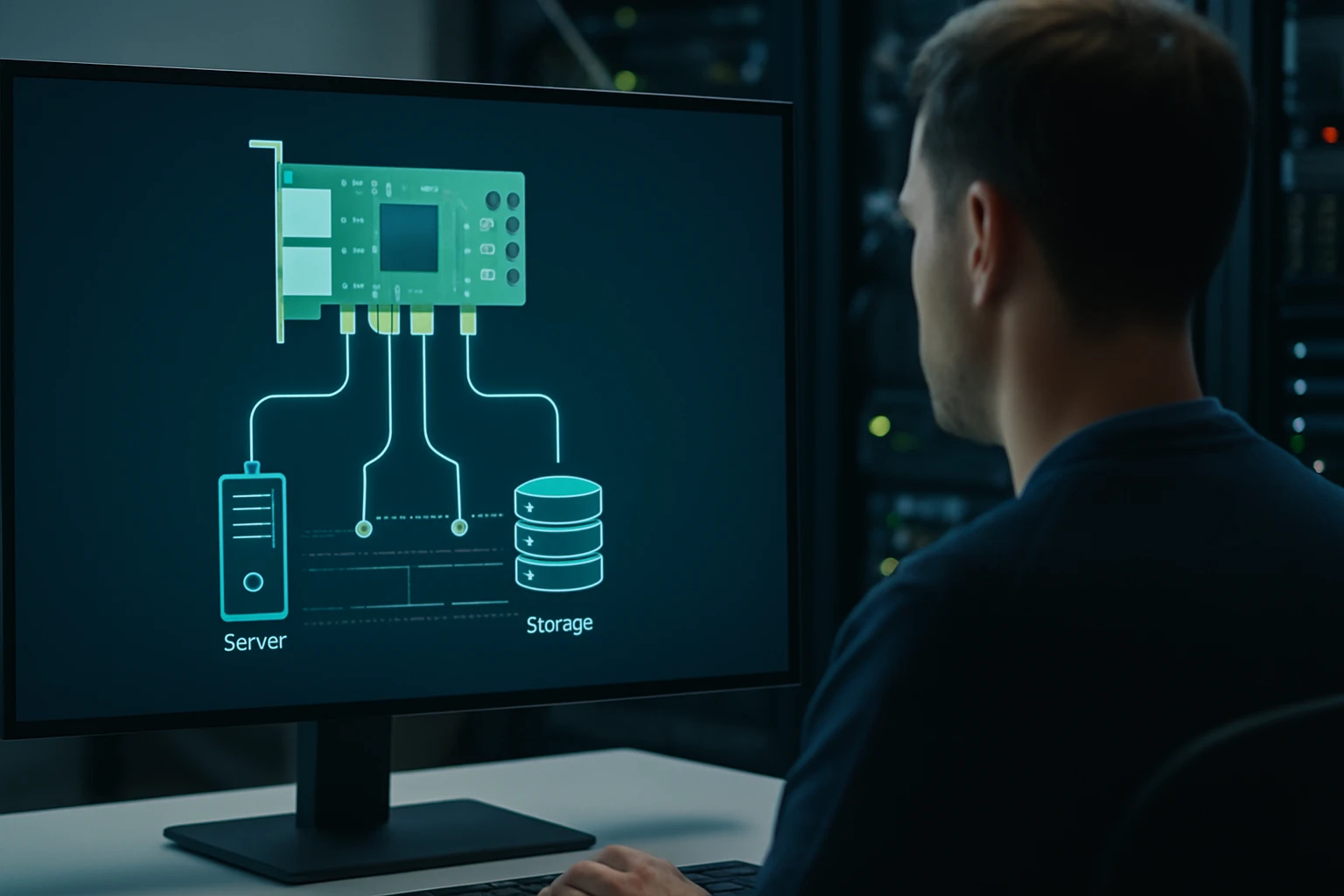


The world of enterprise networking has evolved dramatically over the past decade, and one technology that consistently captures attention is Dynamic Multipoint Virtual Private Network (DMVPN). Having witnessed countless organizations struggle with traditional hub-and-spoke VPN architectures, I've become fascinated by how DMVPN transforms network connectivity challenges into streamlined solutions. The technology addresses fundamental issues that plague modern distributed enterprises: scalability limitations, performance bottlenecks, and administrative overhead.
DMVPN represents a sophisticated networking approach that combines multiple protocols to create dynamic, secure tunnels between network sites without requiring permanent point-to-point connections. This technology promises to revolutionize how organizations think about site-to-site connectivity, offering perspectives from security professionals who value its encryption capabilities, network administrators who appreciate its simplified management, and business leaders who recognize its cost-effectiveness.
Through this exploration, you'll discover the intricate workings of DMVPN architecture, understand its practical implementation scenarios, and learn how to evaluate whether this technology aligns with your organization's networking requirements. We'll examine real-world deployment considerations, compare it against alternative solutions, and provide actionable insights for successful implementation.
Understanding DMVPN Architecture
Dynamic Multipoint Virtual Private Network technology builds upon several foundational networking protocols to create its unique functionality. The architecture primarily leverages Next Hop Resolution Protocol (NHRP), Generic Routing Encapsulation (GRE), and IPSec to establish secure, dynamic connections between network endpoints.
The hub-and-spoke topology forms the foundation of DMVPN implementation. Central hub routers maintain permanent connections to the underlying network infrastructure, while spoke sites establish on-demand tunnels as needed. This design eliminates the traditional requirement for pre-configured point-to-point tunnels between every possible site combination.
NHRP serves as the resolution mechanism that enables spoke sites to discover optimal paths to destination networks. When a spoke router needs to communicate with another spoke, NHRP queries the hub to obtain the real IP address of the target spoke router. This dynamic discovery process eliminates static tunnel configurations and enables automatic network topology adaptation.
"The beauty of dynamic networking lies not in its complexity, but in its ability to simplify what was once impossibly complicated."
GRE tunneling provides the encapsulation framework that allows private network traffic to traverse public internet infrastructure. The protocol creates virtual point-to-point links between network devices, enabling the transmission of various network layer protocols across IP networks. Within DMVPN implementations, GRE tunnels carry both data traffic and routing protocol updates.
IPSec integration ensures that all traffic flowing through DMVPN tunnels maintains enterprise-grade security standards. The protocol suite provides authentication, integrity verification, and encryption services that protect sensitive data during transmission. IPSec operates transparently within the GRE tunnel structure, creating secure communication channels without requiring application-level modifications.
DMVPN Phases and Evolution
The technology has evolved through three distinct phases, each addressing specific limitations and introducing enhanced capabilities. Understanding these evolutionary stages helps organizations select the most appropriate implementation approach for their specific requirements.
Phase 1 DMVPN represents the initial implementation model where spoke sites communicate exclusively through hub routers. All inter-spoke traffic flows through the central hub, creating potential bandwidth bottlenecks but maintaining centralized control over network communications. This phase works well for organizations with centralized data centers and limited spoke-to-spoke communication requirements.
Phase 1 implementations utilize multipoint GRE (mGRE) interfaces at hub locations while maintaining traditional point-to-point GRE tunnels at spoke sites. The hub router maintains NHRP mappings for all connected spokes, enabling dynamic tunnel establishment as new sites join the network. Routing protocols operate normally over these GRE tunnels, distributing network reachability information throughout the DMVPN cloud.
Phase 2 DMVPN introduces spoke-to-spoke tunnel capabilities, allowing direct communication between remote sites without hub involvement. When a spoke router receives traffic destined for another spoke network, it initiates an NHRP resolution request to determine the optimal path. Upon receiving the target spoke's real IP address, the initiating spoke establishes a direct tunnel for efficient communication.
The spoke-to-spoke functionality significantly reduces hub bandwidth requirements and improves application performance for distributed organizations. However, Phase 2 implementations require careful routing protocol configuration to prevent suboptimal path selection and ensure proper traffic flow patterns.
| DMVPN Phase | Hub Interface | Spoke Interface | Spoke-to-Spoke | Primary Use Case |
|---|---|---|---|---|
| Phase 1 | mGRE | Point-to-Point GRE | No | Centralized hub model |
| Phase 2 | mGRE | mGRE | Yes | Direct spoke communication |
| Phase 3 | mGRE | mGRE | Yes | Scalable enterprise networks |
Phase 3 DMVPN represents the most advanced implementation, incorporating NHRP traffic indication messages and redirect capabilities. This phase enables automatic traffic optimization by allowing hub routers to instruct spoke sites when direct tunnels would provide better performance. The hub can redirect traffic flows without manual intervention, creating truly dynamic network optimization.
Phase 3 implementations support the largest scale deployments and provide the most efficient bandwidth utilization. The automatic redirect functionality ensures that network traffic always follows optimal paths while maintaining the flexibility to route through hubs when necessary for policy or security reasons.
Key Advantages of DMVPN Implementation
The technology delivers substantial benefits that address common networking challenges faced by modern enterprises. These advantages span operational efficiency, cost reduction, and technical performance improvements that directly impact business operations.
Simplified Configuration Management represents one of the most significant advantages of DMVPN deployment. Traditional site-to-site VPN architectures require individual tunnel configurations for each possible connection pair. In a network with 50 remote sites, traditional approaches would require nearly 1,225 separate tunnel configurations to enable full mesh connectivity.
DMVPN eliminates this configuration complexity by requiring only hub and spoke configurations. New sites can be added to the network by configuring a single spoke connection, automatically gaining access to all other network resources. This simplified approach reduces deployment time, minimizes configuration errors, and enables rapid network expansion.
"True network scalability emerges when adding complexity becomes as simple as adding a single connection."
Dynamic Scalability enables organizations to expand their networks without architectural limitations. The hub-and-spoke model supports hundreds of spoke sites connecting to a single hub, while multiple hubs can be deployed for geographic distribution or redundancy requirements. Spoke sites automatically discover available network resources through NHRP, eliminating manual network mapping requirements.
The technology adapts to changing network conditions automatically. When new routes become available or existing paths fail, DMVPN tunnels adjust without manual intervention. This dynamic behavior ensures optimal performance and maintains connectivity during network changes or failures.
Cost Optimization results from several factors inherent in DMVPN architecture. Organizations can leverage existing internet connections for secure site-to-site connectivity, eliminating expensive dedicated circuits between locations. The hub-and-spoke model reduces the total number of required tunnels, decreasing licensing and management costs for VPN platforms.
Bandwidth efficiency improvements through spoke-to-spoke tunnels reduce hub infrastructure requirements and associated costs. Organizations can deploy smaller, less expensive hub equipment while maintaining high-performance connectivity between remote locations.
Enhanced Security Posture stems from IPSec integration and centralized policy enforcement capabilities. All traffic flowing through DMVPN tunnels receives enterprise-grade encryption protection, ensuring data confidentiality during transmission across public networks. The hub-centric architecture enables consistent security policy application across all network locations.
Certificate-based authentication mechanisms provide strong identity verification for network devices, preventing unauthorized access to corporate resources. Integration with existing Public Key Infrastructure (PKI) systems enables centralized certificate management and automated renewal processes.
Technical Components and Protocols
Understanding the underlying technical components enables organizations to make informed decisions about DMVPN implementation and troubleshooting approaches. Each protocol contributes specific functionality that combines to create the complete DMVPN solution.
Next Hop Resolution Protocol (NHRP) functions as the address resolution mechanism that enables dynamic tunnel establishment. The protocol maintains a distributed database of network-to-NBMA (Non-Broadcast Multiple Access) address mappings, allowing spoke routers to discover the real IP addresses of target destinations.
NHRP operates through a client-server model where spoke routers function as clients and hub routers serve as Next Hop Servers (NHS). When a spoke needs to reach a destination network, it sends an NHRP Resolution Request to the NHS. The hub router responds with the NBMA address of the spoke router that can reach the destination network, enabling direct tunnel establishment.
The protocol supports caching mechanisms that improve performance by storing frequently accessed mappings locally. Cache entries include aging timers that ensure mapping accuracy while reducing unnecessary NHRP traffic. Advanced NHRP features include traffic indication and redirect messages that optimize traffic flow patterns automatically.
Generic Routing Encapsulation (GRE) provides the tunneling framework that enables private network protocols to traverse public IP networks. The protocol encapsulates original packets within GRE headers, creating virtual point-to-point links between network devices. GRE supports various passenger protocols, including IPv4, IPv6, and routing protocol updates.
Multipoint GRE (mGRE) interfaces enable a single physical interface to support multiple tunnel endpoints simultaneously. This capability is essential for hub routers that must maintain connections to numerous spoke sites. The mGRE interface appears as a single logical interface to the routing process while supporting dynamic tunnel establishment to multiple destinations.
"The elegance of network encapsulation lies in its transparency – complex becomes simple, multiple becomes one."
GRE keepalive mechanisms ensure tunnel reliability by detecting path failures and triggering recovery procedures. The protocol can detect both local interface failures and remote endpoint unavailability, enabling rapid failover to alternative paths when available.
IPSec Integration provides comprehensive security services for DMVPN tunnels without requiring application-level modifications. The protocol suite operates in tunnel mode, encrypting and authenticating entire IP packets including original headers. This approach ensures complete traffic protection while maintaining network layer transparency.
Internet Key Exchange (IKE) protocols handle automatic security association establishment and key management. IKEv2 implementations provide enhanced performance and reliability compared to earlier versions, supporting features like NAT traversal, dead peer detection, and efficient rekeying procedures. Certificate-based authentication eliminates pre-shared key management complexity in large-scale deployments.
IPSec transforms provide flexible security policy implementation through various encryption and authentication algorithms. Organizations can select appropriate security levels based on performance requirements and regulatory compliance needs. Hardware acceleration support in modern network devices ensures that IPSec processing doesn't create performance bottlenecks.
Implementation Scenarios and Use Cases
DMVPN technology addresses diverse networking requirements across various organizational structures and business models. Understanding common implementation scenarios helps organizations evaluate whether DMVPN aligns with their specific networking challenges and objectives.
Multi-Branch Retail Organizations represent ideal candidates for DMVPN implementation due to their distributed nature and centralized data processing requirements. Retail chains with dozens or hundreds of store locations need secure connectivity to central payment processing systems, inventory management platforms, and point-of-sale support services.
Traditional MPLS circuits to every retail location create substantial recurring costs and complex procurement processes. DMVPN enables retailers to leverage existing broadband internet connections while maintaining enterprise-grade security standards. Store locations can access central resources efficiently while supporting local internet breakout for customer Wi-Fi and non-critical applications.
The dynamic nature of retail operations, including seasonal store openings and rapid expansion into new markets, aligns well with DMVPN's simplified deployment model. New locations can be brought online quickly without complex circuit provisioning or extensive configuration requirements.
Manufacturing and Distribution Networks benefit from DMVPN's ability to support both centralized and distributed communication patterns. Manufacturing facilities often require secure connectivity to central ERP systems while needing efficient communication with supplier networks and distribution centers.
Phase 2 or Phase 3 DMVPN implementations enable direct communication between manufacturing sites and distribution centers without routing traffic through central hubs. This direct connectivity improves application performance for time-sensitive operations like just-in-time manufacturing and real-time inventory tracking.
The technology supports quality of service (QoS) implementations that prioritize critical manufacturing control traffic over less time-sensitive administrative communications. Integration with existing industrial control systems maintains operational continuity while adding secure remote access capabilities.
Healthcare Organizations leverage DMVPN to connect distributed clinics, hospitals, and administrative offices while maintaining HIPAA compliance requirements. The technology enables secure transmission of electronic health records, medical imaging data, and administrative information across multiple locations.
Healthcare networks often require 24/7 availability and cannot tolerate extended outages during circuit provisioning or configuration changes. DMVPN's dynamic failover capabilities and simplified management reduce the risk of connectivity disruptions that could impact patient care delivery.
"In healthcare networking, reliability isn't just about uptime – it's about ensuring that critical patient information flows seamlessly when and where it's needed most."
Integration with existing healthcare IT systems, including electronic medical record platforms and medical imaging systems, requires careful bandwidth planning and QoS implementation. DMVPN's spoke-to-spoke capabilities enable efficient data sharing between healthcare facilities without overloading central hub connections.
Financial Services Institutions implement DMVPN to connect branch offices, ATM networks, and data processing centers while meeting strict regulatory compliance requirements. The technology provides the security and reliability necessary for financial transaction processing while supporting cost-effective network expansion.
Branch banking operations require secure connectivity to central core banking systems, real-time transaction processing platforms, and regulatory reporting systems. DMVPN enables banks to maintain centralized security policies while providing local branch autonomy for customer-facing applications.
The technology supports integration with existing security infrastructure, including intrusion detection systems, firewalls, and security information and event management (SIEM) platforms. Centralized logging and monitoring capabilities enable compliance with financial industry regulations and audit requirements.
Deployment Considerations and Best Practices
Successful DMVPN implementation requires careful planning and attention to various technical and operational factors. Organizations must evaluate their existing network infrastructure, security requirements, and operational processes to ensure optimal deployment outcomes.
Network Design Planning begins with thorough assessment of existing network topology, bandwidth requirements, and application traffic patterns. Organizations should document current site-to-site communication requirements and identify opportunities for optimization through direct spoke-to-spoke connectivity.
Hub placement decisions significantly impact network performance and reliability. Geographic distribution of hub sites reduces latency for remote locations while providing redundancy for critical network services. Organizations with global operations may require multiple hub sites to ensure acceptable performance across all regions.
Bandwidth planning must account for both current requirements and future growth projections. Hub sites require sufficient internet connectivity to support all spoke sites during peak usage periods. Spoke sites need adequate bandwidth for both local internet access and DMVPN tunnel traffic to ensure acceptable application performance.
Security Policy Implementation requires integration with existing enterprise security frameworks and compliance requirements. Organizations must define appropriate IPSec parameters, authentication mechanisms, and access control policies that align with corporate security standards.
Certificate management becomes critical in large-scale deployments where pre-shared keys become unwieldy. Public Key Infrastructure (PKI) integration enables automated certificate distribution, renewal, and revocation processes. Organizations should establish clear procedures for certificate lifecycle management and emergency revocation scenarios.
Network segmentation strategies should account for DMVPN tunnel traffic and ensure that appropriate security controls remain in place. Firewall policies, intrusion detection systems, and network access control mechanisms must be configured to work effectively with DMVPN traffic flows.
"Security in networking is not about building walls, but about creating intelligent pathways that know friend from foe."
Quality of Service (QoS) Configuration ensures that critical applications receive appropriate network resources while preventing less important traffic from impacting business operations. DMVPN tunnels support various QoS mechanisms, including traffic classification, queuing, and bandwidth allocation policies.
Voice and video applications require special consideration due to their sensitivity to latency, jitter, and packet loss. Organizations should implement appropriate QoS policies that prioritize real-time communications while ensuring adequate bandwidth for data applications.
Application-specific QoS policies should account for the unique requirements of business-critical systems. ERP applications, database replication traffic, and backup operations may require different QoS treatment to ensure optimal performance and reliability.
Monitoring and Management Strategies enable proactive identification and resolution of network issues before they impact business operations. Organizations should implement comprehensive monitoring solutions that track tunnel status, bandwidth utilization, and application performance metrics.
SNMP-based monitoring tools can provide real-time visibility into DMVPN tunnel operations, including tunnel establishment events, NHRP resolution activities, and IPSec security association status. Automated alerting mechanisms should notify network administrators of potential issues requiring attention.
Performance baseline establishment enables organizations to identify degradation trends and capacity planning requirements. Regular monitoring of key performance indicators helps ensure that DMVPN implementations continue to meet business requirements as network usage patterns evolve.
| Monitoring Metric | Importance Level | Typical Threshold | Action Required |
|---|---|---|---|
| Tunnel Availability | Critical | 99.9% uptime | Immediate investigation |
| Bandwidth Utilization | High | 80% sustained | Capacity planning |
| Latency | Medium | <100ms average | Performance optimization |
| Packet Loss | High | <0.1% | Path analysis |
Comparison with Alternative Technologies
Understanding how DMVPN compares to alternative networking technologies helps organizations make informed decisions about their network architecture strategies. Each technology offers unique advantages and limitations that may align differently with specific organizational requirements.
Traditional Site-to-Site VPN implementations provide straightforward point-to-point connectivity but lack the scalability and flexibility of DMVPN solutions. Organizations with a small number of sites may find traditional VPNs sufficient for their needs, particularly when direct communication between all sites isn't required.
Traditional VPNs require individual tunnel configurations for each site pair, creating exponential complexity growth as networks expand. Administrative overhead increases significantly with each new site addition, requiring careful planning and extensive configuration management processes.
Performance characteristics differ substantially between traditional VPNs and DMVPN implementations. Traditional hub-and-spoke VPN architectures force all inter-site traffic through central hubs, potentially creating bandwidth bottlenecks and increased latency for distributed applications.
Software-Defined Wide Area Network (SD-WAN) technology offers advanced traffic optimization and application-aware routing capabilities that complement or compete with DMVPN implementations. SD-WAN solutions provide centralized policy management and automatic path selection based on application requirements and network conditions.
Cost considerations vary significantly between DMVPN and SD-WAN approaches. DMVPN leverages existing router infrastructure and requires minimal additional hardware investment, while SD-WAN typically requires specialized appliances or software licenses at each location.
Management complexity differs between the two approaches, with SD-WAN solutions often providing more sophisticated centralized management capabilities. However, this enhanced functionality may come with increased complexity for organizations with limited networking expertise.
Multiprotocol Label Switching (MPLS) networks provide predictable performance characteristics and comprehensive quality of service capabilities but at significantly higher costs than internet-based DMVPN implementations. MPLS networks offer service level agreements and guaranteed bandwidth that may be essential for certain applications.
Geographic availability limitations may make MPLS impractical for organizations with remote locations or international operations. DMVPN's reliance on internet connectivity provides broader geographic reach and faster deployment capabilities for new locations.
"The best network technology is not the most advanced, but the one that best aligns with an organization's specific requirements, constraints, and objectives."
Hybrid approaches combining DMVPN with MPLS or SD-WAN technologies enable organizations to leverage the strengths of multiple solutions. Critical locations may utilize MPLS connectivity for guaranteed performance while remote sites rely on DMVPN for cost-effective secure connectivity.
Cloud-Based Networking Solutions including AWS Transit Gateway, Azure Virtual WAN, and Google Cloud Interconnect provide alternative approaches to site-to-site connectivity through cloud service provider infrastructure. These solutions may offer simplified management and integration with cloud-based applications.
Vendor lock-in considerations become important when evaluating cloud-based networking solutions. Organizations must carefully assess long-term strategic implications of relying on specific cloud service providers for critical network infrastructure.
Performance and cost characteristics of cloud-based solutions depend heavily on geographic proximity to cloud service provider points of presence and data transfer pricing models. Organizations should conduct thorough cost analysis including data egress charges and bandwidth utilization patterns.
Troubleshooting and Maintenance
Effective DMVPN troubleshooting requires systematic approaches that address the multiple protocol layers involved in tunnel operations. Network administrators must understand the interaction between NHRP, GRE, and IPSec components to efficiently diagnose and resolve connectivity issues.
Common Connectivity Issues often stem from misconfigured NHRP parameters or IPSec security association problems. Spoke routers may fail to register with hub NHS servers due to authentication failures, incorrect network statements, or connectivity issues with the underlying transport network.
NHRP resolution failures prevent spoke-to-spoke tunnel establishment and can result from hub configuration errors or network reachability problems. Administrators should verify NHRP database entries on hub routers and ensure that spoke registration processes complete successfully.
IPSec security association establishment problems may result from mismatched encryption parameters, certificate validation failures, or NAT traversal issues. Systematic verification of IKE policies, transform sets, and certificate configurations helps identify security-related connectivity problems.
Performance Optimization Techniques address bandwidth utilization, latency, and application-specific requirements within DMVPN environments. TCP MSS adjustment prevents fragmentation issues that can significantly impact application performance over GRE tunnels.
NHRP caching optimization reduces resolution latency and improves spoke-to-spoke tunnel establishment times. Appropriate cache timeout values balance performance improvements with network topology change responsiveness requirements.
"Network troubleshooting is detective work – every symptom tells a story, and every story leads to a solution."
QoS policy tuning ensures that critical applications receive appropriate network resources while preventing less important traffic from impacting business operations. Regular monitoring of QoS statistics helps identify applications that may benefit from policy adjustments.
Preventive Maintenance Procedures help organizations avoid common DMVPN issues through proactive monitoring and regular system updates. Certificate expiration tracking prevents authentication failures that could disrupt network connectivity.
Software update planning should account for the interdependencies between NHRP, GRE, and IPSec implementations across different router platforms. Staged update procedures minimize the risk of widespread connectivity disruptions during maintenance windows.
Configuration backup and change management processes ensure that network modifications can be reversed quickly if problems arise. Version control systems help track configuration changes and identify potential causes of network issues.
Monitoring and Alerting Systems provide early warning of potential problems before they impact business operations. NHRP mapping table monitoring helps identify spoke registration issues or hub availability problems.
Tunnel state monitoring tracks GRE and IPSec tunnel status across all network locations. Automated alerting systems should notify administrators when tunnels fail to establish or when performance metrics exceed acceptable thresholds.
Bandwidth utilization monitoring helps identify capacity planning requirements and potential performance bottlenecks. Trend analysis enables proactive capacity upgrades before network congestion impacts application performance.
Future Evolution and Emerging Trends
The networking landscape continues evolving rapidly, with new technologies and approaches influencing how organizations design and implement wide area networks. DMVPN technology adapts to these changes while maintaining its core advantages of simplicity, scalability, and cost-effectiveness.
Integration with Software-Defined Networking (SDN) represents a significant evolution path for DMVPN implementations. SDN controllers can provide centralized policy management and automated configuration deployment across DMVPN networks, reducing administrative overhead while improving consistency.
Network function virtualization (NFV) enables DMVPN functionality to be deployed as virtual network functions rather than dedicated hardware appliances. This approach provides greater deployment flexibility and can reduce infrastructure costs for organizations with virtualized data center environments.
Intent-based networking concepts allow administrators to define high-level network policies that are automatically translated into specific DMVPN configurations. This abstraction reduces the technical expertise required for network management while improving policy consistency across distributed environments.
Cloud Integration Enhancements enable seamless connectivity between on-premises DMVPN networks and public cloud environments. Native integration with cloud service provider networking services simplifies hybrid cloud deployments and enables consistent security policies across all network locations.
Multi-cloud connectivity scenarios benefit from DMVPN's ability to provide secure, cost-effective connections to multiple cloud service providers simultaneously. Organizations can avoid vendor lock-in while maintaining consistent network architecture across diverse cloud environments.
"The future of networking lies not in choosing between traditional and cloud technologies, but in creating seamless bridges that connect them intelligently."
Container and microservices architectures require network solutions that can adapt to rapidly changing application deployment patterns. DMVPN's dynamic nature aligns well with these requirements, enabling secure connectivity for distributed application components across multiple locations.
Security Enhancement Trends focus on zero-trust network architecture principles and advanced threat detection capabilities. DMVPN implementations increasingly incorporate identity-based access controls and continuous security monitoring to address evolving threat landscapes.
Artificial intelligence and machine learning technologies enable predictive security analytics that can identify potential threats before they impact network operations. Integration of these capabilities with DMVPN monitoring systems provides enhanced security posture for distributed organizations.
Quantum-resistant cryptography preparation becomes increasingly important as quantum computing capabilities advance. Organizations should evaluate their DMVPN implementations for compatibility with post-quantum cryptographic algorithms to ensure long-term security effectiveness.
Performance and Scalability Improvements continue advancing through hardware acceleration technologies and protocol optimizations. Modern network processors provide dedicated acceleration for IPSec operations, enabling higher throughput while reducing CPU utilization on network devices.
IPv6 adoption influences DMVPN implementations as organizations transition from IPv4 addressing schemes. Dual-stack implementations enable gradual migration while maintaining compatibility with existing applications and network infrastructure.
Edge computing requirements drive demand for more distributed network architectures that can support low-latency applications and local data processing. DMVPN's flexibility enables organizations to adapt their network topologies to support edge computing initiatives without requiring complete architectural overhauls.
What is DMVPN and how does it differ from traditional VPN solutions?
DMVPN (Dynamic Multipoint Virtual Private Network) is a networking technology that creates secure, dynamic tunnels between multiple sites using a hub-and-spoke architecture. Unlike traditional VPNs that require individual point-to-point tunnel configurations between every site pair, DMVPN uses protocols like NHRP, GRE, and IPSec to enable automatic tunnel establishment and spoke-to-spoke communication. This approach significantly reduces configuration complexity and enables better scalability for organizations with multiple remote locations.
Which DMVPN phase should I choose for my organization?
The choice depends on your specific requirements. Phase 1 works well for organizations with centralized data centers where all communication flows through the hub. Phase 2 is ideal when you need direct spoke-to-spoke communication to reduce hub bandwidth usage and improve performance. Phase 3 provides the most advanced features with automatic traffic optimization and redirect capabilities, making it suitable for large-scale enterprise deployments with complex traffic patterns.
What are the main security benefits of implementing DMVPN?
DMVPN provides enterprise-grade security through IPSec encryption of all tunnel traffic, ensuring data confidentiality during transmission across public networks. The technology supports certificate-based authentication for strong device identity verification and enables centralized security policy enforcement across all network locations. Integration with existing PKI infrastructure provides automated certificate management and renewal processes.
How does DMVPN handle network failures and provide redundancy?
DMVPN includes built-in redundancy mechanisms through multiple hub deployments and automatic failover capabilities. When primary paths fail, spoke routers can automatically establish connections to backup hubs or alternative internet paths. The dynamic nature of NHRP enables automatic discovery of available network resources and path optimization based on current network conditions.
What bandwidth and performance considerations should I account for when planning DMVPN deployment?
Hub sites require sufficient internet bandwidth to support all connected spoke sites during peak usage periods. Spoke sites need adequate bandwidth for both local internet access and DMVPN tunnel traffic. Consider implementing QoS policies to prioritize critical applications, and account for IPSec encryption overhead which typically adds 10-15% to bandwidth requirements. Performance optimization techniques like TCP MSS adjustment and NHRP caching can significantly improve application performance.
Can DMVPN integrate with existing network infrastructure and security systems?
Yes, DMVPN is designed to integrate with existing enterprise infrastructure including firewalls, intrusion detection systems, and network monitoring platforms. The technology works with existing routing protocols and can leverage current internet connections for transport. Integration with SIEM systems provides centralized logging and monitoring capabilities, while compatibility with existing PKI infrastructure simplifies certificate management in large deployments.