

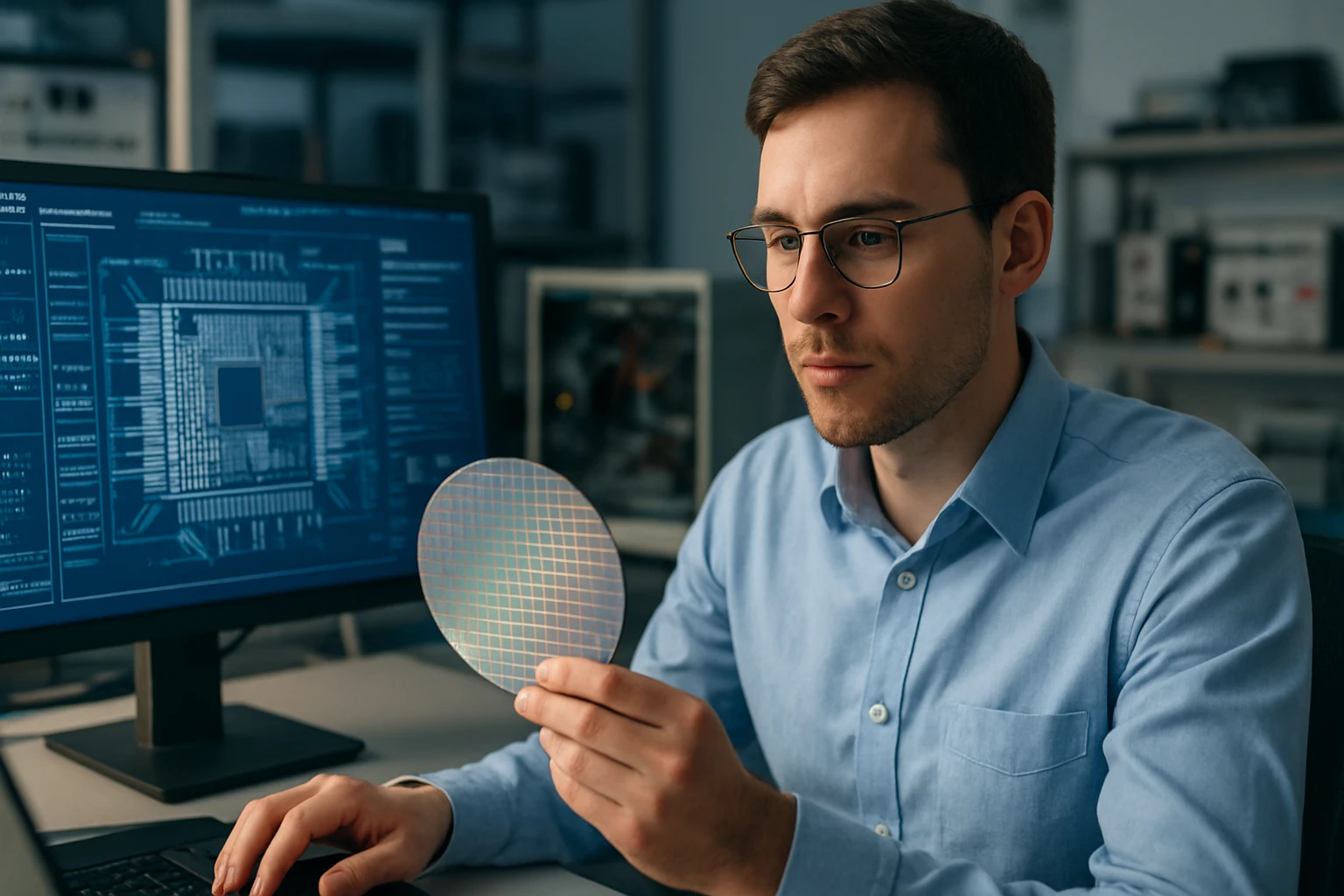
The world of electronics has been fundamentally transformed by a technology that most people have never heard of, yet it powers virtually every digital device we interact with daily. From smartphones to laptops, from smart home systems to advanced automotive electronics, one particular semiconductor technology has become the invisible backbone of our connected world. This technology has revolutionized how we process information, consume energy, and design electronic systems.
Complementary Metal-Oxide-Semiconductor (CMOS) technology represents a sophisticated approach to building integrated circuits that combines efficiency with performance. This semiconductor fabrication process creates circuits using both p-type and n-type metal-oxide-semiconductor field-effect transistors (MOSFETs) working in complementary pairs. The technology promises to explore multiple perspectives on its development, applications, and future potential across various industries and use cases.
Through this exploration, readers will gain comprehensive insights into how CMOS technology functions at its core, understand its critical advantages over alternative approaches, and discover why it has become the dominant force in modern electronics. You'll learn about current applications spanning consumer electronics to industrial systems, examine emerging trends shaping its evolution, and understand the challenges and opportunities that lie ahead for this foundational technology.
Understanding the Fundamentals of CMOS Technology
CMOS technology operates on a brilliantly simple yet powerful principle that has made it the cornerstone of modern digital electronics. The fundamental concept involves pairing complementary transistors that work together to create logic gates and memory cells with exceptional efficiency characteristics.
The basic building block consists of an n-type MOSFET paired with a p-type MOSFET, creating what engineers call a complementary pair. When one transistor is conducting (on), the other is non-conducting (off), which means that in steady-state conditions, virtually no current flows through the circuit. This complementary action eliminates the continuous current draw that plagued earlier transistor technologies.
Key characteristics of CMOS technology include:
• Ultra-low power consumption during static operation
• High noise immunity due to full rail-to-rail voltage swings
• Excellent scalability enabling continued miniaturization
• Temperature stability across wide operating ranges
• Cost-effective manufacturing through mature fabrication processes
The manufacturing process involves creating these transistor pairs on silicon wafers using photolithography and chemical etching techniques. Multiple layers of materials are deposited and patterned to form the complex three-dimensional structures that make up modern integrated circuits. Each layer serves specific functions, from creating the transistor channels to forming the interconnections between different circuit elements.
The Physics Behind CMOS Operation
The operation of CMOS circuits relies on the fundamental physics of semiconductor materials and electric field effects. Silicon, the primary substrate material, can be modified through a process called doping to create regions with different electrical properties.
N-type regions contain excess electrons as charge carriers, while p-type regions have holes (absence of electrons) as the primary charge carriers. When voltage is applied to the gate terminal of a MOSFET, it creates an electric field that either attracts or repels charge carriers in the channel region beneath the gate.
"The beauty of complementary design lies not in the individual components, but in how they work together to achieve something neither could accomplish alone."
In an n-type MOSFET, applying a positive voltage to the gate attracts electrons to the channel region, creating a conductive path between the source and drain terminals. Conversely, in a p-type MOSFET, applying a negative voltage relative to the substrate attracts holes to the channel region, enabling conduction.
Historical Development and Evolution
The journey of CMOS technology began in the 1960s when researchers sought alternatives to the power-hungry bipolar transistor technologies that dominated early integrated circuits. The initial development focused on solving the fundamental problem of power consumption that limited the complexity and portability of electronic devices.
Early CMOS circuits were significantly larger and slower than their bipolar counterparts, leading many to dismiss the technology as impractical for high-performance applications. However, visionary engineers recognized that the power advantages would become increasingly important as circuit complexity grew and portable devices became more prevalent.
The breakthrough came with improvements in manufacturing processes that allowed for smaller transistor dimensions and better performance characteristics. As feature sizes decreased, CMOS circuits became faster while maintaining their power advantages, eventually surpassing bipolar technologies in most applications.
Technological Milestones and Breakthroughs
The evolution of CMOS technology has been marked by several critical milestones that have shaped the modern electronics landscape. The introduction of complementary pairs in logic circuits represented the first major advancement, followed by the development of sophisticated memory architectures.
Process improvements have consistently driven performance gains through dimensional scaling. Each new generation of manufacturing technology has enabled smaller transistors, leading to faster switching speeds, lower power consumption, and higher integration density. This progression has followed Moore's Law for several decades, doubling transistor density approximately every two years.
Modern CMOS processes have reached dimensions measured in nanometers, with current state-of-the-art facilities producing transistors at 3-5 nanometer nodes. These incredibly small dimensions require sophisticated manufacturing techniques including extreme ultraviolet lithography and atomic layer deposition.
Core Advantages and Benefits
The dominance of CMOS technology in modern electronics stems from several fundamental advantages that make it superior to alternative approaches for most applications. These benefits have become more pronounced as electronic systems have evolved toward greater complexity and portability.
Power efficiency stands as the most significant advantage of CMOS technology. The complementary design ensures that one transistor in each pair is always off during steady-state operation, eliminating static current flow. This characteristic becomes increasingly valuable as circuits contain millions or billions of transistors, where even small leakage currents would quickly drain batteries.
"Efficiency in electronics isn't just about doing more with less power—it's about enabling entirely new possibilities that were previously impossible."
The scalability of CMOS technology has enabled the continued advancement of integrated circuit complexity. Unlike some alternative technologies that face fundamental physical limitations, CMOS circuits can be manufactured at increasingly smaller dimensions while maintaining their operational characteristics.
Performance Characteristics and Reliability
CMOS circuits exhibit excellent noise immunity due to their full rail-to-rail voltage swings and high input impedance. This means they can operate reliably in electrically noisy environments and maintain signal integrity across long interconnections within complex integrated circuits.
Temperature stability represents another crucial advantage, as CMOS circuits maintain consistent performance across wide temperature ranges. This characteristic makes them suitable for automotive, industrial, and aerospace applications where environmental conditions can be extreme.
The manufacturing maturity of CMOS processes has resulted in highly reliable and cost-effective production. Decades of process refinement have eliminated most defect mechanisms and optimized yields, making CMOS the most economical choice for high-volume production.
| Advantage | Description | Impact |
|---|---|---|
| Power Efficiency | Near-zero static power consumption | Enables portable devices and battery-powered systems |
| Scalability | Continues to follow Moore's Law | Allows increasing circuit complexity and performance |
| Noise Immunity | High tolerance to electrical interference | Ensures reliable operation in noisy environments |
| Temperature Stability | Consistent performance across temperature ranges | Suitable for harsh environmental conditions |
| Manufacturing Maturity | Well-established, high-yield processes | Cost-effective mass production |
Applications Across Industries
CMOS technology has found applications in virtually every sector of the electronics industry, from consumer devices to specialized industrial equipment. The versatility of the technology allows it to be optimized for different requirements, whether prioritizing power efficiency, performance, or cost.
Consumer electronics represent the largest application domain for CMOS technology. Smartphones, tablets, laptops, and smart home devices all rely heavily on CMOS-based processors, memory chips, and specialized integrated circuits. The power efficiency of CMOS is particularly crucial in battery-powered devices where extended operating time is essential.
Automotive electronics have increasingly adopted CMOS technology as vehicles become more sophisticated and connected. Engine control units, safety systems, infotainment platforms, and emerging autonomous driving technologies all depend on CMOS-based processing and sensing capabilities.
Specialized Applications and Emerging Markets
Industrial automation systems leverage CMOS technology for control processors, sensor interfaces, and communication circuits. The reliability and temperature stability of CMOS make it well-suited for factory environments where equipment must operate continuously under challenging conditions.
Medical devices represent a growing application area where the low power consumption and reliability of CMOS technology enable implantable devices, portable diagnostic equipment, and sophisticated imaging systems. The biocompatibility of properly encapsulated CMOS circuits makes them suitable for direct contact with biological systems.
"The true measure of a technology's success lies not in its complexity, but in how seamlessly it disappears into the background while enabling human progress."
Aerospace and defense applications require the radiation tolerance and reliability that can be achieved with specialized CMOS processes. Satellites, spacecraft, and military systems use hardened CMOS circuits designed to withstand radiation and extreme environmental conditions.
The Internet of Things (IoT) represents one of the fastest-growing application areas for CMOS technology. The ultra-low power capabilities enable sensors and communication devices that can operate for years on a single battery, making widespread deployment of connected devices economically feasible.
Current Technology Trends and Innovations
The CMOS technology landscape continues to evolve rapidly, driven by increasing performance demands and emerging application requirements. Several key trends are shaping the current development direction and future possibilities of the technology.
Three-dimensional integration represents one of the most significant recent innovations in CMOS technology. Instead of continuing to shrink transistors in two dimensions, manufacturers are now stacking multiple layers of circuits to increase density and performance while managing the physical limitations of atomic-scale dimensions.
Specialized processor architectures optimized for artificial intelligence and machine learning workloads are driving new CMOS design approaches. These applications require massive parallel processing capabilities and specialized memory hierarchies that challenge traditional circuit design methodologies.
Advanced Materials and Process Innovations
New materials are being integrated into CMOS processes to overcome the limitations of traditional silicon-based approaches. High-mobility channel materials, advanced gate dielectrics, and novel interconnect materials are enabling continued performance improvements as dimensional scaling becomes more challenging.
Process innovations such as extreme ultraviolet lithography and directed self-assembly are enabling the production of increasingly sophisticated circuit patterns. These advanced manufacturing techniques allow for the precise control required to create transistors with dimensions approaching atomic scales.
"Innovation in semiconductor technology isn't just about making things smaller—it's about reimagining what's possible when we push the boundaries of physics and engineering."
Heterogeneous integration is becoming increasingly important as system requirements demand the combination of different technologies on a single chip or package. CMOS circuits are being integrated with optical components, MEMS devices, and specialized analog circuits to create complete system solutions.
| Trend | Technology | Application |
|---|---|---|
| 3D Integration | Through-silicon vias, monolithic 3D | High-density memory, advanced processors |
| AI Optimization | Specialized architectures, in-memory computing | Machine learning accelerators, edge AI |
| Advanced Materials | High-mobility channels, new dielectrics | High-performance processors, RF circuits |
| Heterogeneous Integration | Multi-technology packages, chiplets | System-on-chip solutions, specialized functions |
Challenges and Limitations
Despite its widespread success, CMOS technology faces several significant challenges that researchers and engineers are actively working to address. These limitations stem from both fundamental physical constraints and practical manufacturing considerations.
Power consumption, while low during static operation, has become a major concern as circuit complexity increases and operating frequencies rise. Dynamic power consumption from switching transistors and leakage currents from increasingly small devices are creating thermal management challenges in high-performance applications.
Manufacturing complexity and cost have grown exponentially with each new generation of CMOS technology. The sophisticated equipment and processes required for advanced nodes represent billions of dollars in investment, making it economically challenging for all but the largest companies to develop cutting-edge processes.
Physical and Economic Constraints
The fundamental physics of silicon-based devices is approaching theoretical limits as transistor dimensions reach atomic scales. Quantum effects, variability in device characteristics, and reliability concerns are becoming increasingly difficult to manage through traditional design approaches.
Economic pressures are forcing the industry to reconsider the traditional approach of pursuing ever-smaller dimensions. The cost per transistor, which decreased consistently for decades, has begun to increase at the most advanced nodes, challenging the economic model that has driven the industry.
"Every technological limitation is an invitation to innovate, to find new ways of achieving what was previously thought impossible."
Design complexity has grown to the point where creating advanced CMOS circuits requires sophisticated computer-aided design tools and extensive verification processes. The time and cost required to design new chips has increased dramatically, limiting the number of companies that can effectively utilize the most advanced technologies.
Reliability concerns arise from the extreme operating conditions within modern CMOS circuits. High current densities, elevated temperatures, and strong electric fields can cause gradual degradation of device characteristics over time, requiring careful design consideration for long-term reliability.
Future Prospects and Emerging Opportunities
The future of CMOS technology lies in both evolutionary improvements to existing approaches and revolutionary changes in how circuits are designed and manufactured. Several promising directions offer the potential to overcome current limitations while opening new application possibilities.
Quantum effects, traditionally viewed as obstacles to continued scaling, are being explored as potential advantages in specialized applications. Quantum computing implementations using CMOS-compatible processes could enable entirely new computational paradigms while leveraging existing manufacturing infrastructure.
Neuromorphic computing represents another frontier where CMOS technology is being adapted to mimic the operation of biological neural networks. These approaches promise to enable ultra-low power artificial intelligence applications that could operate continuously in resource-constrained environments.
Revolutionary Approaches and Paradigm Shifts
Beyond-CMOS technologies are being developed to complement or eventually replace traditional approaches in specific applications. These include technologies based on carbon nanotubes, graphene, and other novel materials that offer unique properties not achievable with silicon-based devices.
System-level innovations are changing how CMOS circuits are integrated into complete solutions. Chiplet architectures, advanced packaging technologies, and photonic integration are enabling new levels of system performance and functionality.
"The future belongs to those who can envision not just incremental improvements, but fundamental transformations in how we approach technological challenges."
Sustainable manufacturing is becoming increasingly important as environmental concerns drive the need for more efficient production processes and recyclable materials. Green semiconductor manufacturing initiatives are developing approaches to reduce the environmental impact of CMOS production while maintaining performance and cost advantages.
The convergence of CMOS technology with other disciplines such as biotechnology, photonics, and quantum physics is creating opportunities for entirely new classes of devices and applications. These interdisciplinary approaches promise to extend the relevance of CMOS technology far beyond its traditional boundaries.
Manufacturing and Process Considerations
The manufacturing of CMOS integrated circuits represents one of the most sophisticated and precise industrial processes ever developed. Modern semiconductor fabrication facilities, known as fabs, contain hundreds of process steps executed with nanometer-level precision in ultra-clean environments.
The complexity of CMOS manufacturing stems from the need to create three-dimensional structures with precise dimensions and material properties. Each transistor requires multiple layers of different materials, each deposited and patterned with extraordinary accuracy to ensure proper device operation.
Quality control and yield management are critical aspects of CMOS manufacturing, as even tiny defects can render entire chips non-functional. Advanced metrology and inspection systems monitor every aspect of the manufacturing process to detect and correct problems before they impact product quality.
Economic and Environmental Considerations
The capital investment required for state-of-the-art CMOS manufacturing facilities has reached unprecedented levels, with new fabs costing tens of billions of dollars. This economic reality is reshaping the industry structure, with only a few companies capable of maintaining leading-edge manufacturing capabilities.
Environmental considerations are becoming increasingly important in CMOS manufacturing, as the processes require significant energy consumption and use various chemicals. Industry initiatives are focused on developing more sustainable manufacturing approaches while maintaining the performance and cost advantages of CMOS technology.
Supply chain complexity has grown dramatically as CMOS circuits have become more sophisticated. The global nature of semiconductor manufacturing means that disruptions in any part of the world can impact the entire electronics industry, highlighting the need for resilient supply chain strategies.
The skilled workforce required for CMOS manufacturing represents both an opportunity and a challenge for the industry. The specialized knowledge needed to operate and maintain advanced manufacturing equipment requires extensive training and experience, making talent development a critical industry priority.
What is CMOS technology and how does it work?
CMOS (Complementary Metal-Oxide-Semiconductor) technology uses pairs of complementary transistors – one n-type and one p-type – that work together to create digital circuits. When one transistor is on, the other is off, which eliminates static power consumption and provides excellent power efficiency.
Why is CMOS technology so important in modern electronics?
CMOS technology is crucial because it offers the best combination of low power consumption, high performance, and cost-effective manufacturing. It enables everything from smartphone processors to computer memory, making modern portable and complex electronic devices possible.
What are the main advantages of CMOS over other semiconductor technologies?
The primary advantages include ultra-low static power consumption, excellent noise immunity, high integration density, temperature stability, and mature, cost-effective manufacturing processes. These benefits make CMOS ideal for both high-performance and battery-powered applications.
What industries use CMOS technology?
CMOS technology is used across virtually all electronics industries, including consumer electronics, automotive, telecommunications, industrial automation, medical devices, aerospace, and emerging areas like IoT and artificial intelligence applications.
What are the current challenges facing CMOS technology?
Major challenges include increasing manufacturing complexity and costs, physical limitations as transistors approach atomic scales, growing power consumption in high-performance applications, and design complexity that requires sophisticated tools and expertise.
How is CMOS technology evolving for future applications?
Future evolution includes three-dimensional integration, specialized architectures for AI applications, advanced materials beyond silicon, heterogeneous integration with other technologies, and exploration of quantum effects for new computational paradigms.
What makes CMOS manufacturing so complex and expensive?
CMOS manufacturing requires hundreds of precise process steps, extremely clean environments, sophisticated equipment, and nanometer-level accuracy. Modern fabs cost tens of billions of dollars and require highly specialized expertise to operate effectively.
How does CMOS technology contribute to energy efficiency?
CMOS circuits consume virtually no power when not switching, making them ideal for battery-powered devices. The complementary design ensures that only one transistor in each pair conducts at a time, eliminating wasteful static current flow that plagued earlier technologies.