

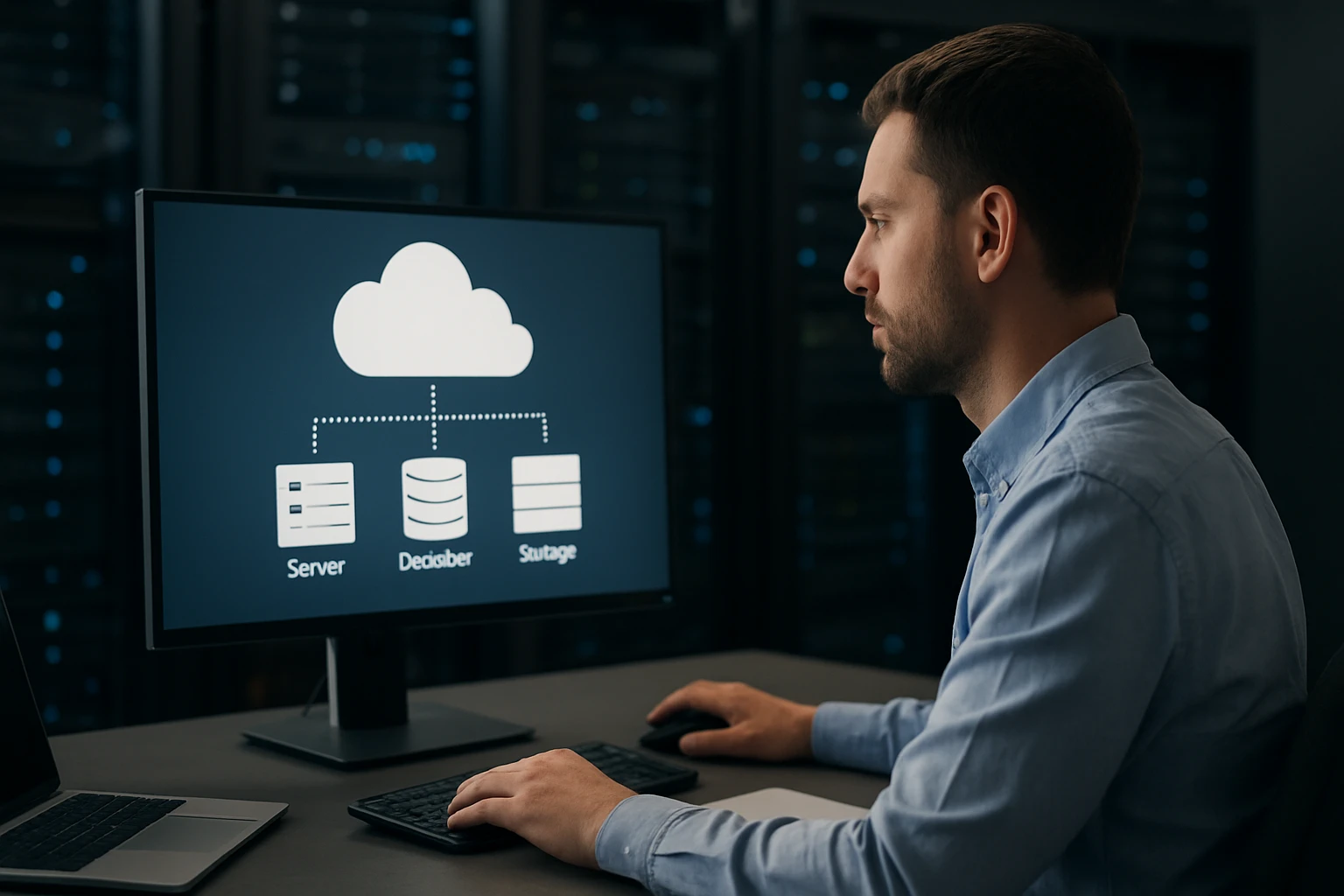
The rapid transformation of how businesses operate in the digital age has fundamentally changed our relationship with technology infrastructure. What once required massive physical server rooms, countless cables, and dedicated IT teams to maintain on-premises systems has evolved into something far more elegant and accessible. This shift represents one of the most significant technological revolutions of our time, affecting everything from small startups to multinational corporations.
Cloud infrastructure represents the foundation of modern computing – a virtualized environment where computing resources are delivered over the internet rather than housed in physical locations. This approach promises flexibility, scalability, and cost-effectiveness while offering multiple deployment models to suit different organizational needs. The beauty lies in its ability to transform capital expenditure into operational expenditure, allowing businesses to pay only for what they use.
Through exploring the essential components, deployment strategies, security considerations, and real-world applications, you'll gain a comprehensive understanding of how cloud infrastructure can revolutionize your approach to technology. Whether you're considering migration from traditional systems or optimizing existing cloud deployments, this deep dive will equip you with the knowledge needed to make informed decisions about your infrastructure strategy.
Understanding Cloud Infrastructure Fundamentals
Cloud infrastructure serves as the backbone of modern digital operations, representing a paradigm shift from traditional on-premises computing models. At its core, this technology abstracts physical hardware resources and presents them as virtualized services accessible through internet connections. The fundamental principle revolves around resource pooling, where multiple users share computing resources while maintaining isolation and security.
The evolution from physical servers to virtualized environments has created unprecedented opportunities for businesses to scale operations dynamically. Traditional infrastructure required significant upfront investments in hardware, software licenses, and maintenance contracts. Cloud infrastructure eliminates these barriers by providing immediate access to enterprise-grade computing resources without the associated capital expenditure.
"The transformation from owning infrastructure to accessing it as a service has fundamentally changed how organizations approach technology planning and resource allocation."
This shift enables organizations to focus on core business objectives rather than managing underlying technology complexities. The abstraction layer provided by cloud infrastructure handles routine maintenance, security updates, and hardware replacements automatically, reducing operational overhead significantly.
Core Components of Cloud Infrastructure
Compute Resources
Compute resources form the processing foundation of cloud infrastructure, encompassing virtual machines, containers, and serverless computing platforms. Virtual machines provide dedicated computing environments that can be configured with specific operating systems, memory allocations, and processing power. These resources can be provisioned instantly and scaled according to demand fluctuations.
Container technology has revolutionized application deployment by packaging applications with their dependencies into lightweight, portable units. This approach ensures consistency across different environments while optimizing resource utilization. Containers can be orchestrated using platforms that automate deployment, scaling, and management processes.
Serverless computing represents the latest evolution in compute abstraction, allowing developers to execute code without managing underlying infrastructure. This model charges only for actual execution time, making it highly cost-effective for applications with variable or unpredictable workloads.
Storage Solutions
Cloud storage systems provide scalable, durable, and highly available data storage options that adapt to changing business requirements. Object storage offers virtually unlimited capacity for unstructured data, making it ideal for backup, archival, and content distribution purposes. This storage type provides built-in redundancy and global accessibility through web-based interfaces.
Block storage delivers high-performance storage volumes that can be attached to virtual machines, providing the foundation for databases and file systems. These volumes offer consistent performance characteristics and can be dynamically resized without service interruption.
File storage systems provide shared access to data across multiple compute instances, enabling collaborative workflows and centralized data management. These systems support standard file protocols and can be mounted directly to virtual machines or accessed through network interfaces.
Networking Infrastructure
Network components enable secure, reliable connectivity between cloud resources and external systems. Virtual private clouds create isolated network environments where organizations can deploy resources with complete control over IP addressing, routing, and security policies. These environments can be connected to on-premises networks through secure tunneling protocols.
Load balancers distribute incoming traffic across multiple compute instances, ensuring high availability and optimal performance. Advanced load balancing algorithms can route traffic based on geographic location, server health, or application-specific criteria.
Content delivery networks accelerate content delivery by caching frequently accessed data at edge locations closer to end users. This approach reduces latency and improves user experience while reducing bandwidth costs for origin servers.
Cloud Deployment Models
Public Cloud Architecture
Public cloud deployments leverage shared infrastructure managed by third-party providers, offering maximum cost efficiency and scalability. These environments provide access to cutting-edge technologies without requiring internal expertise or capital investment. Public clouds excel in scenarios requiring rapid scaling, global reach, or access to specialized services.
The multi-tenant nature of public clouds enables providers to achieve economies of scale that benefit all users. Advanced security measures, including encryption, access controls, and compliance certifications, ensure data protection despite the shared environment.
Resource elasticity in public clouds allows organizations to handle traffic spikes automatically without over-provisioning resources during normal operations. This capability proves particularly valuable for seasonal businesses or applications with unpredictable demand patterns.
Private Cloud Implementation
Private cloud infrastructure provides dedicated resources exclusively for single organizations, offering enhanced control and customization options. This deployment model appeals to organizations with strict compliance requirements or specific performance needs that shared environments cannot accommodate.
On-premises private clouds give organizations complete control over hardware selection, network configuration, and security policies. This approach requires significant investment in infrastructure and expertise but provides maximum customization flexibility.
Hosted private clouds combine the control benefits of private infrastructure with the operational advantages of managed services. Service providers maintain dedicated infrastructure on behalf of clients while offering professional management and support services.
Hybrid Cloud Strategies
Hybrid cloud architectures combine public and private cloud resources to create flexible, optimized environments that leverage the strengths of each deployment model. This approach enables organizations to keep sensitive workloads in private environments while utilizing public cloud resources for less critical applications or burst capacity.
"The most successful cloud strategies often involve hybrid approaches that balance security, performance, cost, and flexibility requirements across different deployment models."
Data integration between hybrid environments requires careful planning to ensure seamless operation while maintaining security boundaries. Advanced networking solutions enable secure communication between different cloud environments while preserving performance characteristics.
Workload portability becomes crucial in hybrid environments, requiring standardized deployment practices and compatible technology stacks across different infrastructure components. Container technologies and infrastructure-as-code practices facilitate this portability.
Essential Infrastructure Services
Identity and Access Management
Identity and access management systems provide centralized authentication and authorization services that secure cloud resources while enabling productive user experiences. These systems support multiple authentication methods, including multi-factor authentication, single sign-on, and identity federation with external systems.
Role-based access control mechanisms ensure users receive appropriate permissions based on their organizational responsibilities. Fine-grained permission systems allow administrators to implement least-privilege access policies that minimize security risks while maintaining operational efficiency.
Audit logging capabilities track all access attempts and administrative actions, providing comprehensive visibility into system usage patterns. These logs support compliance requirements and security investigations while helping optimize access policies.
Monitoring and Analytics
Comprehensive monitoring solutions provide real-time visibility into infrastructure performance, resource utilization, and application health. Advanced monitoring platforms collect metrics from all infrastructure components and present them through customizable dashboards and alerting systems.
Performance analytics help identify optimization opportunities by analyzing resource usage patterns over time. These insights enable proactive capacity planning and cost optimization while preventing performance degradation.
Log aggregation systems collect and analyze log data from across the infrastructure, providing insights into system behavior and potential issues. Machine learning algorithms can identify anomalous patterns that may indicate security threats or performance problems.
Backup and Disaster Recovery
Automated backup systems ensure data protection through regular, consistent snapshots of critical information. These systems support multiple retention policies and can store backup data across geographically distributed locations for maximum protection against disasters.
Disaster recovery capabilities enable rapid restoration of services following system failures or security incidents. Advanced recovery solutions can automatically failover to secondary systems while maintaining data consistency and minimizing service interruption.
Testing and validation procedures ensure backup and recovery systems function correctly when needed. Regular recovery drills help identify potential issues and validate recovery time objectives.
Security and Compliance Framework
Data Protection Mechanisms
Encryption technologies protect data both in transit and at rest, ensuring confidentiality even if unauthorized access occurs. Advanced encryption standards provide military-grade protection while maintaining performance characteristics suitable for production environments.
Key management systems securely store and rotate encryption keys, preventing unauthorized access to encrypted data. These systems support compliance requirements while simplifying key lifecycle management across complex environments.
Data loss prevention tools monitor data movement and usage patterns to prevent unauthorized disclosure of sensitive information. These systems can automatically classify data based on content analysis and apply appropriate protection policies.
Network Security Controls
Firewall systems provide network-level protection by filtering traffic based on predefined security policies. Advanced firewalls incorporate application-aware filtering and threat intelligence to identify and block sophisticated attacks.
Intrusion detection and prevention systems monitor network traffic for malicious activity and can automatically respond to detected threats. These systems use behavioral analysis and signature-based detection to identify both known and unknown attack patterns.
Network segmentation strategies isolate different components of the infrastructure to limit the potential impact of security breaches. Micro-segmentation approaches provide granular control over network communication between individual workloads.
Compliance Management
Compliance frameworks help organizations meet regulatory requirements through standardized controls and documentation processes. These frameworks map technical controls to specific regulatory requirements, simplifying audit preparation and ongoing compliance monitoring.
"Effective compliance management transforms regulatory requirements from operational burdens into strategic advantages that build customer trust and competitive differentiation."
Automated compliance monitoring tools continuously assess infrastructure configurations against established baselines and regulatory standards. These tools can identify configuration drift and recommend remediation actions to maintain compliance posture.
Documentation and reporting capabilities provide comprehensive audit trails that demonstrate compliance with relevant regulations. Automated reporting reduces administrative overhead while ensuring consistent, accurate compliance documentation.
Performance Optimization Strategies
Resource Allocation and Scaling
Dynamic resource allocation enables infrastructure to adapt automatically to changing demand patterns without manual intervention. Auto-scaling policies can add or remove resources based on performance metrics, ensuring optimal performance while controlling costs.
Predictive scaling uses historical data and machine learning algorithms to anticipate demand changes and proactively adjust resource allocation. This approach prevents performance degradation during traffic spikes while avoiding over-provisioning during normal operations.
Resource tagging and cost allocation strategies provide visibility into resource usage patterns and associated costs. These practices enable organizations to optimize spending by identifying underutilized resources and rightsizing deployments.
Performance Monitoring and Tuning
Application performance monitoring tools provide deep visibility into application behavior and resource consumption patterns. These tools can identify performance bottlenecks and recommend optimization strategies to improve user experience.
Database performance optimization involves analyzing query patterns, index usage, and storage configuration to maximize database efficiency. Automated tuning capabilities can adjust database parameters based on workload characteristics.
Network performance optimization focuses on minimizing latency and maximizing throughput through strategic resource placement and traffic routing. Content caching and edge computing strategies can significantly improve performance for geographically distributed users.
Cost Management and Optimization
Resource Cost Analysis
Detailed cost tracking provides visibility into infrastructure spending patterns across different services, departments, and projects. Advanced cost analysis tools can identify spending trends and predict future costs based on usage patterns.
Reserved instance strategies can significantly reduce compute costs for predictable workloads by committing to longer-term resource usage. These strategies require careful capacity planning but can provide substantial savings for stable workloads.
Spot instance utilization takes advantage of unused cloud capacity at significantly reduced prices for fault-tolerant workloads. While these instances can be interrupted, proper architecture design can leverage them effectively for batch processing and development environments.
Budget Management and Controls
Budget alerts and spending limits help prevent unexpected cost overruns by notifying administrators when spending approaches predefined thresholds. Automated responses can temporarily restrict resource provisioning to prevent budget violations.
Cost optimization recommendations analyze usage patterns and suggest specific actions to reduce spending without impacting performance. These recommendations might include rightsizing instances, eliminating unused resources, or switching to more cost-effective service tiers.
Chargeback and showback mechanisms allocate infrastructure costs to specific business units or projects, promoting cost awareness and accountability. These mechanisms help organizations understand the true cost of different initiatives and make informed investment decisions.
Migration Strategies and Best Practices
Assessment and Planning
Infrastructure assessment involves analyzing existing systems to understand dependencies, performance requirements, and migration complexity. This assessment forms the foundation for developing realistic migration timelines and resource requirements.
Application portfolio analysis categorizes applications based on migration complexity, business criticality, and technical constraints. This analysis helps prioritize migration efforts and select appropriate migration strategies for different application types.
"Successful cloud migration requires treating it as a business transformation initiative rather than simply a technical project, involving stakeholders across the organization."
Risk assessment identifies potential migration challenges and develops mitigation strategies to minimize business disruption. These assessments consider technical risks, operational risks, and business continuity requirements.
Migration Execution Approaches
Lift-and-shift migrations move existing applications to cloud infrastructure with minimal modifications, providing quick migration timelines but limited cloud benefits. This approach works well for applications with short remaining lifespans or minimal modification requirements.
Re-platforming strategies make minor modifications to applications to take advantage of cloud-native services while maintaining core application architecture. This approach balances migration speed with cloud optimization benefits.
Re-architecting approaches redesign applications to fully leverage cloud-native capabilities, providing maximum benefits but requiring significant development effort. This strategy works best for applications with long-term strategic importance.
Post-Migration Optimization
Performance validation ensures migrated applications meet or exceed pre-migration performance characteristics. Comprehensive testing across different load conditions helps identify and resolve performance issues before they impact users.
Cost optimization reviews analyze actual migration costs against projections and identify opportunities to reduce ongoing operational expenses. These reviews often reveal opportunities for further optimization that weren't apparent during initial planning.
Security validation confirms that migrated applications maintain appropriate security postures and comply with organizational policies. Security testing should include both automated scanning and manual penetration testing to identify potential vulnerabilities.
| Migration Strategy | Timeline | Cost Impact | Risk Level | Cloud Benefits |
|---|---|---|---|---|
| Lift-and-Shift | 3-6 months | Low initial, moderate ongoing | Low | Basic elasticity, reduced maintenance |
| Re-platforming | 6-12 months | Moderate initial, low ongoing | Medium | Enhanced performance, some cloud services |
| Re-architecting | 12-24 months | High initial, very low ongoing | High | Full cloud-native benefits, maximum optimization |
Future Trends and Innovations
Emerging Technologies
Edge computing brings processing capabilities closer to data sources and end users, reducing latency and enabling new application scenarios. This approach becomes increasingly important as IoT devices generate massive amounts of data that require real-time processing.
Quantum computing represents a revolutionary advancement that could transform certain types of computational problems. While still in early stages, cloud providers are beginning to offer quantum computing services for research and development purposes.
Artificial intelligence and machine learning services are becoming integral components of cloud infrastructure, providing pre-built capabilities that organizations can integrate into their applications without developing expertise in these complex technologies.
Infrastructure Evolution
Serverless architectures continue evolving toward more sophisticated abstractions that eliminate infrastructure management entirely. These developments enable developers to focus exclusively on business logic while the platform handles all operational concerns.
Container orchestration platforms are becoming more intelligent, automatically optimizing resource allocation and application placement based on performance requirements and cost constraints. These platforms increasingly incorporate machine learning to improve decision-making.
"The future of cloud infrastructure lies not in managing resources more efficiently, but in eliminating the need to manage resources at all."
Multi-cloud management tools are evolving to provide seamless experiences across different cloud providers, enabling organizations to leverage the best capabilities from multiple platforms while avoiding vendor lock-in.
Sustainability and Environmental Impact
Green computing initiatives focus on reducing the environmental impact of cloud infrastructure through renewable energy usage and improved efficiency. Major cloud providers are committing to carbon neutrality and investing heavily in sustainable technologies.
Energy-efficient hardware designs and cooling systems continue improving the environmental footprint of data centers. These improvements benefit both the environment and cost structures, creating aligned incentives for sustainable practices.
Carbon tracking and reporting capabilities help organizations understand and reduce the environmental impact of their cloud usage. These tools provide visibility into carbon footprints and suggest optimization strategies that benefit both cost and environmental objectives.
Implementation Roadmap
Phase 1: Foundation Building
Infrastructure assessment and planning establish the groundwork for successful cloud adoption. This phase involves analyzing existing systems, identifying dependencies, and developing comprehensive migration strategies that align with business objectives.
Team training and skill development ensure organizations have the necessary expertise to operate cloud infrastructure effectively. Investment in training pays dividends throughout the adoption process and ongoing operations.
Pilot project selection identifies low-risk applications suitable for initial cloud deployment. These projects provide learning opportunities and demonstrate cloud benefits while minimizing potential business impact.
Phase 2: Core Migration
Application migration follows established patterns and best practices developed during pilot projects. This phase focuses on moving business-critical applications while maintaining service availability and performance standards.
Security implementation ensures migrated applications maintain appropriate protection levels while taking advantage of cloud-native security services. Security validation should occur throughout the migration process rather than as a final step.
Performance optimization fine-tunes migrated applications to achieve optimal performance and cost characteristics. This optimization often reveals additional opportunities for architectural improvements.
Phase 3: Optimization and Innovation
Advanced service adoption leverages sophisticated cloud capabilities to enable new business opportunities and operational efficiencies. This phase transforms cloud infrastructure from a cost center into a strategic business enabler.
Automation implementation reduces operational overhead and improves consistency across the infrastructure. Advanced automation capabilities can handle routine maintenance tasks and respond to common operational scenarios automatically.
Continuous improvement processes ensure cloud infrastructure evolves with changing business requirements and technological capabilities. Regular assessments identify optimization opportunities and emerging technology adoption strategies.
| Implementation Phase | Duration | Key Activities | Success Metrics |
|---|---|---|---|
| Foundation Building | 2-4 months | Assessment, planning, training | Team readiness, pilot selection |
| Core Migration | 6-18 months | Application migration, security, testing | Migration milestones, performance targets |
| Optimization | Ongoing | Advanced services, automation, improvement | Cost reduction, innovation metrics |
Cloud infrastructure represents more than a technological upgrade – it embodies a fundamental shift in how organizations approach computing resources and digital transformation. The journey from traditional on-premises systems to sophisticated cloud environments requires careful planning, skilled execution, and ongoing optimization efforts.
The benefits extend far beyond cost savings, encompassing improved agility, enhanced security, global scalability, and access to cutting-edge technologies that would be prohibitively expensive to develop internally. Organizations that embrace cloud infrastructure position themselves to respond rapidly to market changes while focusing resources on core business differentiators.
Success in cloud adoption requires treating it as a business transformation initiative that involves people, processes, and technology in equal measure. The most successful implementations combine technical excellence with organizational change management, ensuring that teams develop the skills and mindset necessary to leverage cloud capabilities effectively.
What is cloud infrastructure?
Cloud infrastructure refers to the virtualized computing resources delivered over the internet, including servers, storage, networking, and services that replace traditional on-premises hardware and software systems.
What are the main types of cloud deployment models?
The three primary deployment models are public cloud (shared infrastructure managed by third parties), private cloud (dedicated infrastructure for single organizations), and hybrid cloud (combination of public and private resources).
How does cloud infrastructure improve business agility?
Cloud infrastructure enables rapid resource provisioning, automatic scaling, and access to advanced services without capital investment, allowing organizations to respond quickly to market opportunities and changing business requirements.
What security considerations are important for cloud infrastructure?
Key security considerations include data encryption, access controls, network security, compliance management, and shared responsibility models that define security obligations between cloud providers and customers.
How can organizations optimize cloud costs?
Cost optimization strategies include rightsizing resources, using reserved instances for predictable workloads, implementing auto-scaling policies, eliminating unused resources, and leveraging cost monitoring tools for visibility and control.
What is the difference between IaaS, PaaS, and SaaS?
Infrastructure as a Service (IaaS) provides virtualized computing resources, Platform as a Service (PaaS) offers development and deployment platforms, and Software as a Service (SaaS) delivers complete applications over the internet.