

The evolution of cloud computing has fundamentally transformed how organizations approach their IT infrastructure, and among the various deployment models available, private cloud computing stands out as a particularly compelling solution for enterprises with specific security, compliance, and performance requirements. This computing paradigm has captured my attention because it represents a perfect balance between the scalability and efficiency of cloud technologies and the control that organizations need over their most sensitive data and critical applications.
A private cloud is a cloud computing environment dedicated exclusively to a single organization, whether hosted on-premises or by a third-party provider, offering the same benefits as public cloud services but with enhanced security, control, and customization capabilities. This model promises to deliver multiple perspectives on modern IT infrastructure, combining the agility of cloud computing with the governance requirements that many enterprises cannot compromise on.
Throughout this exploration, you'll discover the comprehensive advantages that private cloud computing offers, understand its various deployment models, learn about implementation strategies, and gain insights into how this technology can transform your organization's IT landscape while maintaining the highest standards of security and compliance.
Understanding Private Cloud Computing Fundamentals
Private cloud computing represents a dedicated cloud infrastructure operated solely for a single organization. Unlike public clouds where resources are shared among multiple tenants, private clouds provide exclusive access to computing resources, storage, and networking capabilities.
The architecture typically includes virtualized servers, storage systems, and networking components managed through a centralized platform. This setup enables organizations to deliver cloud services internally while maintaining complete control over their infrastructure.
Key characteristics include resource pooling, on-demand self-service, rapid elasticity, measured service, and broad network access. These features mirror public cloud capabilities while ensuring data isolation and enhanced security measures.
Core Components and Architecture
The foundation of any private cloud rests on several critical components working in harmony. Virtualization technology serves as the cornerstone, enabling multiple virtual machines to run on physical hardware efficiently.
Management platforms orchestrate resource allocation, monitoring, and automation across the entire infrastructure. These platforms provide unified interfaces for administrators to manage compute, storage, and network resources seamlessly.
Storage systems in private clouds often implement software-defined storage (SDS) solutions, providing flexibility and scalability. Network components include software-defined networking (SDN) capabilities, enabling dynamic network configuration and enhanced security policies.
Comprehensive Advantages of Private Cloud Implementation
Enhanced Security and Data Protection
"Security in cloud computing isn't just about technology; it's about creating an environment where data protection becomes an integral part of every operational decision."
Private clouds offer superior security advantages compared to public cloud environments. Organizations maintain complete control over their security policies, access controls, and data encryption standards.
Physical security measures can be customized to meet specific organizational requirements. This includes biometric access controls, surveillance systems, and environmental monitoring that align with internal security protocols.
Data sovereignty becomes achievable as organizations can ensure their information never leaves designated geographic boundaries. This control is particularly crucial for companies operating in highly regulated industries or handling sensitive customer information.
Regulatory Compliance and Governance
Meeting regulatory requirements becomes significantly easier with private cloud deployments. Organizations can implement specific compliance frameworks without worrying about shared infrastructure vulnerabilities.
Audit trails and documentation processes can be tailored to meet industry-specific regulations such as HIPAA, SOX, or GDPR. This customization ensures that compliance reporting is comprehensive and accurate.
Data retention policies can be enforced consistently across the entire infrastructure. Organizations can implement automated deletion schedules, backup procedures, and recovery protocols that align with regulatory mandates.
Performance Optimization and Resource Control
Private clouds eliminate the "noisy neighbor" effect common in public cloud environments. Dedicated resources ensure consistent performance levels for critical applications and services.
Quality of Service (QoS) parameters can be fine-tuned to meet specific application requirements. This granular control enables organizations to prioritize mission-critical workloads while optimizing resource utilization.
Latency reduction becomes achievable through strategic placement of resources closer to end users. Organizations can design their network topology to minimize data travel distances and optimize application response times.
Deployment Models and Implementation Strategies
On-Premises Private Cloud
On-premises deployment provides maximum control over infrastructure and data. Organizations invest in their own hardware, software, and facilities while maintaining complete ownership of their cloud environment.
This model requires significant capital expenditure for initial setup and ongoing operational costs for maintenance. However, it offers the highest level of security and customization possible.
Staff requirements include specialized cloud architects, system administrators, and security professionals. Organizations must invest in training and certification programs to maintain expertise levels.
Hosted Private Cloud
Third-party providers manage the infrastructure while ensuring dedicated resources for individual organizations. This model reduces capital expenditure while maintaining many private cloud benefits.
Service level agreements (SLAs) define performance, availability, and security standards. Organizations can negotiate specific terms that align with their operational requirements and compliance needs.
Hybrid management approaches allow organizations to maintain some control while leveraging provider expertise. This balance can optimize costs while ensuring adequate oversight of critical systems.
"The true value of private cloud computing lies not in the technology itself, but in how it enables organizations to align their IT infrastructure with their strategic business objectives."
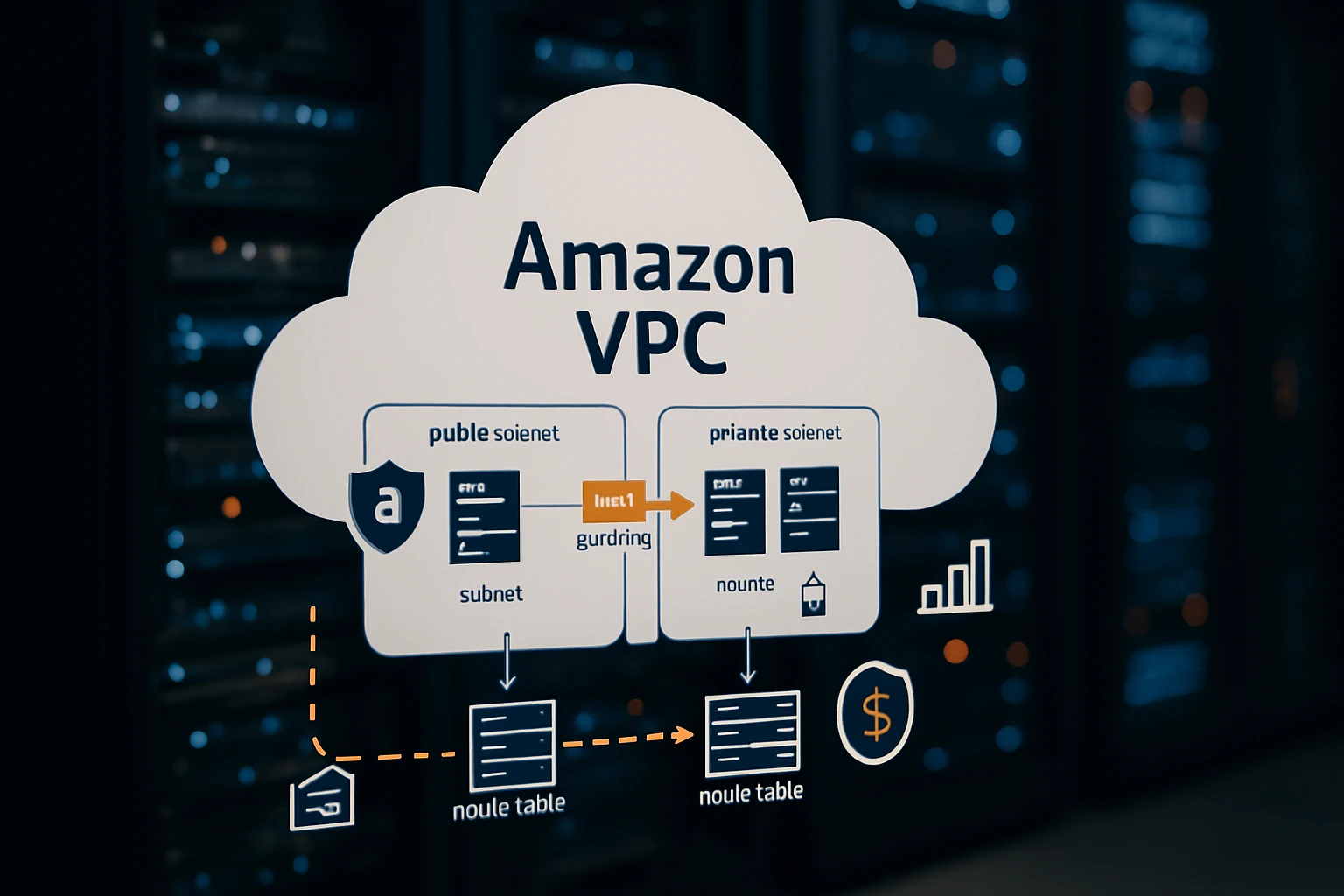
Virtual Private Cloud (VPC)
VPC solutions provide logical isolation within public cloud environments. Organizations can create private network segments with dedicated IP address ranges and security policies.
Network segmentation capabilities enable micro-segmentation strategies that enhance security posture. Traffic flow can be controlled and monitored at granular levels throughout the virtual infrastructure.
Cost optimization becomes possible through dynamic resource allocation. Organizations pay only for resources consumed while maintaining isolation and security benefits similar to traditional private clouds.
Technology Stack and Infrastructure Components
Virtualization Technologies
Hypervisor selection significantly impacts private cloud performance and capabilities. Type 1 hypervisors provide better performance and security compared to Type 2 solutions for enterprise deployments.
Container orchestration platforms like Kubernetes are increasingly integrated into private cloud architectures. These technologies enable microservices deployment and management at scale.
Software-defined infrastructure (SDI) components provide abstraction layers that simplify management and enhance flexibility. This includes software-defined compute, storage, and networking solutions.
| Technology Component | Primary Function | Key Benefits |
|---|---|---|
| Hypervisor | Hardware virtualization | Resource efficiency, isolation |
| Container Platform | Application orchestration | Scalability, portability |
| SDN Controller | Network management | Flexibility, automation |
| SDS Platform | Storage virtualization | Scalability, cost optimization |
| Cloud Management Platform | Infrastructure orchestration | Unified management, automation |
Automation and Orchestration
Infrastructure as Code (IaC) principles enable consistent and repeatable deployments. Organizations can version control their infrastructure configurations and implement change management processes.
Automated provisioning reduces deployment times from days to minutes. Self-service portals empower users to request resources while maintaining governance and approval workflows.
Configuration management tools ensure system consistency across the entire infrastructure. These tools can detect configuration drift and automatically remediate issues to maintain desired states.
Monitoring and Analytics
Comprehensive monitoring solutions provide real-time visibility into infrastructure performance and health. Advanced analytics can predict potential issues before they impact operations.
Log aggregation and analysis enable security incident detection and response. Machine learning algorithms can identify unusual patterns that may indicate security threats or performance problems.
Capacity planning becomes data-driven through historical analysis and predictive modeling. Organizations can optimize resource allocation and plan for future growth more effectively.
Cost Analysis and Financial Considerations
Capital Expenditure vs. Operational Expenditure
"Understanding the total cost of ownership for private cloud infrastructure requires looking beyond initial hardware costs to include the full lifecycle of technology, people, and processes."
Private cloud implementations typically require substantial upfront investments in hardware, software licenses, and infrastructure setup. These capital expenditures must be carefully planned and budgeted over multiple years.
Operational expenses include ongoing maintenance, utility costs, staff salaries, and software subscriptions. Organizations must factor in the total cost of ownership when comparing private cloud options to public cloud alternatives.
Depreciation schedules and technology refresh cycles impact long-term financial planning. Hardware typically requires replacement every 3-5 years, while software licenses may have different renewal terms.
Return on Investment Calculations
ROI calculations for private clouds must consider both quantitative and qualitative benefits. Direct cost savings from improved efficiency and reduced downtime can be measured precisely.
Indirect benefits include enhanced security posture, improved compliance, and better application performance. These factors contribute to business value but may be more challenging to quantify financially.
Risk mitigation value should be factored into ROI calculations. The cost of potential data breaches, compliance violations, or service outages can be substantial and should be considered in financial analysis.
Cost Optimization Strategies
Resource rightsizing ensures that allocated capacity matches actual utilization patterns. Regular analysis of usage metrics can identify opportunities to optimize resource allocation and reduce waste.
Automation reduces operational overhead by minimizing manual tasks and improving efficiency. Initial investments in automation tools typically pay for themselves through reduced labor costs and improved reliability.
Energy efficiency measures can significantly impact operational costs. Modern hardware and optimized cooling systems can reduce power consumption and associated utility expenses.
| Cost Category | Initial Investment | Ongoing Costs | Optimization Opportunities |
|---|---|---|---|
| Hardware | High | Moderate | Rightsizing, energy efficiency |
| Software Licensing | Moderate | High | License optimization, open source |
| Personnel | Moderate | High | Automation, training |
| Facilities | High | Moderate | Consolidation, efficiency |
| Maintenance | Low | Moderate | Preventive maintenance, warranties |
Security Framework and Best Practices
Identity and Access Management
Comprehensive IAM systems provide centralized control over user authentication and authorization. Multi-factor authentication should be mandatory for all administrative access to private cloud resources.
Role-based access control (RBAC) ensures users receive only the minimum permissions necessary for their job functions. Regular access reviews help maintain security hygiene and prevent privilege creep.
Privileged access management (PAM) solutions provide additional security layers for administrative accounts. These tools can monitor, record, and control high-privilege activities within the private cloud environment.
Network Security Architecture
"Effective private cloud security requires a layered approach where every component contributes to the overall security posture, creating multiple barriers against potential threats."
Network segmentation isolates different workloads and limits potential attack surfaces. Micro-segmentation strategies can provide granular control over traffic flows between applications and services.
Intrusion detection and prevention systems (IDS/IPS) monitor network traffic for suspicious activities. These systems should be tuned specifically for the private cloud environment to minimize false positives.
Encryption in transit protects data as it moves between different components of the private cloud infrastructure. This includes both east-west traffic within the data center and north-south traffic to external networks.
Data Protection and Encryption
Data classification schemes help organizations identify and protect their most sensitive information. Different protection levels can be applied based on data sensitivity and regulatory requirements.
Encryption at rest protects stored data from unauthorized access. Key management systems ensure that encryption keys are properly generated, stored, and rotated according to security policies.
Backup and disaster recovery procedures must be regularly tested to ensure data can be recovered in various failure scenarios. Recovery time objectives (RTO) and recovery point objectives (RPO) should align with business requirements.
Integration and Hybrid Cloud Strategies
Hybrid Cloud Architecture Design
Hybrid cloud strategies combine private cloud infrastructure with public cloud services to optimize cost, performance, and flexibility. Workload placement decisions should be based on specific application requirements and data sensitivity levels.
API gateways facilitate secure communication between private and public cloud environments. These gateways can implement authentication, authorization, and traffic management policies consistently across hybrid deployments.
Data synchronization mechanisms ensure consistency between different cloud environments. Organizations must carefully design these processes to maintain data integrity while optimizing performance.
Application Migration Strategies
"Successful cloud migration isn't just about moving applications; it's about reimagining how technology can better serve business objectives while maintaining operational excellence."
Assessment and planning phases help organizations understand their current application portfolio and migration requirements. Dependencies between applications must be mapped to ensure successful migration sequencing.
Lift-and-shift migrations provide quick wins for applications that don't require significant modifications. However, organizations should also consider refactoring opportunities to optimize applications for cloud-native architectures.
Phased migration approaches reduce risk and allow organizations to learn from early migrations before tackling more complex workloads. This strategy also helps spread the workload and costs over extended periods.
DevOps Integration
Continuous integration and continuous deployment (CI/CD) pipelines enable rapid application development and deployment. Private clouds can provide consistent environments for development, testing, and production workloads.
Infrastructure automation tools integrate with development workflows to provide self-service capabilities for developers. This integration can significantly reduce deployment times while maintaining governance and security standards.
Monitoring and feedback loops provide developers with real-time insights into application performance and user experience. This information enables rapid iteration and improvement of applications running in the private cloud environment.
Future Trends and Emerging Technologies
Edge Computing Integration
Edge computing capabilities are increasingly being integrated with private cloud architectures to reduce latency and improve user experience. This integration enables organizations to process data closer to where it's generated.
5G networks will enable new edge computing scenarios that require private cloud infrastructure. Organizations can leverage these technologies to support IoT deployments, autonomous systems, and real-time analytics.
Distributed cloud architectures extend private cloud capabilities to multiple locations while maintaining centralized management and governance. This approach provides geographic distribution while preserving private cloud benefits.
Artificial Intelligence and Machine Learning
AI and ML workloads require specialized infrastructure capabilities that private clouds can provide. GPU clusters, high-performance storage, and low-latency networking are essential for these applications.
AutoML platforms democratize machine learning capabilities within organizations. Private clouds can host these platforms securely while ensuring that sensitive training data remains within organizational boundaries.
Predictive analytics capabilities can optimize private cloud operations by forecasting resource requirements and identifying potential issues before they impact operations.
Sustainability and Green Computing
Energy efficiency initiatives are becoming increasingly important for private cloud operations. Organizations are implementing renewable energy sources and optimizing cooling systems to reduce environmental impact.
Carbon footprint tracking helps organizations measure and reduce their environmental impact. Private clouds can provide better visibility and control over energy consumption compared to public cloud alternatives.
Circular economy principles are being applied to hardware lifecycle management. Organizations are exploring refurbishment, recycling, and sustainable disposal options for end-of-life equipment.
What is the main difference between private cloud and public cloud?
The primary difference lies in resource dedication and control. Private clouds provide exclusive access to computing resources for a single organization, while public clouds share resources among multiple tenants. This exclusivity in private clouds offers enhanced security, compliance capabilities, and performance predictability.
How much does it typically cost to implement a private cloud?
Implementation costs vary significantly based on organization size, requirements, and deployment model. On-premises private clouds typically require initial investments ranging from hundreds of thousands to millions of dollars, while hosted private clouds operate on subscription models that can start at tens of thousands per month.
Can small businesses benefit from private cloud computing?
Yes, small businesses can benefit through hosted private cloud solutions or virtual private cloud offerings. These options provide private cloud advantages without requiring substantial capital investments or specialized staff. The key is selecting the right deployment model that aligns with business size and requirements.
What are the main security advantages of private clouds?
Private clouds offer enhanced security through dedicated infrastructure, customizable security policies, complete data control, and the ability to implement specific compliance frameworks. Organizations can also ensure data sovereignty and implement physical security measures tailored to their requirements.
How long does it typically take to implement a private cloud?
Implementation timelines vary from 3-6 months for hosted solutions to 12-18 months for complex on-premises deployments. Factors affecting timeline include infrastructure complexity, customization requirements, data migration needs, and staff training requirements.
What skills do IT teams need for private cloud management?
Essential skills include virtualization technologies, cloud platforms, automation tools, security frameworks, and networking concepts. Teams also need expertise in monitoring, troubleshooting, and capacity planning. Many organizations invest in certification programs and ongoing training to maintain required skill levels.