

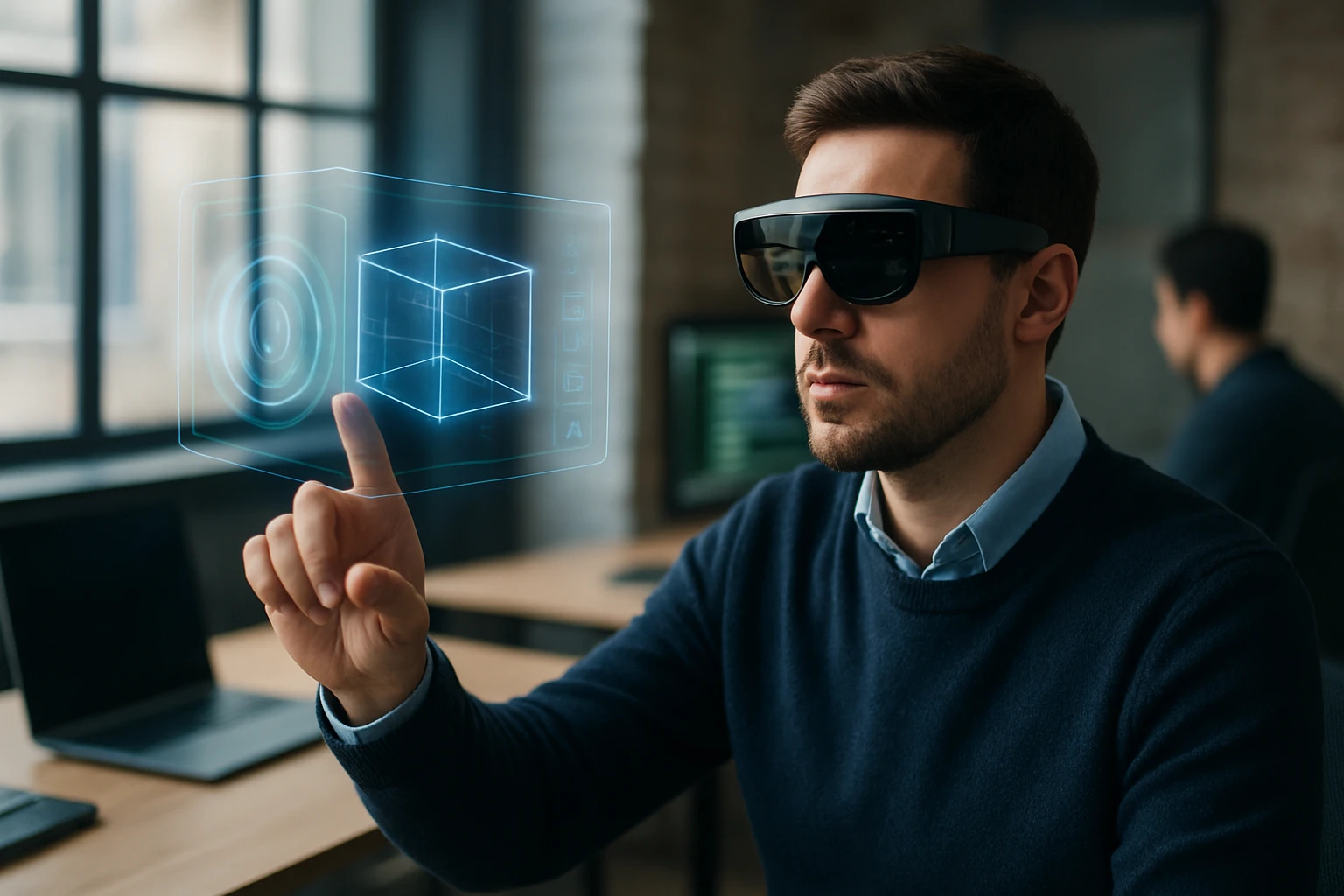
The intersection of digital and physical worlds has always fascinated me, particularly how technology can seamlessly blend virtual elements with our everyday reality. Watching people interact with invisible interfaces, manipulate holographic objects, or receive contextual information overlaid on their surroundings feels like witnessing science fiction become reality. This transformation isn't just about entertainment—it's fundamentally changing how we work, learn, shop, and connect with our environment.
Augmented Reality represents the sophisticated overlay of digital information onto the real world through specialized devices and software systems. Unlike virtual reality that creates entirely artificial environments, AR enhances our existing surroundings by adding computer-generated elements that respond to real-world contexts. This technology promises to examine multiple perspectives, from technical implementation to practical applications across various industries.
Through this exploration, you'll discover the intricate mechanisms that make AR possible, understand the current applications reshaping different sectors, and gain insights into the challenges and opportunities that lie ahead. Whether you're a technology enthusiast, business professional, or simply curious about emerging innovations, this comprehensive look will provide you with the knowledge needed to understand and potentially leverage this transformative technology.
Understanding the Core Technology Behind Augmented Reality
Augmented Reality functions through a complex orchestration of hardware and software components working in perfect harmony. The foundation begins with sophisticated sensors that capture real-world data, including cameras for visual input, accelerometers for motion detection, and GPS systems for location awareness. These sensors continuously gather information about the user's environment and position within it.
The processing power required for real-time AR experiences demands advanced computational capabilities. Modern AR systems utilize powerful processors, often enhanced by specialized chips designed for artificial intelligence and machine learning tasks. These components work together to analyze incoming sensor data, identify objects and surfaces in the real world, and determine where digital elements should be placed.
Computer vision algorithms form the backbone of AR technology, enabling devices to understand and interpret visual information from the physical world. These algorithms can recognize specific objects, track movement patterns, and calculate spatial relationships between different elements in the environment. The sophistication of these systems allows for precise placement of digital content that appears naturally integrated with real-world objects.
"The magic of augmented reality lies not in the technology itself, but in how seamlessly it disappears, allowing users to focus on enhanced experiences rather than the complexity beneath."
Essential Hardware Components
The hardware ecosystem supporting AR experiences encompasses several critical components that must work together flawlessly. Display systems vary significantly depending on the intended use case, ranging from smartphone screens to specialized head-mounted displays and smart glasses. Each display type presents unique advantages and limitations in terms of field of view, resolution, and user comfort.
Processing units in AR devices must handle multiple demanding tasks simultaneously. They need to process sensor data, run computer vision algorithms, render 3D graphics, and maintain system responsiveness—all in real-time. The thermal management of these powerful processors becomes crucial, especially in mobile and wearable AR devices where size and weight constraints are paramount.
Sensor arrays in modern AR systems include various types of cameras, depth sensors, inertial measurement units, and sometimes LiDAR systems. These sensors provide the raw data necessary for understanding the user's environment and tracking their movements. The quality and precision of these sensors directly impact the accuracy and stability of AR experiences.
Software Architecture and Processing Pipeline
The software stack powering AR applications involves multiple layers of complex algorithms and frameworks. At the foundation level, simultaneous localization and mapping (SLAM) algorithms help devices understand their position in space while simultaneously creating a map of the environment. This capability enables persistent placement of digital objects that remain in fixed positions relative to real-world locations.
Rendering engines specifically designed for AR must handle the unique challenges of compositing virtual objects with real-world imagery. These engines need to account for lighting conditions, shadows, occlusion, and perspective to create convincing illusions that digital elements belong in the physical space. The computational demands of real-time rendering require careful optimization to maintain smooth performance.
Machine learning models increasingly play vital roles in AR systems, particularly for object recognition, scene understanding, and predictive tracking. These models can identify specific items, understand spatial relationships, and even predict user intentions to provide more responsive and intuitive experiences. The integration of AI capabilities continues to expand the possibilities for AR applications.
Current Applications Across Industries
Healthcare and Medical Training
Healthcare represents one of the most promising frontiers for AR technology implementation. Medical professionals utilize AR systems for surgical planning, allowing surgeons to visualize internal structures overlaid on patients' bodies before making incisions. This capability significantly reduces risks and improves surgical precision by providing detailed anatomical information in real-time.
Medical education benefits tremendously from AR applications that enable students to examine virtual anatomical models in three-dimensional space. These interactive learning tools allow for detailed exploration of body systems without requiring physical specimens. Students can manipulate virtual organs, observe physiological processes, and practice procedures in safe, controlled environments.
Patient care applications include AR systems that help medical staff locate veins for blood draws, visualize medication effects, and provide real-time access to patient records and vital signs. These tools reduce medical errors, improve efficiency, and enhance the overall quality of healthcare delivery. Emergency responders also use AR systems to receive critical information about patients and navigation assistance to incident locations.
"In healthcare, augmented reality transforms abstract medical data into tangible, interactive experiences that enhance both learning and patient care outcomes."
Manufacturing and Industrial Applications
Manufacturing industries have embraced AR technology for assembly line guidance, quality control, and maintenance procedures. Workers equipped with AR devices receive step-by-step visual instructions overlaid on actual equipment, reducing errors and improving efficiency. These systems can highlight specific components, show proper tool placement, and provide real-time feedback on assembly progress.
Quality control processes benefit from AR systems that can instantly identify defects, measure tolerances, and compare manufactured parts against digital specifications. Inspectors use AR tools to access detailed technical drawings, historical data, and testing procedures without leaving their workstations. This integration streamlines workflows and ensures consistent quality standards.
Maintenance and repair operations utilize AR for equipment diagnostics, providing technicians with visual guides for complex procedures. AR systems can overlay service manuals, parts diagrams, and troubleshooting information directly onto machinery. This capability reduces downtime, minimizes the need for specialized training, and enables remote expert assistance through shared AR experiences.
| Industry Sector | Primary AR Applications | Key Benefits |
|---|---|---|
| Healthcare | Surgical planning, medical training, patient care | Improved precision, enhanced learning, reduced errors |
| Manufacturing | Assembly guidance, quality control, maintenance | Increased efficiency, consistent quality, reduced training time |
| Retail | Virtual try-ons, product visualization, store navigation | Enhanced customer experience, reduced returns, increased sales |
| Education | Interactive learning, virtual field trips, skill training | Improved engagement, better retention, hands-on experience |
Retail and E-commerce Revolution
Retail environments have transformed through AR implementations that allow customers to virtually try products before purchasing. Fashion retailers offer AR mirrors that let shoppers see how clothing items look without physically trying them on. Furniture stores provide AR apps enabling customers to visualize how pieces will appear in their homes, reducing uncertainty and return rates.
E-commerce platforms integrate AR features that bridge the gap between online and physical shopping experiences. Customers can use their smartphones to see how products will look in their actual environments, from artwork on walls to appliances in kitchens. These capabilities address the primary limitation of online shopping—the inability to physically interact with products before purchase.
Interactive shopping experiences powered by AR include virtual store tours, product information overlays, and personalized recommendations based on customer preferences and behavior. Retailers use AR to create memorable brand experiences that differentiate them from competitors while providing practical value to customers. These implementations often result in increased customer engagement and higher conversion rates.
Education and Training Transformation
Educational institutions leverage AR technology to create immersive learning experiences that engage students in ways traditional methods cannot match. History lessons come alive through AR reconstructions of ancient civilizations, allowing students to explore historical sites and interact with virtual artifacts. Science education benefits from AR models that demonstrate complex concepts like molecular structures or astronomical phenomena.
Professional training programs utilize AR simulations to provide hands-on experience without real-world risks or costs. Pilots practice emergency procedures in AR environments, mechanics learn engine repair techniques on virtual equipment, and medical students perform virtual surgeries. These training applications provide consistent, repeatable experiences while ensuring safety and reducing resource requirements.
Language learning applications use AR to create contextual learning environments where students can interact with virtual objects and characters. These systems provide immediate feedback, adapt to individual learning styles, and create engaging scenarios that make language acquisition more natural and enjoyable. The immersive nature of AR helps students develop practical communication skills in realistic settings.
"Educational applications of augmented reality transform passive learning into active exploration, making abstract concepts tangible and memorable."
Technical Challenges and Limitations
Hardware Constraints and Performance Issues
Current AR hardware faces significant limitations that impact user experience and adoption rates. Battery life remains a critical concern, especially for mobile and wearable AR devices that must power multiple sensors, processors, and displays simultaneously. The energy requirements for real-time processing and rendering often result in device usage times measured in hours rather than full days.
Processing power limitations affect the complexity and quality of AR experiences that devices can deliver. Real-time rendering of high-quality graphics while maintaining stable tracking requires substantial computational resources. Mobile devices, despite continuous improvements, still struggle with the most demanding AR applications, leading to compromises in visual quality or feature sets.
Thermal management presents ongoing challenges as powerful processors generate significant heat during intensive AR operations. This heat generation can lead to performance throttling, uncomfortable user experiences, and potential hardware damage. Effective cooling solutions must balance performance requirements with size, weight, and noise constraints.
Display technology limitations include narrow fields of view, limited brightness ranges, and optical distortions that can break the illusion of seamlessly integrated digital content. Current display systems often struggle with outdoor visibility, color accuracy, and the ability to properly occlude real-world objects with virtual elements.
Software and Algorithm Challenges
Tracking accuracy and stability represent fundamental challenges in AR software development. Environmental factors such as lighting conditions, surface textures, and movement patterns can significantly impact the reliability of tracking systems. Poor tracking results in digital objects that appear to drift, shake, or disappear entirely, breaking the immersive experience.
Latency issues between user actions and system responses can cause motion sickness and reduce the effectiveness of AR applications. The complex processing pipeline from sensor input to visual output must complete within milliseconds to maintain the illusion of real-time interaction. Achieving this performance consistently across different devices and environments remains challenging.
Occlusion handling—the ability to properly hide virtual objects behind real-world elements—requires sophisticated depth sensing and processing capabilities. Many current AR systems struggle with accurate occlusion, leading to unrealistic visual effects where virtual objects appear in front of real objects that should block them. This limitation significantly impacts the believability of AR experiences.
Scene understanding algorithms must interpret complex, dynamic environments in real-time. These systems need to identify surfaces, objects, lighting conditions, and spatial relationships while adapting to changes in the environment. The computational requirements for comprehensive scene understanding often exceed the capabilities of current mobile hardware.
User Experience and Adoption Barriers
User interface design for AR presents unique challenges that differ significantly from traditional screen-based interfaces. Designers must consider three-dimensional space, user comfort, and the integration of virtual elements with real-world contexts. Creating intuitive interaction methods that work reliably across different environments and user capabilities requires extensive research and testing.
Social acceptance of AR devices, particularly wearable systems, faces obstacles related to privacy concerns, social norms, and aesthetic considerations. Many potential users express discomfort with always-on cameras and sensors, while others find current AR devices too bulky or conspicuous for regular use. Overcoming these barriers requires careful attention to design, functionality, and user education.
Content creation for AR applications requires specialized skills and tools that are still evolving. Developers must understand both traditional software development and the unique requirements of spatial computing. The learning curve for creating effective AR experiences can be steep, limiting the pool of qualified developers and the pace of content creation.
"The greatest challenge in augmented reality isn't technical—it's creating experiences so natural and valuable that users forget they're using technology at all."
Current Market Landscape and Key Players
Technology Giants and Their AR Strategies
Major technology companies have invested billions of dollars in AR research and development, each pursuing different approaches and market segments. These investments reflect the widespread belief that AR represents a fundamental shift in how people interact with digital information and services. The competition among these companies drives rapid innovation and development across the entire AR ecosystem.
Mobile platform providers focus on AR frameworks and development tools that enable widespread adoption through existing smartphone infrastructure. These companies leverage their massive user bases and app distribution networks to introduce AR capabilities gradually. Their approach emphasizes accessibility and immediate availability rather than cutting-edge hardware capabilities.
Hardware manufacturers concentrate on developing specialized AR devices, from lightweight smart glasses to powerful mixed-reality headsets. These companies face the challenge of balancing performance, comfort, and cost while building entirely new product categories. Their success depends on creating compelling hardware that justifies the investment required for dedicated AR devices.
Software and services companies develop AR applications, development platforms, and enterprise solutions that demonstrate the practical value of AR technology. These organizations often partner with hardware manufacturers to create complete solutions for specific industries or use cases. Their role is crucial in translating AR's technical capabilities into real-world benefits.
Market Segments and Growth Projections
The AR market encompasses several distinct segments, each with different requirements, growth rates, and adoption timelines. Enterprise applications currently represent the largest revenue segment, driven by clear return-on-investment calculations and willingness to invest in productivity-enhancing technologies. These applications often justify higher costs through measurable improvements in efficiency, training, and quality.
Consumer applications show tremendous potential but face greater adoption challenges related to cost, utility, and social acceptance. Gaming and entertainment applications lead consumer adoption, followed by shopping and social media integrations. The consumer market's growth depends heavily on hardware improvements and the development of compelling use cases beyond novelty applications.
Industrial and manufacturing applications demonstrate strong growth driven by digital transformation initiatives and the need for improved operational efficiency. These sectors value AR's ability to reduce training time, improve safety, and enhance quality control processes. The measurable benefits in these applications often lead to rapid adoption once initial implementations prove successful.
| Market Segment | Current Size (2024) | Projected Growth Rate | Primary Drivers |
|---|---|---|---|
| Enterprise Solutions | $8.2 billion | 35% annually | ROI, productivity, training efficiency |
| Consumer Applications | $3.1 billion | 28% annually | Gaming, social media, e-commerce |
| Industrial/Manufacturing | $5.7 billion | 42% annually | Digital transformation, safety, quality |
| Healthcare | $2.4 billion | 38% annually | Patient outcomes, training, precision |
Investment Trends and Funding Patterns
Venture capital investment in AR startups has fluctuated significantly over recent years, reflecting both enthusiasm and skepticism about the technology's near-term prospects. Early-stage companies receive funding primarily for specialized applications, development tools, and hardware components rather than broad consumer platforms. Investors increasingly focus on companies with clear paths to revenue and practical applications.
Corporate venture capital and strategic investments play larger roles in AR funding compared to many other technology sectors. Established companies invest in AR startups to gain access to specialized technologies, talent, and market insights. These strategic relationships often provide startups with resources and market access that pure financial investors cannot offer.
Government funding and research grants support AR development in areas such as defense, healthcare, and education. These investments often focus on fundamental research and applications with significant public benefit rather than commercial viability. Government support helps advance the underlying science and technology that benefits the entire AR ecosystem.
"Investment patterns in augmented reality reflect a maturing market where practical applications and measurable returns increasingly drive funding decisions over pure technological novelty."
Future Prospects and Emerging Trends
Next-Generation Hardware Developments
Upcoming hardware innovations promise to address many current limitations while enabling entirely new categories of AR experiences. Advanced display technologies, including retinal projection systems and holographic displays, could eliminate the need for traditional screens while providing unlimited fields of view. These developments would remove one of the most significant barriers to natural AR experiences.
Miniaturization efforts focus on creating AR devices that are indistinguishable from regular eyewear while maintaining full functionality. Progress in semiconductor technology, battery chemistry, and optical engineering continues to reduce the size and weight of AR components. Future devices may integrate seamlessly into contact lenses or even implantable systems.
Processing improvements include specialized AR chips designed specifically for the unique computational requirements of spatial computing. These processors optimize power consumption, thermal management, and performance for AR workloads. Cloud computing integration will also enable lightweight devices to access powerful processing capabilities remotely.
Sensor technology advances encompass higher-resolution cameras, more accurate motion sensors, and new types of environmental sensors. These improvements will enable more precise tracking, better understanding of user context, and richer environmental data for AR applications. Advanced sensors may also provide biometric monitoring and health-related information.
Software and AI Integration Advances
Artificial intelligence integration will significantly enhance AR capabilities through improved scene understanding, predictive interactions, and personalized experiences. Machine learning models will better interpret user intentions, environmental contexts, and optimal ways to present information. These AI systems will make AR interfaces more intuitive and responsive to individual user needs.
Computer vision advances will enable AR systems to understand complex scenes with human-like comprehension. Future systems may recognize objects, understand relationships between elements, and predict changes in the environment. This enhanced understanding will enable more sophisticated and reliable AR applications across various contexts.
Natural language processing integration will allow users to interact with AR systems through voice commands and conversations. These interfaces will understand context, intent, and complex instructions while providing appropriate responses through visual, audio, or haptic feedback. Voice interaction will make AR more accessible and natural for many users.
Cross-platform compatibility and standardization efforts will enable AR content and experiences to work seamlessly across different devices and manufacturers. Industry standards for AR development, content formats, and interaction paradigms will accelerate adoption and reduce development costs. These standards will also improve user experiences by ensuring consistency across platforms.
Societal Impact and Transformation Potential
Workplace transformation through AR adoption will change how people perform jobs across numerous industries. Remote work capabilities will expand as AR enables shared virtual workspaces and collaborative experiences that rival in-person interactions. Training and skill development will become more accessible, efficient, and effective through AR-enhanced learning systems.
Educational systems will integrate AR to create more engaging and effective learning experiences. Students will have access to immersive historical recreations, interactive scientific models, and personalized tutoring systems. These tools will help address different learning styles and provide equal access to high-quality educational resources regardless of geographic location.
Social interactions may evolve as AR enables new forms of communication and shared experiences. People will interact with digital representations of friends and family, share virtual objects and experiences, and participate in augmented social spaces. These capabilities could help maintain relationships across distances while creating new forms of social connection.
Privacy and security considerations will become increasingly important as AR systems collect detailed information about users' environments, behaviors, and interactions. Society will need to develop new frameworks for protecting personal information while enabling the benefits of AR technology. These discussions will shape the development and deployment of future AR systems.
"The transformative potential of augmented reality extends far beyond technology—it promises to reshape how we work, learn, and connect with both digital information and each other."
Implementation Strategies for Organizations
Planning and Assessment Framework
Organizations considering AR implementation must begin with comprehensive assessments of their current processes, technology infrastructure, and strategic objectives. This evaluation should identify specific pain points that AR could address, quantify potential benefits, and establish realistic timelines for implementation. Successful AR projects typically start with clear problem definitions and measurable success criteria.
Stakeholder engagement throughout the planning process ensures that AR initiatives align with user needs and organizational goals. Different departments may have varying requirements and concerns about AR adoption. Early involvement of end users, IT departments, and management helps identify potential obstacles and build support for implementation efforts.
Technology readiness assessments examine existing infrastructure, device capabilities, and integration requirements. Organizations must evaluate whether current systems can support AR applications or require upgrades. These assessments should also consider security requirements, data management needs, and compatibility with existing workflows and software systems.
Budget planning for AR projects must account for hardware costs, software development or licensing fees, training expenses, and ongoing maintenance requirements. Organizations should also consider the total cost of ownership over the expected lifecycle of AR systems. Pilot projects can help validate cost assumptions and demonstrate value before larger investments.
Development and Deployment Approaches
Pilot project strategies allow organizations to test AR applications in controlled environments before full-scale deployment. These limited implementations help identify technical issues, user experience problems, and organizational challenges that may not be apparent during planning phases. Successful pilots provide valuable data for refining approaches and building confidence in larger implementations.
Agile development methodologies work particularly well for AR projects due to the rapidly evolving nature of the technology and user requirements. Iterative development cycles allow for continuous feedback incorporation, technology updates, and requirement refinements. This approach helps ensure that final implementations meet actual user needs rather than initial assumptions.
Integration planning addresses how AR systems will connect with existing enterprise software, databases, and workflows. Successful implementations often require custom development work to ensure seamless data flow and user experiences. Organizations should plan for API development, data synchronization, and user authentication across multiple systems.
Training and change management programs prepare users for AR adoption and help maximize the benefits of new systems. These programs should address both technical skills and workflow changes that AR implementation may require. Ongoing support and feedback mechanisms help ensure successful adoption and identify opportunities for improvement.
Measuring Success and ROI
Key performance indicators for AR implementations vary depending on the specific use case and organizational objectives. Common metrics include productivity improvements, error reduction rates, training time decreases, and user satisfaction scores. Organizations should establish baseline measurements before implementation to accurately assess impact.
Return on investment calculations for AR projects must consider both direct cost savings and indirect benefits such as improved employee satisfaction, reduced turnover, and enhanced customer experiences. Some benefits may be difficult to quantify immediately but become apparent over longer time periods. Regular assessment helps organizations understand the full value of their AR investments.
User adoption metrics provide insights into how well AR systems are being integrated into daily workflows. High adoption rates typically correlate with successful implementations, while low adoption may indicate usability issues or insufficient training. Monitoring usage patterns helps identify areas for improvement and optimization.
Continuous improvement processes ensure that AR systems evolve with changing user needs and technological capabilities. Regular feedback collection, performance monitoring, and system updates help maintain the value and effectiveness of AR implementations. Organizations should plan for ongoing investment in AR system maintenance and enhancement.
What is the difference between Augmented Reality and Virtual Reality?
Augmented Reality overlays digital information onto the real world, allowing users to see and interact with both physical and virtual elements simultaneously. Virtual Reality creates completely artificial environments that replace the real world entirely. AR enhances reality while VR replaces it.
What hardware do I need to experience AR applications?
Most AR experiences can be accessed through modern smartphones or tablets with cameras and sufficient processing power. More advanced applications may require specialized devices such as AR glasses, headsets, or industrial-grade equipment depending on the specific use case and requirements.
How accurate is AR tracking and positioning?
AR tracking accuracy varies depending on the device, environment, and application requirements. Consumer devices typically achieve accuracy within a few centimeters under good conditions, while specialized industrial systems can achieve millimeter-level precision. Factors like lighting, surface textures, and movement patterns affect tracking quality.
What are the main challenges facing AR adoption?
Primary challenges include hardware limitations such as battery life and processing power, software issues like tracking stability and latency, user experience concerns including interface design and comfort, and broader adoption barriers such as cost and social acceptance of AR devices.
Can AR work without an internet connection?
Many AR applications can function offline once initial content is downloaded and stored locally on the device. However, applications requiring real-time data, cloud processing, or remote content may need internet connectivity. The offline capability depends on the specific application design and requirements.
What industries benefit most from AR technology?
Healthcare, manufacturing, retail, and education currently show the strongest AR adoption and benefits. These industries have clear use cases where AR provides measurable improvements in efficiency, accuracy, training effectiveness, or customer experience. However, AR applications are expanding across virtually all sectors.
How much does it cost to implement AR in a business?
AR implementation costs vary widely depending on the complexity of applications, hardware requirements, development needs, and scale of deployment. Simple smartphone-based solutions may cost thousands of dollars, while comprehensive enterprise systems can require investments of hundreds of thousands or millions of dollars.
Is AR technology safe for long-term use?
Current research suggests that AR technology is generally safe for regular use when devices are properly designed and used according to manufacturer guidelines. However, long-term studies are still ongoing, and users should follow recommended usage patterns, take regular breaks, and be aware of potential issues like eye strain or distraction in certain environments.