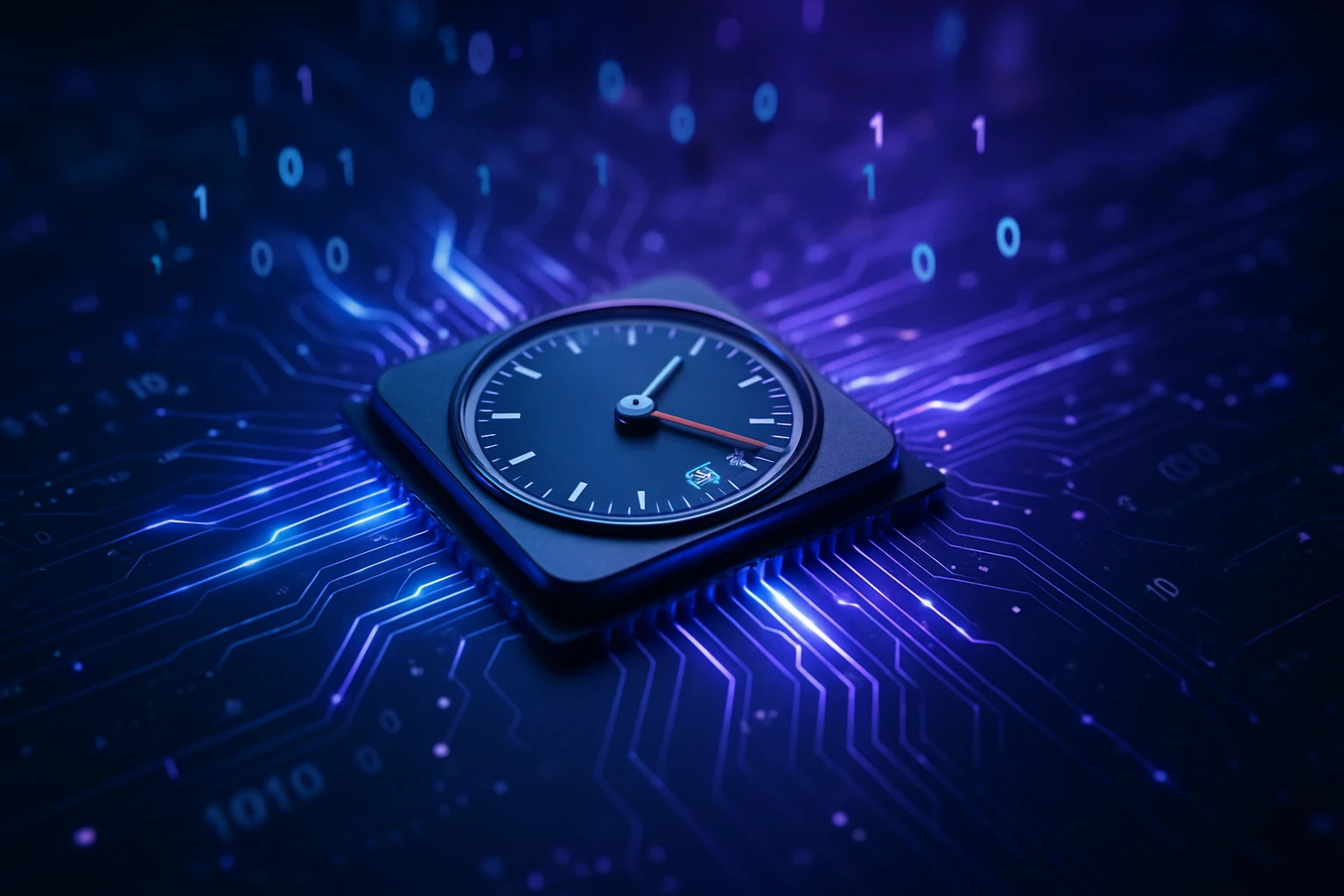


The relentless pursuit of faster computing has captivated technology enthusiasts and professionals for decades. Clock speed stands as one of the most fundamental metrics in understanding how processors deliver performance, yet it remains surprisingly misunderstood by many users who rely on these powerful components daily. This fascination stems from the direct correlation between clock speed and the tangible experience of using computers, smartphones, and countless other digital devices.
Clock speed represents the frequency at which a processor's internal clock generates pulses, measured in hertz (Hz), with modern processors operating in the gigahertz (GHz) range. This metric indicates how many instruction cycles a processor can potentially execute per second, serving as a baseline for comparing processing capabilities. However, the relationship between clock speed and actual performance involves multiple variables that create a complex landscape of considerations for both manufacturers and consumers.
Throughout this exploration, you'll discover the intricate mechanics behind processor timing, learn how clock speed interacts with other critical performance factors, and understand why raw frequency numbers don't tell the complete performance story. We'll examine real-world implications, compare different processor architectures, and provide practical guidance for making informed decisions about processor selection based on your specific computing needs.
Understanding the Fundamentals of Clock Speed
Clock speed operates as the heartbeat of any processor, establishing the rhythm at which computational operations occur. The processor's internal clock generates electrical pulses at precise intervals, and each pulse represents an opportunity for the processor to execute an instruction or move data between components.
Modern processors typically operate at frequencies ranging from 1.5 GHz to over 5 GHz. A 3 GHz processor, for example, generates three billion clock pulses per second, providing three billion opportunities for instruction execution. This fundamental timing mechanism ensures synchronized operation across all processor components.
The measurement of clock speed in gigahertz reflects the enormous frequencies at which modern processors operate. Early computers operated at kilohertz frequencies, while today's processors have achieved speeds thousands of times faster through decades of technological advancement and manufacturing improvements.
Base Clock vs. Boost Clock
Contemporary processors feature multiple clock speed specifications that reflect their adaptive performance capabilities. The base clock represents the guaranteed minimum frequency at which the processor operates under normal conditions, ensuring consistent performance across various workloads and thermal conditions.
Boost clock technology allows processors to temporarily increase their operating frequency when thermal and power conditions permit. This dynamic frequency scaling enables processors to deliver maximum performance when needed while maintaining efficiency during lighter workloads.
"The ability to dynamically adjust clock speeds based on workload demands represents one of the most significant advances in processor efficiency, allowing systems to balance performance with power consumption in real-time."
The difference between base and boost clocks can be substantial, sometimes exceeding 1 GHz. This variability means that advertised clock speeds may not reflect sustained performance under continuous heavy workloads, where thermal limitations force processors to operate closer to their base frequencies.
The Relationship Between Clock Speed and Performance
Clock speed serves as just one component in the complex equation of processor performance. While higher clock speeds generally enable faster instruction execution, the relationship between frequency and real-world performance depends heavily on additional factors that can significantly impact overall system responsiveness.
Instructions per clock (IPC) represents a critical metric that determines how much work a processor accomplishes during each clock cycle. Modern processors can execute multiple instructions simultaneously through techniques like superscalar execution and out-of-order processing, making IPC a crucial performance multiplier.
Cache memory hierarchy plays an equally important role in determining effective performance. Processors with larger, more efficient cache systems can maintain higher effective clock speeds by reducing the frequency of slower memory accesses that would otherwise stall the processor pipeline.
Architecture Efficiency and Clock Speed Optimization
Different processor architectures achieve varying levels of efficiency at the same clock speeds. Some designs prioritize high frequencies with simpler instruction sets, while others focus on complex instruction execution capabilities that accomplish more work per clock cycle.
The manufacturing process node significantly influences achievable clock speeds and power efficiency. Smaller transistors enable higher frequencies while consuming less power, allowing modern processors to achieve performance levels that would have been impossible with older manufacturing technologies.
Pipeline depth affects the relationship between clock speed and performance. Deeper pipelines can enable higher clock speeds but may introduce penalties when branch predictions fail, creating a delicate balance between frequency optimization and execution efficiency.
Factors That Influence Effective Clock Speed
Thermal management represents one of the most significant limiting factors for sustained high clock speeds. As processors generate heat during operation, thermal throttling mechanisms reduce clock speeds to prevent damage, making cooling solutions crucial for maintaining peak performance.
Power delivery systems must provide clean, stable power to support high-frequency operation. Inadequate power supply designs can cause voltage fluctuations that force processors to reduce clock speeds for stability, highlighting the importance of robust system design beyond the processor itself.
"Thermal and power constraints often prove more limiting than the processor's inherent frequency capabilities, making system-level design considerations just as important as the processor specification itself."
Memory subsystem performance directly impacts the effectiveness of high clock speeds. Slow memory access can create bottlenecks that prevent processors from utilizing their full frequency potential, emphasizing the importance of balanced system configurations.
Environmental and System Factors
Ambient temperature affects processor cooling efficiency and sustainable clock speeds. Systems operating in warmer environments may experience reduced performance due to thermal limitations, while better cooling solutions can maintain higher frequencies for longer periods.
System workload characteristics influence clock speed behavior. Single-threaded applications may enable maximum boost frequencies on individual cores, while multi-threaded workloads distribute heat across multiple cores, potentially limiting the peak frequencies achievable on any single core.
Background processes and system overhead can impact effective clock speed utilization. Systems with excessive background activity may not fully utilize available processor frequency due to resource contention and context switching overhead.
Comparing Clock Speeds Across Different Architectures
Direct clock speed comparisons between different processor architectures can be misleading due to fundamental differences in instruction execution efficiency. A processor running at 3 GHz may significantly outperform another processor running at 4 GHz if the first processor accomplishes more work per clock cycle.
Architecture-specific optimizations can dramatically impact performance at the same clock speeds. Some processors excel at specific workload types through specialized instruction sets or execution units, making clock speed just one factor in overall capability assessment.
| Architecture Type | Typical Clock Range | IPC Characteristics | Best Use Cases |
|---|---|---|---|
| High-Performance Desktop | 3.0-5.5 GHz | High IPC, Complex Instructions | Gaming, Content Creation |
| Mobile/Laptop | 1.5-4.0 GHz | Balanced IPC, Power Efficient | General Computing, Portability |
| Server/Enterprise | 2.0-4.0 GHz | High IPC, Multi-threading Focus | Data Processing, Virtualization |
| Embedded/IoT | 0.1-2.0 GHz | Simple Instructions, Ultra-Low Power | Sensors, Control Systems |
Manufacturing process differences create varying relationships between clock speed and power consumption. Newer process nodes typically enable higher frequencies at lower power levels, making direct frequency comparisons between processors built on different manufacturing processes less meaningful.
"Understanding that a 3 GHz processor from one generation may significantly outperform a 4 GHz processor from an earlier generation illustrates why clock speed alone cannot determine processing capability."
Clock Speed in Modern Multi-Core Processors
Multi-core processors introduce complexity in clock speed management, as different cores may operate at different frequencies simultaneously. This dynamic frequency scaling allows processors to optimize performance and power consumption based on workload distribution across available cores.
Thermal design considerations become more complex with multiple cores, as heat generation from one core can affect the maximum sustainable frequency of adjacent cores. This thermal interdependence means that maximum boost clocks may only be achievable when other cores are idle or operating at reduced frequencies.
Core parking and thread scheduling algorithms work in conjunction with clock speed management to optimize system performance. Operating systems can direct workloads to cores operating at optimal frequencies while allowing other cores to reduce their clock speeds for power savings.
Heterogeneous Core Designs
Modern processors increasingly feature different core types optimized for different workload characteristics. Performance cores may achieve higher clock speeds for demanding tasks, while efficiency cores operate at lower frequencies to handle background tasks with minimal power consumption.
The coordination between different core types requires sophisticated clock speed management that considers both performance requirements and power budgets. This complexity makes simple clock speed specifications less meaningful for understanding overall system capability.
Workload migration between different core types can impact effective clock speed utilization. Applications may experience performance variations as threads move between high-frequency performance cores and lower-frequency efficiency cores based on system load and power management policies.
Real-World Performance Implications
Gaming performance often correlates strongly with single-core clock speeds, as many games cannot fully utilize multiple processor cores. Higher clock speeds can directly translate to improved frame rates and reduced input latency in gaming scenarios, making frequency a relevant consideration for gaming-focused systems.
Content creation workloads may benefit more from multi-core performance than pure clock speed, as video encoding, 3D rendering, and other creative tasks can effectively utilize multiple processor cores simultaneously. The balance between core count and clock speed becomes crucial for optimizing creative workflows.
"Real-world performance depends on the specific applications and workloads users run, making it essential to consider how different software types utilize processor capabilities rather than focusing solely on raw specifications."
Productivity applications show varying sensitivity to clock speed depending on their specific computational requirements. Spreadsheet calculations and database queries may benefit from high single-core performance, while compilation and data analysis tasks might favor multi-core capabilities over pure frequency.
| Workload Type | Clock Speed Sensitivity | Multi-Core Utilization | Performance Priority |
|---|---|---|---|
| Gaming | High | Low to Medium | Single-Core Frequency |
| Video Editing | Medium | High | Balanced Cores/Frequency |
| Web Browsing | Low | Low | Power Efficiency |
| Scientific Computing | Medium | Very High | Total Computational Throughput |
| Office Productivity | Medium | Low | Responsive Single-Core Performance |
Power Consumption and Clock Speed Relationship
Power consumption increases exponentially with clock speed due to the fundamental physics of transistor switching. This relationship means that small increases in frequency can result in disproportionately large increases in power consumption and heat generation, creating practical limits for sustainable high-frequency operation.
Dynamic voltage and frequency scaling (DVFS) technologies allow processors to adjust both voltage and frequency based on workload demands. This capability enables significant power savings during light workloads while maintaining the ability to achieve high performance when needed.
Battery life in mobile devices directly correlates with processor clock speed management. Aggressive frequency scaling can extend battery life substantially, while sustained high-frequency operation can dramatically reduce usage time between charges.
Thermal Design Power (TDP) Considerations
TDP specifications provide guidance for cooling system requirements but don't directly limit clock speeds. Processors can temporarily exceed their TDP ratings during boost operation, requiring cooling solutions capable of handling these peak power levels for optimal performance.
The relationship between TDP and sustainable clock speeds varies significantly based on workload characteristics. Some applications may enable sustained high-frequency operation within TDP limits, while others may force thermal throttling despite seemingly adequate cooling solutions.
"Understanding the exponential relationship between clock speed and power consumption helps explain why processor manufacturers focus increasingly on architectural efficiency improvements rather than pure frequency increases."
System-level power delivery must account for peak power demands during maximum boost operation. Inadequate power supplies can limit achievable clock speeds regardless of the processor's inherent capabilities, making power system design crucial for performance optimization.
Future Trends and Technological Developments
Manufacturing process improvements continue to enable higher clock speeds while reducing power consumption. Advanced process nodes introduce new materials and transistor designs that push the boundaries of achievable frequencies, though the rate of improvement has slowed compared to earlier decades.
Three-dimensional chip architectures and advanced packaging technologies may enable new approaches to clock speed optimization. These innovations could allow for better heat dissipation and more efficient power delivery, potentially enabling higher sustainable frequencies.
Specialized processing units and heterogeneous computing approaches may reduce the emphasis on traditional CPU clock speeds. As workloads increasingly utilize GPUs, AI accelerators, and other specialized processors, overall system performance may depend less on CPU frequency alone.
Quantum Computing and Alternative Paradigms
Quantum computing represents a fundamental departure from traditional clock-based processing, operating on entirely different principles that don't rely on conventional frequency measurements. While still in early development, quantum processors could eventually handle certain computational tasks without traditional clock speed limitations.
Neuromorphic computing architectures attempt to mimic brain-like processing patterns that don't depend on synchronized clock signals. These approaches could enable new types of computational efficiency that transcend traditional frequency-based performance metrics.
"The future of computing performance may increasingly depend on specialized processing capabilities and architectural innovations rather than continued increases in traditional clock speeds."
Optical computing technologies could potentially enable processing speeds far beyond current electronic limitations. While still largely experimental, photonic processors could eventually achieve effective "clock speeds" measured in terahertz rather than gigahertz.
Practical Considerations for Processor Selection
When evaluating processors for specific use cases, clock speed should be considered alongside other critical specifications including core count, cache sizes, and architectural generation. The optimal balance depends heavily on intended applications and performance priorities.
Budget considerations often require trade-offs between clock speed and other features. Higher-frequency processors typically command premium pricing, making it important to assess whether the additional performance justifies the increased cost for specific use cases.
Future-proofing considerations should account for how software requirements may evolve over time. Applications increasingly utilize multiple processor cores, potentially making core count and overall architectural capability more important than peak clock speeds for long-term system relevance.
System Integration and Compatibility
Motherboard and chipset limitations may restrict achievable clock speeds regardless of processor specifications. Ensuring compatibility between all system components is crucial for realizing the full performance potential of high-frequency processors.
Cooling solution requirements scale with target clock speeds and sustained workload demands. Adequate cooling is essential not only for achieving peak performance but also for maintaining system stability and component longevity under demanding conditions.
Memory speed and capacity can significantly impact the effective utilization of high clock speeds. Fast processors paired with slow memory may experience performance bottlenecks that prevent full utilization of available processing frequency.
What is processor clock speed?
Processor clock speed is the frequency at which a processor's internal clock operates, measured in hertz (Hz). It indicates how many instruction cycles the processor can potentially execute per second, with modern processors typically operating in the gigahertz (GHz) range.
Does higher clock speed always mean better performance?
No, higher clock speed doesn't always guarantee better performance. Factors like instructions per clock (IPC), cache efficiency, and overall architecture design significantly impact real-world performance. A newer processor with lower clock speed may outperform an older processor with higher clock speed.
What's the difference between base clock and boost clock?
Base clock is the guaranteed minimum frequency at which a processor operates under normal conditions, while boost clock is the maximum frequency achievable when thermal and power conditions permit. Boost clocks provide temporary performance increases for demanding workloads.
How does temperature affect processor clock speed?
High temperatures can trigger thermal throttling, causing processors to reduce their clock speeds to prevent damage. Effective cooling solutions are essential for maintaining sustained high-frequency operation and achieving optimal performance.
Can I increase my processor's clock speed?
Some processors support overclocking, which allows users to increase clock speeds beyond factory specifications. However, this requires adequate cooling, stable power delivery, and carries risks including reduced component lifespan and potential system instability.
Why do mobile processors have lower clock speeds than desktop processors?
Mobile processors prioritize power efficiency and battery life over raw performance. Lower clock speeds reduce power consumption and heat generation, enabling longer battery life and operation in compact devices with limited cooling capabilities.
How do multi-core processors manage clock speeds?
Multi-core processors can operate different cores at different frequencies simultaneously. This dynamic frequency scaling optimizes performance and power consumption based on workload distribution, with some cores potentially running at maximum boost while others operate at lower frequencies.
What role does manufacturing process play in clock speed?
Smaller manufacturing process nodes typically enable higher clock speeds while consuming less power. Advanced processes use smaller transistors that switch faster and generate less heat, allowing for improved frequency and efficiency combinations.