

The constant evolution of cyber threats has fundamentally changed how organizations approach system maintenance and security. Traditional patch management strategies, which often relied on vendor-recommended timelines or blanket update schedules, are proving inadequate against sophisticated attack vectors that exploit vulnerabilities within hours of their discovery. This shift has created an urgent need for more intelligent, strategic approaches to vulnerability remediation that can keep pace with the modern threat landscape.
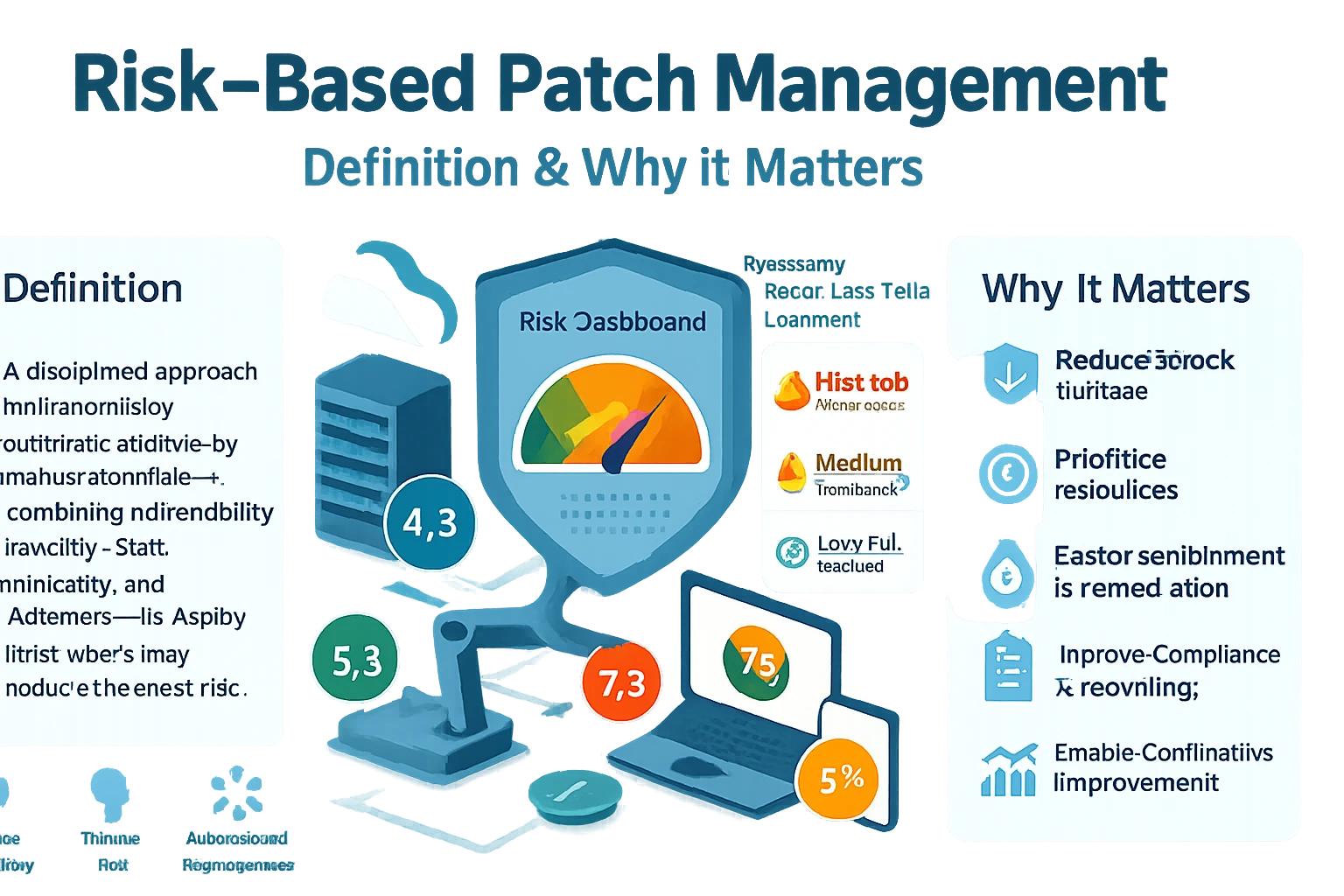
Risk-based patch management represents a paradigm shift from reactive, schedule-driven patching to a proactive, intelligence-driven approach. This methodology evaluates vulnerabilities not just by their technical severity scores, but by considering the actual risk they pose to specific organizational assets, business processes, and security postures. By incorporating threat intelligence, asset criticality, and environmental context, organizations can make informed decisions about which patches to prioritize and deploy first.
Through this comprehensive exploration, you'll discover how to implement a robust risk-based patch management framework that aligns with your organization's unique risk tolerance and business objectives. We'll examine practical assessment techniques, explore automation strategies that can scale with enterprise environments, and provide actionable insights for building a program that transforms patch management from a reactive burden into a strategic security advantage.
Understanding Risk-Based Patch Management Fundamentals
Risk-based patch management fundamentally differs from traditional approaches by incorporating comprehensive risk assessment into every patching decision. Instead of treating all vulnerabilities equally or following vendor-recommended timelines blindly, this methodology evaluates each vulnerability within the context of your specific environment and threat landscape.
The foundation of this approach rests on understanding that not all vulnerabilities pose equal risk to your organization. A critical vulnerability in a system that's isolated from the internet and contains non-sensitive data may pose less immediate risk than a medium-severity vulnerability in a public-facing application that processes customer data.
Modern risk-based frameworks leverage multiple data sources to inform patching decisions. These include vulnerability scanners, threat intelligence feeds, asset inventories, and business impact assessments. By combining these information sources, security teams can create a comprehensive risk profile for each vulnerability.
Core Components of Risk Assessment
Vulnerability Severity and Exploitability
The Common Vulnerability Scoring System (CVSS) provides a baseline for understanding vulnerability severity, but risk-based approaches go beyond these scores. They incorporate real-world exploitability data, including whether proof-of-concept exploits exist, if the vulnerability is being actively exploited in the wild, and how easily it can be weaponized.
Asset Criticality and Business Context
Every system and application within your environment carries different levels of business importance. Critical infrastructure systems, customer-facing applications, and data repositories containing sensitive information require different risk calculations than development environments or isolated testing systems.
Environmental Factors
Network segmentation, access controls, and existing security measures all influence the actual risk posed by vulnerabilities. A vulnerability in a system protected by multiple security layers may require different prioritization than the same vulnerability in an exposed system.
"The most effective patch management programs treat vulnerability remediation as a business risk decision, not just a technical maintenance task."
Strategic Risk Assessment Methodologies
Implementing effective risk assessment requires structured methodologies that can consistently evaluate vulnerabilities across diverse IT environments. These frameworks provide repeatable processes for making informed patching decisions while accounting for organizational constraints and priorities.
Quantitative Risk Scoring Models
Quantitative approaches assign numerical values to various risk factors, creating composite scores that enable direct comparison between vulnerabilities. These models typically incorporate multiple weighted factors to produce actionable priority rankings.
CVSS Enhancement Models
While CVSS provides a foundation, enhanced models incorporate additional factors such as asset value, threat actor interest, and exploit availability. Organizations often multiply base CVSS scores by environmental and temporal factors to create more contextually relevant risk scores.
Business Impact Weighting
Sophisticated scoring models assign business impact multipliers based on system criticality, data sensitivity, and operational dependencies. Customer-facing systems might receive higher multipliers than internal development environments, reflecting their greater potential impact on business operations.
Qualitative Risk Frameworks
Qualitative approaches use descriptive categories and expert judgment to assess risk levels. These frameworks often prove more intuitive for stakeholders and can better accommodate complex organizational factors that resist quantification.
Risk Matrix Approaches
Two-dimensional risk matrices plot vulnerability severity against likelihood of exploitation, creating visual representations that facilitate decision-making. These matrices can incorporate organizational risk tolerance levels to establish clear action thresholds.
Threat Modeling Integration
Advanced qualitative frameworks integrate threat modeling outputs to understand how vulnerabilities fit into broader attack scenarios. This approach helps identify vulnerabilities that might seem low-risk in isolation but become critical components of potential attack chains.
Technology Integration and Automation Strategies
Modern risk-based patch management relies heavily on integrated technology platforms that can process vast amounts of vulnerability and threat data in real-time. These systems enable organizations to scale their risk assessment capabilities while maintaining consistency and accuracy across large, complex environments.
Vulnerability Management Platform Integration
Centralized Data Aggregation
Effective platforms consolidate vulnerability data from multiple sources, including network scanners, application security tools, and cloud security platforms. This centralization ensures comprehensive visibility across hybrid and multi-cloud environments.
Real-Time Threat Intelligence Integration
Leading platforms incorporate threat intelligence feeds that provide real-time information about active exploitation, threat actor interest, and emerging attack trends. This intelligence helps prioritize vulnerabilities that pose immediate threats over those with theoretical risk.
Asset Discovery and Classification
Automated asset discovery ensures that all systems receive appropriate risk assessments. Advanced platforms can automatically classify assets based on network location, installed software, and data sensitivity indicators.
Automated Risk Calculation Engines
Modern automation engines process multiple risk factors simultaneously, generating consistent risk scores across thousands of vulnerabilities. These systems can incorporate organizational policies and risk tolerances to produce customized prioritization schemes.
Machine Learning Enhancement
Advanced platforms leverage machine learning algorithms to improve risk predictions over time. These systems learn from historical patching outcomes and threat materialization to refine their risk assessment accuracy.
Dynamic Prioritization
Automated systems can continuously recalculate risk scores as new threat intelligence emerges or environmental conditions change. This dynamic approach ensures that patching priorities remain current with evolving threat landscapes.
| Integration Component | Primary Function | Key Benefits | Implementation Considerations |
|---|---|---|---|
| SIEM Integration | Correlate vulnerability data with security events | Enhanced threat context, incident response alignment | Requires event log standardization |
| CMDB Integration | Asset relationship mapping | Improved business impact assessment | Data quality and accuracy critical |
| Ticketing System Integration | Workflow automation | Streamlined remediation processes | Change management process alignment |
| Cloud Security Integration | Multi-cloud visibility | Comprehensive coverage | API compatibility requirements |
Implementation Framework and Best Practices
Successful risk-based patch management implementation requires a structured approach that addresses organizational culture, technical infrastructure, and operational processes. Organizations must carefully plan their transition from traditional patching approaches while maintaining security effectiveness throughout the implementation period.
Phased Implementation Strategy
Assessment and Planning Phase
Begin by conducting comprehensive assessments of existing patch management processes, asset inventories, and risk tolerance levels. This phase should identify gaps in current approaches and establish baseline metrics for measuring improvement.
Pilot Program Development
Implement risk-based approaches within controlled environments or specific asset categories before organization-wide deployment. Pilot programs allow teams to refine processes and demonstrate value to stakeholders.
Gradual Expansion and Optimization
Systematically expand risk-based approaches across additional systems and environments while continuously optimizing risk assessment criteria and automation capabilities.
Organizational Change Management
Stakeholder Alignment
Risk-based patch management requires buy-in from multiple organizational levels, including executive leadership, IT operations, and security teams. Clear communication about benefits and resource requirements helps ensure adequate support.
Training and Skill Development
Teams need training on new tools, processes, and risk assessment methodologies. Investment in skill development ensures that staff can effectively operate within risk-based frameworks.
Policy and Procedure Updates
Existing patch management policies often require significant updates to accommodate risk-based decision-making processes. These updates should clearly define roles, responsibilities, and escalation procedures.
"Organizations that successfully implement risk-based patch management typically see 40-60% improvements in mean time to remediation for critical vulnerabilities while reducing overall patching workload."
Business Impact Assessment and Asset Classification
Understanding the business value and criticality of different systems forms the cornerstone of effective risk-based patch management. Organizations must develop comprehensive asset classification schemes that accurately reflect business dependencies, data sensitivity, and operational importance.
Asset Criticality Frameworks
Tiered Classification Systems
Most organizations benefit from tiered classification systems that group assets into categories such as critical, high, medium, and low importance. These tiers should reflect business impact if systems become unavailable or compromised.
Business Process Mapping
Advanced classification approaches map individual assets to specific business processes, enabling more precise impact assessments. This mapping helps identify dependencies that might not be obvious from technical architecture alone.
Data Sensitivity Integration
Asset classifications must account for the types and sensitivity levels of data processed or stored on each system. Customer data, intellectual property, and regulatory compliance requirements all influence appropriate classification levels.
Dynamic Asset Valuation
Modern environments require dynamic approaches to asset valuation that can adapt to changing business conditions and threat landscapes. Static classifications often become outdated quickly in rapidly evolving IT environments.
Contextual Value Assessment
Asset values should reflect current business context, including seasonal importance fluctuations, project dependencies, and market conditions. E-commerce platforms, for example, might require higher protection levels during peak shopping periods.
Dependency Analysis
Comprehensive dependency mapping identifies how system failures cascade through business processes. Single points of failure often require higher classification levels than their individual importance might suggest.
Threat Intelligence Integration and Vulnerability Prioritization
Effective risk-based patch management requires sophisticated threat intelligence integration that provides real-time context about vulnerability exploitation trends, threat actor activities, and emerging attack patterns. This intelligence transforms static vulnerability scores into dynamic risk assessments that reflect current threat landscapes.
Threat Intelligence Sources and Quality
Commercial Threat Intelligence Feeds
High-quality commercial feeds provide curated intelligence about active exploitation, threat actor techniques, and vulnerability weaponization trends. These feeds often include contextual information that helps security teams understand why specific vulnerabilities pose immediate risks.
Open Source Intelligence (OSINT)
Public threat intelligence sources, including security researcher publications, proof-of-concept repositories, and vulnerability databases, provide valuable supplementary information for risk assessment processes.
Internal Threat Intelligence
Organizations should develop capabilities for generating internal threat intelligence based on their specific attack patterns, incident response data, and environmental observations.
Exploitation Likelihood Assessment
Active Exploitation Indicators
Real-time monitoring for active exploitation attempts provides the strongest indicator of immediate risk. Integration with intrusion detection systems and security monitoring platforms helps identify vulnerabilities under active attack.
Weaponization Timeline Analysis
Understanding typical timelines between vulnerability disclosure and weaponization helps predict when theoretical vulnerabilities might become active threats. This analysis enables proactive patching before exploitation becomes widespread.
Threat Actor Interest Mapping
Different threat actors target different vulnerability types and attack vectors. Mapping organizational threat models to specific threat actor capabilities helps prioritize vulnerabilities most likely to be exploited against specific environments.
| Threat Intelligence Type | Update Frequency | Primary Use Case | Reliability Level |
|---|---|---|---|
| Commercial Feeds | Real-time to hourly | Active exploitation detection | High |
| Government Advisories | Daily to weekly | Strategic threat awareness | Very High |
| Vendor Security Bulletins | As published | Product-specific risks | High |
| Research Publications | Weekly to monthly | Emerging threat trends | Variable |
| Internal Intelligence | Continuous | Environment-specific risks | High |
"Organizations that effectively integrate threat intelligence into their patch management processes reduce their exposure window to actively exploited vulnerabilities by an average of 75%."
Metrics, Monitoring, and Continuous Improvement
Measuring the effectiveness of risk-based patch management programs requires comprehensive metrics that capture both security improvements and operational efficiency gains. These measurements provide the foundation for continuous improvement and demonstrate program value to organizational stakeholders.
Key Performance Indicators
Risk Reduction Metrics
Track the reduction in overall organizational risk exposure through metrics such as mean time to patch critical vulnerabilities, percentage of high-risk vulnerabilities remediated within SLA timeframes, and reduction in exploitable attack surface.
Operational Efficiency Measures
Monitor improvements in operational efficiency through metrics like patch deployment success rates, reduction in emergency patching events, and decreased time spent on low-risk vulnerability remediation.
Business Alignment Indicators
Measure how well patch management activities align with business objectives through metrics such as system availability during patching windows, business process continuity, and stakeholder satisfaction scores.
Continuous Improvement Processes
Regular Risk Model Validation
Periodically validate risk assessment models against actual security incidents and threat materialization. This validation helps identify areas where risk calculations need refinement or adjustment.
Feedback Loop Implementation
Establish feedback mechanisms that capture lessons learned from patching activities, security incidents, and operational challenges. These insights drive iterative improvements to risk assessment and prioritization processes.
Benchmarking and Industry Comparison
Regular benchmarking against industry standards and peer organizations helps identify opportunities for improvement and validates the effectiveness of current approaches.
Advanced Automation and Orchestration Techniques
Sophisticated automation capabilities enable organizations to scale risk-based patch management across large, complex environments while maintaining consistency and reducing manual effort. These advanced techniques leverage orchestration platforms, artificial intelligence, and integrated security tools to create comprehensive automated workflows.
Intelligent Patch Orchestration
Multi-Stage Deployment Automation
Advanced orchestration platforms can automatically manage complex deployment scenarios that include development, testing, and production environments. These systems ensure that patches receive appropriate validation before reaching critical systems.
Rollback and Recovery Automation
Intelligent systems monitor patch deployments for adverse effects and can automatically trigger rollback procedures when problems are detected. This capability reduces the risk associated with automated patching while maintaining deployment speed.
Dependency-Aware Scheduling
Sophisticated scheduling systems understand system dependencies and can coordinate patching activities to minimize business disruption. These systems can automatically adjust schedules based on business calendars, maintenance windows, and operational requirements.
AI-Enhanced Risk Assessment
Predictive Risk Modeling
Machine learning algorithms can analyze historical vulnerability and threat data to predict future risk trends and identify vulnerabilities likely to become high-priority targets. These predictions enable proactive patching strategies.
Anomaly Detection Integration
AI systems can identify unusual patterns in vulnerability exploitation or system behavior that might indicate emerging threats or environmental changes requiring risk assessment updates.
Natural Language Processing for Threat Intelligence
Advanced systems use natural language processing to analyze unstructured threat intelligence sources, extracting relevant risk indicators that can be automatically incorporated into risk calculations.
"Organizations implementing AI-enhanced risk assessment report 50-70% improvements in vulnerability prioritization accuracy and 30-40% reductions in false positive risk assessments."
Compliance and Regulatory Considerations
Risk-based patch management must align with various regulatory requirements and compliance frameworks while maintaining the flexibility to adapt to organizational risk tolerance. Understanding these requirements helps ensure that risk-based approaches enhance rather than complicate compliance efforts.
Regulatory Framework Alignment
Industry-Specific Requirements
Different industries face varying regulatory requirements for vulnerability management and system security. Healthcare organizations must comply with HIPAA requirements, financial institutions with PCI DSS standards, and government contractors with NIST frameworks.
Documentation and Audit Trail Requirements
Risk-based approaches must maintain comprehensive documentation of decision-making processes, risk assessments, and remediation activities. This documentation supports audit requirements and demonstrates due diligence in security practices.
Risk Acceptance and Exception Management
Formal processes for risk acceptance and exception management ensure that decisions to delay or skip patches receive appropriate review and approval. These processes must align with organizational risk governance frameworks.
Compliance Automation
Automated Compliance Reporting
Advanced platforms can automatically generate compliance reports that demonstrate adherence to various regulatory requirements. These reports can include risk assessment summaries, patching statistics, and exception documentation.
Policy Enforcement Automation
Automated systems can enforce compliance policies by preventing the deployment of systems that don't meet minimum patching requirements or by automatically escalating overdue vulnerabilities.
Continuous Compliance Monitoring
Real-time monitoring capabilities help ensure ongoing compliance with regulatory requirements while providing early warning of potential compliance gaps.
Cloud and Hybrid Environment Considerations
Modern IT environments increasingly span multiple cloud providers, on-premises infrastructure, and hybrid architectures. Risk-based patch management must adapt to these complex environments while maintaining comprehensive visibility and control across all platforms.
Multi-Cloud Patch Management
Cloud-Native Security Integration
Risk-based approaches must integrate with cloud-native security tools and services provided by major cloud platforms. This integration ensures comprehensive vulnerability visibility across Infrastructure as a Service (IaaS), Platform as a Service (PaaS), and Software as a Service (SaaS) components.
Shared Responsibility Model Navigation
Understanding shared responsibility models helps organizations focus their patch management efforts on areas under their control while ensuring appropriate coordination with cloud providers for platform-level vulnerabilities.
Container and Serverless Considerations
Modern cloud architectures increasingly rely on containerized applications and serverless functions that require specialized patching approaches. Risk-based frameworks must account for the unique characteristics and lifecycles of these deployment models.
Hybrid Architecture Challenges
Unified Visibility Requirements
Hybrid environments require unified visibility across on-premises and cloud infrastructure to ensure comprehensive risk assessment. This visibility must account for network connectivity, access controls, and data flows between environments.
Consistent Policy Application
Risk-based policies must apply consistently across hybrid environments while accommodating the unique characteristics and constraints of different platforms and deployment models.
Cross-Platform Orchestration
Advanced orchestration capabilities must coordinate patching activities across diverse platforms and environments while maintaining appropriate security controls and change management processes.
"Organizations with mature hybrid cloud patch management report 60% faster vulnerability remediation times and 45% better security posture consistency across their entire infrastructure."
Building Organizational Resilience Through Risk-Based Approaches
Risk-based patch management contributes to broader organizational resilience by creating adaptive, intelligence-driven security practices that can evolve with changing threat landscapes and business requirements. This resilience extends beyond technical security to encompass business continuity and operational excellence.
Resilience Framework Integration
Business Continuity Planning
Risk-based patch management should integrate with business continuity planning to ensure that vulnerability remediation activities support rather than disrupt critical business operations. This integration helps balance security needs with operational requirements.
Incident Response Coordination
Patch management programs must coordinate closely with incident response capabilities to ensure rapid remediation of vulnerabilities being actively exploited. This coordination includes pre-positioned response procedures and emergency patching capabilities.
Supply Chain Risk Management
Modern risk assessment must account for supply chain vulnerabilities and third-party software risks. This broader perspective helps organizations understand and mitigate risks that extend beyond their direct control.
Adaptive Security Posture
Dynamic Risk Tolerance
Organizations benefit from dynamic risk tolerance frameworks that can adjust to changing business conditions, threat levels, and operational requirements. These frameworks enable appropriate risk-taking while maintaining security effectiveness.
Learning Organization Principles
Successful risk-based patch management programs embody learning organization principles, continuously improving their risk assessment accuracy and operational effectiveness based on experience and changing conditions.
Future-Proofing Strategies
Investment in flexible, extensible patch management platforms and processes helps organizations adapt to emerging technologies, evolving threat landscapes, and changing business requirements without requiring complete program overhauls.
What is risk-based patch management and how does it differ from traditional approaches?
Risk-based patch management is a strategic approach that prioritizes vulnerability remediation based on the actual risk posed to an organization rather than following vendor timelines or treating all vulnerabilities equally. Unlike traditional methods that often apply patches chronologically or based solely on CVSS scores, risk-based approaches consider factors such as asset criticality, threat intelligence, business impact, environmental context, and exploit availability. This methodology enables organizations to focus their limited resources on addressing the most significant threats first, improving security posture while optimizing operational efficiency.
How do organizations determine which vulnerabilities pose the highest risk?
Organizations determine vulnerability risk through comprehensive assessment frameworks that evaluate multiple factors simultaneously. These assessments typically combine technical vulnerability severity scores with business context information, including asset criticality, data sensitivity, network exposure, and existing security controls. Threat intelligence integration provides real-time information about active exploitation, proof-of-concept availability, and threat actor interest. Advanced organizations use automated risk calculation engines that process these multiple data sources to generate consistent, comparable risk scores across their entire environment.
What role does threat intelligence play in risk-based patch management?
Threat intelligence serves as a critical component that transforms static vulnerability assessments into dynamic risk evaluations. It provides real-time context about which vulnerabilities are being actively exploited, which threat actors are targeting specific vulnerability types, and how quickly vulnerabilities typically become weaponized after disclosure. This intelligence helps organizations distinguish between theoretical risks and immediate threats, enabling them to prioritize patches for vulnerabilities under active attack while potentially deferring lower-risk items. Quality threat intelligence integration can significantly reduce the window of exposure to actively exploited vulnerabilities.
How can organizations measure the success of their risk-based patch management programs?
Success measurement requires a combination of security-focused and operational metrics that demonstrate both risk reduction and efficiency improvements. Key indicators include mean time to patch critical vulnerabilities, percentage of high-risk vulnerabilities remediated within established timeframes, reduction in overall organizational risk exposure, and decreased frequency of emergency patching events. Organizations should also track operational metrics such as patch deployment success rates, system availability during maintenance windows, and resource allocation efficiency. Regular validation of risk assessment accuracy through incident correlation helps ensure the program remains effective.
What are the main challenges organizations face when implementing risk-based patch management?
Organizations commonly encounter several implementation challenges, including resistance to change from teams accustomed to traditional patching approaches, difficulty in accurately assessing business impact and asset criticality, integration complexity with existing security tools and processes, and the need for significant upfront investment in technology platforms and staff training. Data quality issues, particularly around asset inventories and configuration management databases, can significantly impact risk assessment accuracy. Additionally, organizations must balance the desire for comprehensive risk assessment with the need for timely decision-making, especially during active security incidents.
How does risk-based patch management adapt to cloud and hybrid environments?
Cloud and hybrid environments require specialized approaches that account for shared responsibility models, diverse platform characteristics, and distributed infrastructure. Risk-based frameworks must integrate with cloud-native security tools while maintaining unified visibility across on-premises and cloud assets. Container and serverless architectures introduce unique patching challenges that require adapted risk assessment criteria. Organizations must navigate varying levels of control across different service models (IaaS, PaaS, SaaS) while ensuring consistent policy application and risk assessment standards across their entire hybrid infrastructure.
"The future of cybersecurity lies not in patching everything immediately, but in intelligently prioritizing remediation efforts based on real-world risk and business impact."
"Effective risk-based patch management transforms vulnerability management from a reactive maintenance burden into a strategic security capability that directly supports business objectives."
"Organizations that master risk-based approaches typically achieve better security outcomes with fewer resources than those relying on traditional patching methods."