

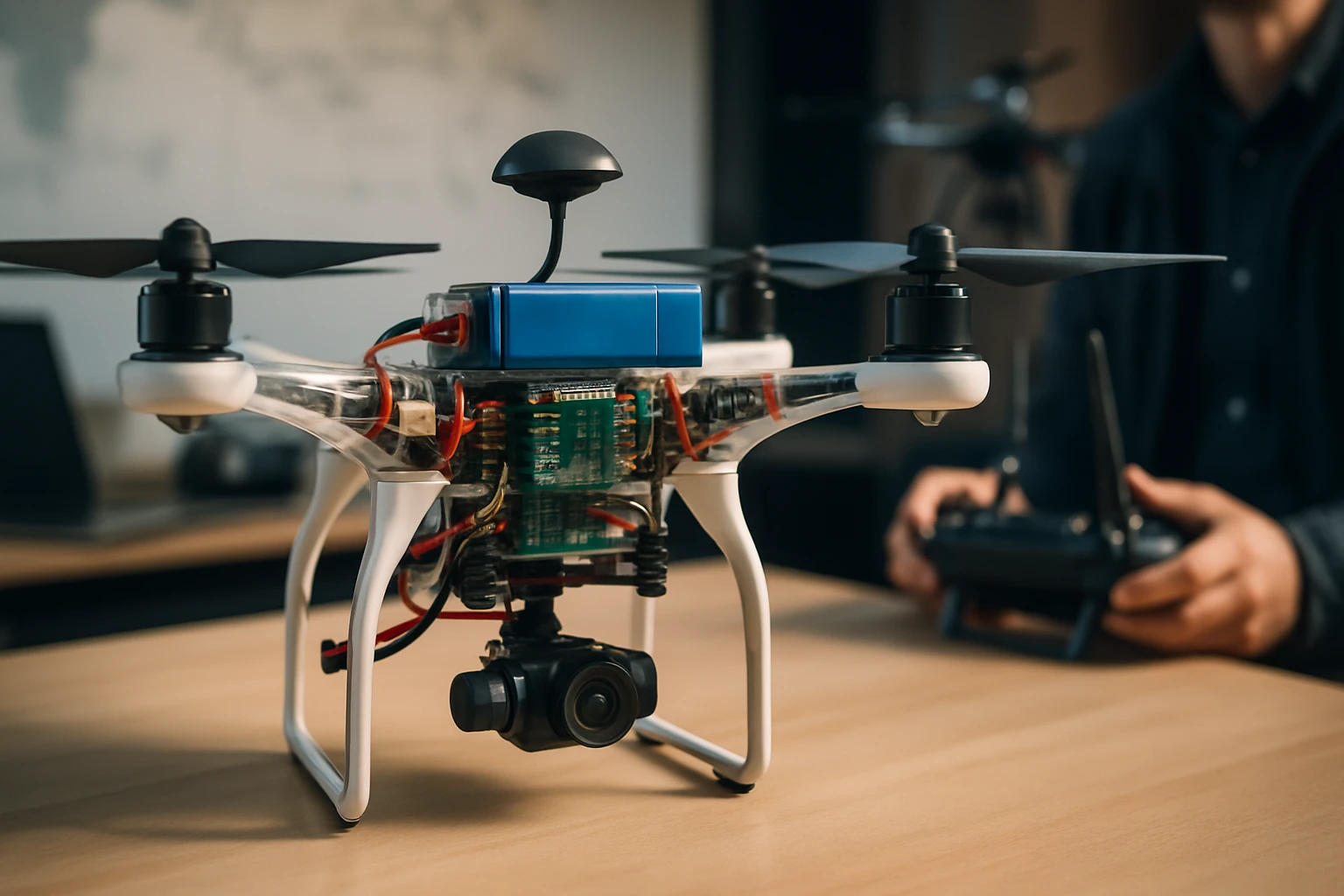
The world around us is rapidly transforming through technological innovation, and few inventions have captured our imagination quite like unmanned aerial vehicles. These remarkable machines have evolved from military curiosities to everyday tools that reshape industries, hobbies, and our understanding of what's possible in the skies above us.
At its core, a drone represents the convergence of multiple technologies working in harmony to achieve autonomous or remote-controlled flight. While definitions may vary across different sectors and applications, these aerial systems share common characteristics that distinguish them from traditional aircraft. We'll explore various perspectives on what constitutes a drone, from technical specifications to practical applications.
This comprehensive exploration will equip you with a thorough understanding of drone technology, from basic components to advanced capabilities. You'll discover how these systems operate, their diverse applications across industries, and the regulatory landscape that governs their use. Whether you're considering purchasing your first drone or seeking to understand their impact on modern society, this guide provides the knowledge you need.
Understanding the Fundamental Nature of Unmanned Aerial Systems
Unmanned aerial vehicles, commonly known as drones, represent sophisticated flying machines that operate without a human pilot aboard. These systems can function through remote control by a human operator or autonomously through onboard computer systems and sensors. The term "drone" originally described military aircraft, but has expanded to encompass civilian applications ranging from photography to package delivery.
The distinction between different types of unmanned aircraft often depends on their size, capabilities, and intended use. Professional-grade systems typically feature advanced navigation capabilities, high-resolution cameras, and extended flight times. Consumer models focus on ease of use, affordability, and recreational applications.
Modern drone technology encompasses various configurations, from small quadcopters weighing less than a pound to large fixed-wing aircraft capable of extended surveillance missions. The versatility of these platforms makes them valuable tools across numerous industries and applications.
Core Components That Enable Aerial Operations
Every functional drone relies on several essential systems working together seamlessly. The flight controller serves as the brain of the operation, processing sensor data and maintaining stable flight through rapid adjustments to motor speeds and control surfaces.
Propulsion systems vary significantly based on aircraft design and intended use. Multi-rotor configurations use electric motors driving propellers to achieve lift and maneuverability. Fixed-wing designs may employ electric motors or small combustion engines for forward thrust, relying on wing surfaces for lift generation.
Navigation and stabilization depend heavily on sensor arrays including accelerometers, gyroscopes, magnetometers, and GPS receivers. These components provide real-time data about the aircraft's position, orientation, and movement, enabling precise control and autonomous flight capabilities.
Power and Communication Systems
Battery technology plays a crucial role in determining flight duration and payload capacity. Lithium-polymer batteries dominate the consumer market due to their favorable power-to-weight ratio and recharge capabilities. Professional applications may require more sophisticated power management systems or alternative energy sources.
Communication systems establish the vital link between operator and aircraft. Radio frequency transmitters handle control inputs and telemetry data, while some advanced systems incorporate cellular or satellite communication for beyond-visual-line-of-sight operations.
Flight Control and Stabilization Technologies
Modern unmanned aircraft achieve remarkable stability through sophisticated flight control algorithms that continuously adjust motor outputs based on sensor feedback. These systems can compensate for wind disturbances, maintain precise positioning, and execute complex maneuvers with minimal operator input.
Inertial measurement units provide critical data about aircraft orientation and acceleration in three-dimensional space. This information enables the flight controller to maintain level flight, execute smooth turns, and respond appropriately to control inputs from the operator.
Advanced systems incorporate GPS positioning for waypoint navigation, return-to-home functions, and geofencing capabilities that prevent flight into restricted areas. These features enhance safety and enable autonomous mission execution without constant operator intervention.
| Component | Function | Importance Level |
|---|---|---|
| Flight Controller | Central processing and control | Critical |
| GPS Module | Position and navigation | High |
| IMU Sensors | Orientation and stability | Critical |
| Battery System | Power supply | Critical |
| Motors/Propellers | Propulsion and lift | Critical |
| Communication Link | Control and telemetry | High |
Diverse Applications Across Industries
Commercial photography and videography represent some of the most visible applications of drone technology. These platforms enable unique perspectives previously available only through expensive helicopter rentals or fixed-wing aircraft operations.
Agricultural monitoring utilizes specialized sensors to assess crop health, optimize irrigation, and monitor livestock. Farmers can survey large areas efficiently, identifying problem areas before they become significant issues affecting yield or animal welfare.
Infrastructure inspection benefits tremendously from unmanned aerial capabilities. Power lines, bridges, cell towers, and building facades can be examined safely and cost-effectively, reducing risks to human inspectors while providing detailed visual documentation.
"The integration of unmanned systems into civilian airspace represents one of the most significant developments in aviation since the introduction of jet engines."
Emergency Response and Public Safety
Search and rescue operations leverage drone capabilities to cover large areas quickly, locate missing persons, and assess dangerous situations without risking additional lives. Thermal imaging cameras can detect heat signatures in challenging conditions where human searchers might miss crucial evidence.
Fire suppression efforts benefit from aerial reconnaissance that helps incident commanders understand fire behavior, identify escape routes, and coordinate resource deployment. Some specialized drones can even deliver fire suppressant materials to specific locations.
Law enforcement applications include crowd monitoring, evidence collection, and suspect tracking. These tools provide valuable intelligence while maintaining officer safety during potentially dangerous situations.
Regulatory Framework and Safety Considerations
Aviation authorities worldwide have established comprehensive regulations governing unmanned aircraft operations. Registration requirements typically apply to aircraft above certain weight thresholds, ensuring accountability and enabling identification of operators when necessary.
Operational limitations commonly include altitude restrictions, distance limitations from airports, and requirements for maintaining visual contact with the aircraft. These rules balance the benefits of drone technology with the need to protect traditional aviation and public safety.
Pilot certification programs have emerged for commercial operators, establishing minimum knowledge standards for safe and legal operations. These programs cover topics including airspace regulations, weather considerations, and emergency procedures.
| Regulation Type | Typical Requirements | Enforcement Level |
|---|---|---|
| Registration | Aircraft identification | Mandatory |
| Pilot Certification | Knowledge testing | Commercial ops |
| Operational Limits | Altitude/distance restrictions | Strictly enforced |
| Privacy Compliance | Consent for recording | Variable by jurisdiction |
Technological Advancement and Future Capabilities
Artificial intelligence integration promises to revolutionize autonomous flight capabilities, enabling drones to make complex decisions based on environmental conditions and mission objectives. Machine learning algorithms can improve performance through experience and adapt to changing operational requirements.
Sensor miniaturization continues to expand payload possibilities while reducing weight penalties. Advanced imaging systems, chemical detection equipment, and environmental monitoring sensors become increasingly accessible for smaller platforms.
Battery technology improvements focus on increasing energy density while reducing charging times and extending operational lifespan. Alternative power sources, including fuel cells and solar panels, may enable extended mission durations for specialized applications.
"Autonomous flight capabilities are evolving from simple waypoint navigation to complex decision-making systems that can adapt to dynamic environments."
Communication and Connectivity Evolution
Beyond visual line of sight operations require robust communication systems capable of maintaining reliable links over extended distances. Satellite communication and cellular networks enable operations far from traditional radio frequency limitations.
Swarm coordination capabilities allow multiple aircraft to work together on complex missions, sharing information and coordinating actions to achieve objectives impossible for single platforms. This technology holds particular promise for large-area surveillance and environmental monitoring applications.
Safety Systems and Risk Mitigation
Collision avoidance technology represents a critical advancement in unmanned aircraft safety. These systems use various sensors including radar, lidar, and optical cameras to detect obstacles and automatically adjust flight paths to prevent accidents.
Redundant system design ensures continued operation even when individual components fail. Multiple GPS receivers, backup communication links, and redundant flight control systems enhance reliability for critical applications.
Emergency response protocols built into modern flight control systems can automatically return aircraft to safe landing areas when communication is lost or battery levels become critically low. These features protect both the aircraft and people on the ground.
"Effective risk management in unmanned aviation requires layered safety systems that address both technical failures and human factors."
Payload Integration and Specialized Equipment
Camera systems range from basic video recording equipment to sophisticated multi-spectral imaging arrays capable of revealing information invisible to human eyes. Stabilization systems ensure smooth footage even in challenging wind conditions.
Sensor packages for scientific applications may include air quality monitors, radiation detectors, or weather measurement instruments. These specialized payloads enable data collection in environments too dangerous or inaccessible for human researchers.
Delivery mechanisms for cargo transport applications require precise control systems capable of safely releasing packages at designated locations. These systems must account for wind conditions and ensure accurate placement while maintaining aircraft stability.
Environmental Impact and Sustainability
Electric propulsion systems produce zero direct emissions during operation, making unmanned aircraft environmentally friendly alternatives to traditional helicopters and small aircraft for many applications. This advantage becomes particularly significant for operations in urban environments or sensitive ecological areas.
Noise reduction technologies address community concerns about aircraft operations in populated areas. Advanced propeller designs and motor configurations can significantly reduce acoustic signatures while maintaining performance capabilities.
Operational efficiency compared to traditional aircraft often results in reduced overall environmental impact. The ability to precisely target specific areas for inspection or monitoring eliminates unnecessary fuel consumption associated with broader survey patterns.
"The environmental benefits of electric unmanned aircraft extend beyond zero emissions to include reduced noise pollution and more efficient use of energy resources."
Data Management and Analysis Capabilities
Real-time data transmission enables immediate analysis and response to changing conditions during flight operations. High-bandwidth communication links can stream video, sensor data, and telemetry information to ground-based analysis systems.
Automated data processing reduces the workload on human operators while improving consistency and accuracy of results. Computer vision algorithms can identify specific features, count objects, or detect anomalies without human intervention.
Cloud-based storage and analysis platforms enable collaboration between multiple users and provide access to historical data for trend analysis and long-term monitoring applications. These systems can handle the large data volumes generated by modern sensor systems.
Training and Skill Development Requirements
Pilot training programs vary significantly based on intended applications and regulatory requirements. Basic recreational use may require only familiarization with safety procedures, while commercial operations demand comprehensive knowledge of aviation principles and regulations.
Maintenance procedures ensure continued safe operation and optimal performance throughout the aircraft's service life. Regular inspection schedules, component replacement intervals, and troubleshooting procedures form essential elements of responsible ownership.
Emergency procedures prepare operators for various failure scenarios and unexpected situations. These protocols cover communication failures, weather emergencies, and mechanical problems that may arise during operations.
"Proper training extends beyond basic flight skills to include thorough understanding of regulations, safety procedures, and emergency response protocols."
Economic Impact and Market Development
Cost reduction benefits make previously expensive aerial operations accessible to smaller businesses and organizations. Tasks that once required expensive helicopter rentals can now be accomplished with significantly lower operating costs and greater scheduling flexibility.
New business opportunities emerge as drone technology enables services and capabilities that were previously impractical or impossible. From precision agriculture to infrastructure monitoring, entirely new markets have developed around unmanned aerial capabilities.
Job creation spans multiple sectors including manufacturing, software development, pilot training, and specialized services. The growing industry supports positions ranging from entry-level technicians to advanced engineers developing next-generation systems.
Integration with Existing Infrastructure
Air traffic management systems must evolve to accommodate increasing numbers of unmanned aircraft operating in shared airspace. New technologies and procedures ensure safe separation between manned and unmanned aircraft while enabling efficient operations for all users.
Ground support infrastructure includes charging stations, maintenance facilities, and communication networks necessary to support widespread drone operations. This infrastructure development parallels the growth of the unmanned aircraft industry.
Integration with smart city initiatives leverages drone capabilities for traffic monitoring, emergency response, and infrastructure maintenance. These applications demonstrate how unmanned aircraft can contribute to more efficient urban management and improved quality of life for residents.
What exactly qualifies as a drone?
A drone is any unmanned aircraft that can be operated remotely or autonomously, ranging from small consumer quadcopters to large military surveillance aircraft. The key characteristic is the absence of a human pilot aboard the aircraft.
How do drones maintain stable flight?
Drones use flight control systems that continuously process data from sensors like accelerometers and gyroscopes, making rapid adjustments to motor speeds or control surfaces to maintain stability and respond to control inputs.
What are the main types of drone configurations?
The most common types include multi-rotor aircraft (quadcopters, hexacopters), fixed-wing aircraft, and hybrid designs that combine characteristics of both. Each configuration offers specific advantages for different applications.
Do I need a license to operate a drone?
Licensing requirements vary by country and intended use. Recreational use typically requires registration for aircraft above certain weights, while commercial operations generally require pilot certification and additional permits.
How long can drones typically fly?
Flight times vary dramatically based on size, battery capacity, and payload. Consumer drones typically fly 20-30 minutes, while larger professional systems may operate for several hours, and specialized long-endurance platforms can stay airborne for days.
What sensors do modern drones typically include?
Standard sensors include GPS receivers, accelerometers, gyroscopes, magnetometers, and barometric altimeters. Advanced systems may add cameras, lidar, radar, thermal imaging, or specialized sensors for specific applications.